Bayern's Youth Surge: Celebrating Academy Successes and Missed Opportunities
On Bayern’s campus, the story of a season is being told not just on the pitch, but over steaming pots in the canteen.
Vincent Kompany has already triggered nine Weißwurst ceremonies for debutants since last summer – a quirky internal ritual that has suddenly become a regular fixture. Since Lennart Karl’s first appearance at the Club World Cup, a full team’s worth of youngsters have stepped into professional football. In recent weeks, the pace has been dizzying.
The chefs can hardly keep up.
Youth boss Jochen Sauer walked in again not long ago, grinning at the kitchen staff. “Here we are again – sooner than expected,” he said, as they prepared the sausages that were supposed to celebrate Maycon Cardoso’s debut against Gladbach in early March. Before the plates were cleared, the next wave arrived: Deniz Ofli, Filip Pavic and, most recently, Erblin Osmani all made their first-team bows.
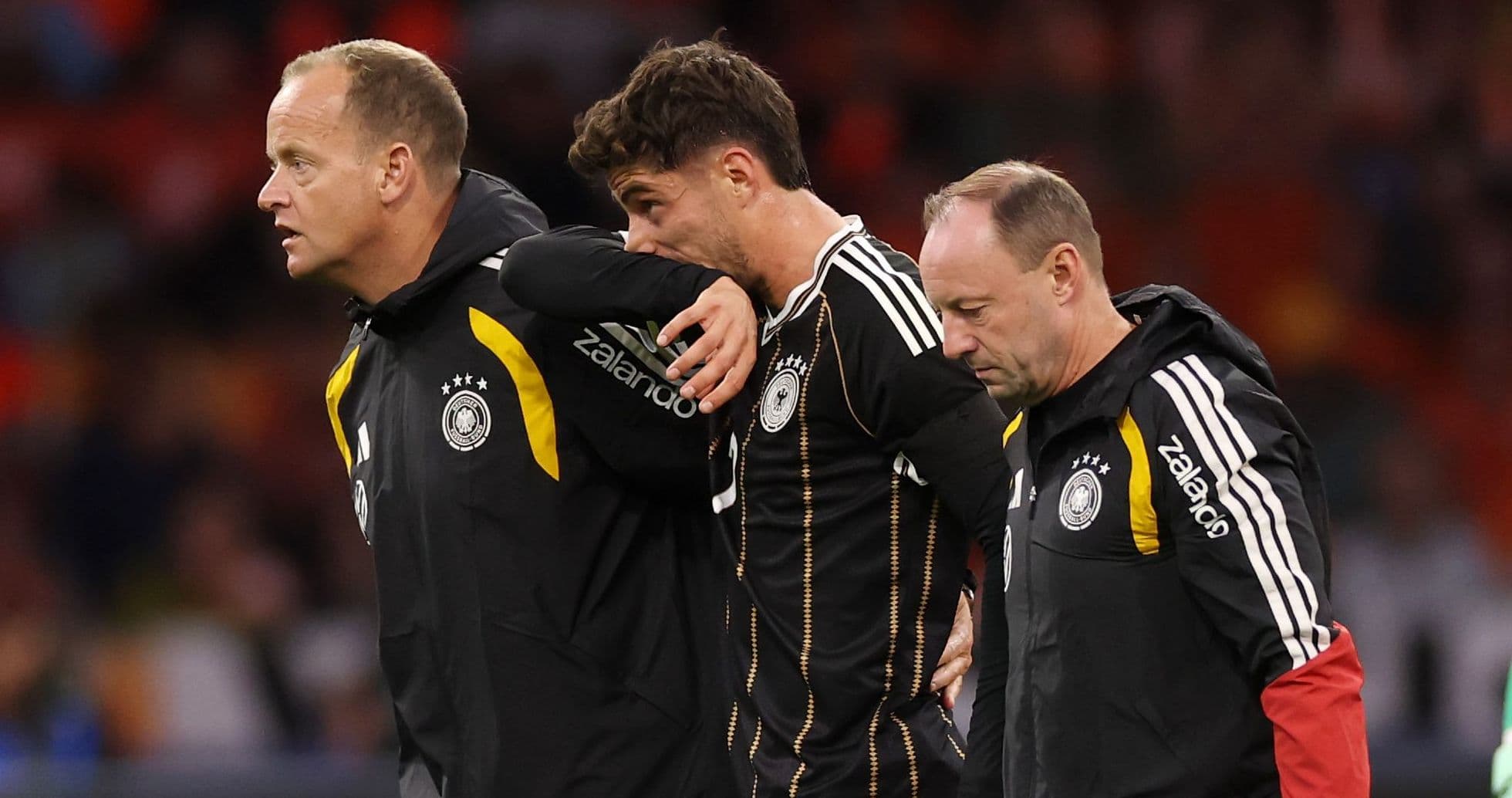
A minor injury crisis opened the door. Kompany kicked it wide open.
Earlier in the season, he had already ushered Wisdom Mike, David Santos Daiber, Cassiano Kiala and Felipe Chavez into the spotlight. The result: a club record for academy debuts in a single season, and the most minutes ever given to homegrown youngsters, with the lowest average age of that group in Europe’s top leagues.
Sauer could barely hide his pride. Bayern, he stressed, stand alone on that front in Europe. The canteen staff, though, might be relieved to hear that the Weißwurst marathons are on hold. The next celebration is scheduled for summer – a barbecue to mark what the club sees as a record-breaking season for its academy.
From neglect to regret
The symbolism of that break with tradition cuts deep. Not long ago, Bayern’s pathway from campus to Allianz Arena was more slogan than reality. The price was high. A generation slipped away.
At the heart of that missed opportunity stands Angelo Stiller.
Today, he is one of the Bundesliga’s most complete midfielders at VfB Stuttgart, pushing hard for a World Cup ticket with Germany. Back then, he was a Munich-born academy talent watching Bayern buy over his head.
The turning point came in 2020. Hansi Flick had just delivered the treble, Bayern were hunting the sextuple, and the pandemic-pushed transfer window stayed open until 5 October. What followed was a frantic 24-hour spree: Marc Roca for €9 million, Bouna Sarr for €8 million, Eric Maxim Choupo-Moting on a free, Douglas Costa on loan and Tiago Dantas, also on loan. Sporting director Hasan Salihamidzic fronted the business.
The 1-4 defeat at TSG Hoffenheim had rattled nerves. Bayern reacted with a shopping cart rather than a scalpel.
Two years later, the verdict was brutal. Only Choupo-Moting truly justified his arrival. Sarr and Costa barely moved the needle. Roca and Dantas, meanwhile, did something more damaging: they blocked the pathway for Stiller and fellow academy midfielder Adrian Fein, now at SSV Jahn Regensburg. Money was spent, trust was not.
Bayern at least clawed back a small win on Roca, selling him to Leeds United for a reported €12 million. The Dantas deal, though, remains a monument to misjudgment.
The Portuguese midfielder arrived largely at Flick’s insistence. He had admired Dantas during his time as sporting director at the DFB and, according to reports, forced the transfer through despite Salihamidzic having different ideas for the midfield.
Tension simmered quickly.
A “slap in the face”
Just months after that late-window flurry, murmurs grew around Säbener Straße. People at the training ground wondered why Dantas, who trained regularly with the first team, seemed to be nudging ahead of Stiller in the pecking order.
The irony? Dantas wasn’t even allowed to play.
Due to paperwork arriving after the official deadline, he could not be registered for first-team action until 1 January. The optics were awful: an external loan player training with the stars, an internal talent looking on, and no match minutes available for the newcomer anyway.
The reporting infuriated Flick.
“That’s not true,” he snapped, accusing critics of trying to drive a wedge between the first team and the academy. He insisted communication was constant and unified. Yet the unease never really disappeared.
A year later, Stiller put words to it.
The now 24-year-old later described the arrivals of Roca and Dantas as a “slap in the face”. Speaking to SPOX, he admitted he knew by then that his Bayern chapter would end once his contract expired. It did. He left on a free to TSG Hoffenheim, became a mainstay under Sebastian Hoeneß and then followed the coach to Stuttgart for the 2023/24 season, where his rise accelerated again.
From overlooked prospect to national-team starter in a World Cup year – the arc could hardly be clearer.
Julian Nagelsmann initially left Stiller out of his Germany squad for the March camp, a decision that puzzled many. Injuries to Aleksandar Pavlovic – another Bayern academy product – and Felix Nmecha opened the door. Stiller walked straight into the starting XI. A World Cup place is no longer a dream. It is a realistic target.
Two careers, two continents apart
While Stiller’s career finally aligns with his talent, Dantas has taken the scenic route.
He never matched the expectations that followed him to Munich. Flick soon realised the problem: the technical quality was there, the physical level was not. Dantas managed just two Bundesliga appearances. When Flick departed after his running feud with Salihamidzic and later crashed out as Germany coach, Bayern quietly declined the €8 million purchase option.
Benfica did not have a clear role for him either. The loans started piling up. CD Tondela in Portugal. PAOK Thessaloniki in Greece. AZ Alkmaar in the Netherlands. The 18-time Portugal U21 international drifted across Europe, searching for a home and a starting place.
He finally found both in Croatia.
In the summer of 2024, Dantas signed a one-year deal with NK Osijek and, for the first time in his senior career, nailed down a regular role. The flaws remained – he still struggled in direct duels – but his passing range and feel for the game resurfaced. That form earned him another free transfer, this time to HNK Rijeka.
There, something clicked.
At the 2017 champions and multiple cup winners, Dantas has become the heartbeat of midfield and a genuine attacking threat: eight goals and ten assists in 44 competitive games so far. The numbers are no longer theoretical promise. They are production.
He almost stepped back into the German spotlight this season. Rijeka reached the Conference League round of 16 before falling to Racing Strasbourg, who now face Mainz 05. A deeper run would have pushed Dantas back into the consciousness of the club that once saw him as a shortcut instead of trusting its own.
Rijeka sit third in the league, well behind Dinamo Zagreb, but Dantas’ shot at a first major title as a key player is alive. He has already lifted the Bundesliga and the Club World Cup with Bayern, though mainly as a bit-part figure. Croatia offers something different: responsibility, expectation, consequence.
The Croatian Cup has become his stage. In a wild 3-2 quarter-final win over Hajduk Split, Rijeka scored three times in stoppage time. Dantas converted the penalty to make it 1-1, sparking the late onslaught. The semi-final now pits him against former club Osijek.
For Stiller, the defining question is whether this season ends on a plane to the World Cup. For Dantas, it is simpler, but no less sharp: can he finally lift a trophy as the man in the middle, not the name on the fringes of a superclub’s squad list?