Barcelona's No. 9 Dilemma: Gyokeres, Espi, or Guirassy?
Barcelona went into the summer with a clear idea of their ideal No. 9. The name was written in bold at the top of every internal list: Julian Alvarez. Eli Junior Kroupi sat just beneath him as the wildcard alternative, the kind of forward a club locks in before everyone else realises how good he is.
That plan is now collapsing in real time.
Atletico Madrid have slammed the door on Alvarez, refusing to even entertain serious negotiations. Bournemouth, for their part, have made it plain that Kroupi is not for sale. The youngster’s metatarsal injury, which will keep him out for three to four months, only hardens that stance and effectively takes him off the market for a club that needs immediate help.
So Barcelona stand at a familiar crossroads: limited money, huge expectations, and a glaring need up front. If the dream targets are gone, the room for error shrinks. This next decision will say a lot about what the club believes it is right now.
Viktor Gyokeres: The win-now gamble
If the priority is impact from day one, Viktor Gyokeres is the obvious, almost unavoidable, name.
The Swedish international has grown into one of Europe’s most complete centre-forwards. He finishes at an elite level, runs at defenders with real menace, presses like a player who refuses to lose the ball, and has the frame to bully centre-backs who dare to get too tight. He is not a static penalty-box poacher; he drifts wide, attacks space, links play, and creates chances for others.
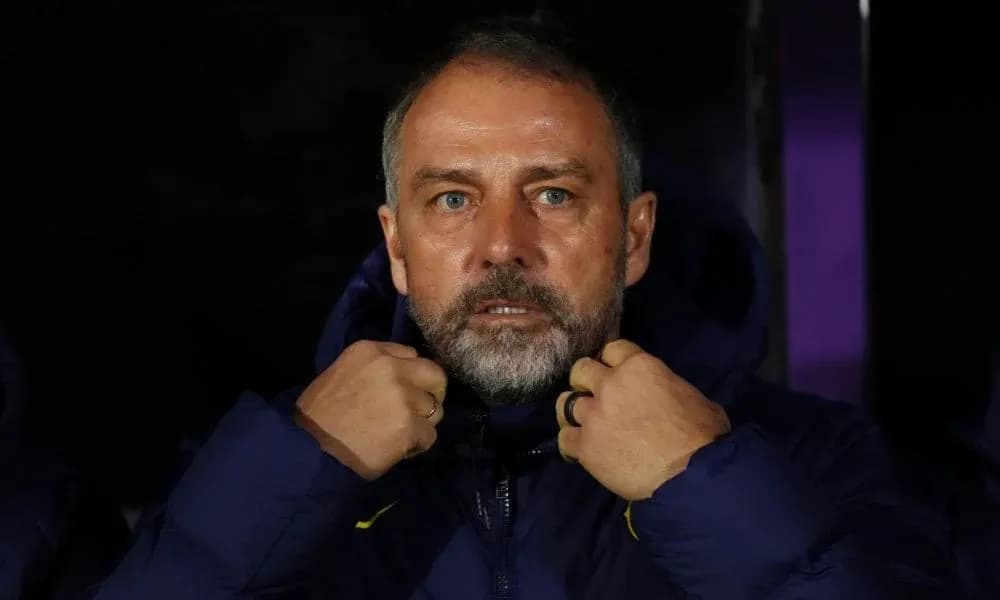
That mix fits Hansi Flick’s aggressive attacking system almost perfectly. Flick wants forwards who can trigger the press, stretch the pitch, and still provide a reliable end product. Gyokeres ticks every box.
But he is 28. This is not a prospect to mould; it is a finished article entering his peak. Barcelona would be paying for what he can do now, not what he might become. The fee would be heavy, the salary likely among the highest in the squad, and the financial risk substantial for a club still navigating tight margins.
If the hierarchy truly believes this team can challenge for the Champions League immediately, Gyokeres is the kind of signing that can tilt a season. If they are not at that level yet, the cost starts to look like a luxury rather than a necessity.
Carlos Espi: The slow burn
On the opposite end of the spectrum sits Carlos Espi, the type of signing Barcelona have historically made just before a player explodes.
At 21, the Spanish striker offers mobility, technique, and a huge ceiling. This is not the answer to the “who starts at centre-forward in August?” question. This is about getting ahead of the market and securing one of Spain’s most promising attacking talents before Europe’s giants inevitably circle.
But young forwards at Barcelona walk a tightrope. The demands are brutal. The scrutiny is constant. Rarely does a striker arrive at that age and instantly look at home in a shirt that heavy.
Espi would need time. He would need patience, careful management, and probably a season of learning more than leading. That would almost certainly mean starting the campaign with Ferran Torres as the main reference in attack, with Espi developing in the shadows rather than carrying the line.
If Barcelona truly believe in his upside, the move makes sense as a long-term play. He could grow behind a more experienced Spaniard, pick up minutes in controlled situations, and slowly emerge as a genuine option. But that path demands a level of restraint and long-term thinking that often clashes with the urgency of the Camp Nou environment.
Serhou Guirassy: The pragmatic choice
Then there is Serhou Guirassy, the name that doesn’t dominate headlines but quietly answers several of Barcelona’s most immediate questions.
The Guinea international is a proven goalscorer, especially inside the box. He lives off sharp movement, clever positioning, and the kind of penalty-area instincts that can turn tight games. He also offers strong hold-up play and intelligent link-up, giving midfielders a reliable outlet and centre-backs someone who can pin them back.
His physical presence would give Barcelona a different attacking dimension, particularly against low blocks that have so often suffocated their possession. With Guirassy, crosses and cut-backs suddenly have a true target.
Financially, he sits in a more realistic bracket. He would command a lower fee than Gyokeres while still bringing valuable Champions League experience and a track record of scoring at a high level.
The catch is obvious: he is 30. This is not a striker to build a decade around. His resale value would be minimal, and Barcelona would still need to find a longer-term solution in the coming years. He is a bridge, not the destination.
But football seasons are not won on balance sheets alone. Sometimes a club simply needs a reliable finisher who can score now, stabilise the attack, and buy time for the next big decision.
What kind of Barcelona is this?
Strip away the names and the choice becomes philosophical.
Viktor Gyokeres is the statement that Barcelona are ready to compete at the very top again and are willing to spend like it. Carlos Espi is the patient bet on potential, a return to the idea that the club can identify and nurture the next great No. 9 before the rest of Europe reacts. Serhou Guirassy is the pragmatic middle ground, a short-term solution that respects financial reality without sacrificing ambition on the pitch.
With Alvarez blocked and Kroupi effectively off the table, the temptation will be to sign whoever is available simply to tick the “striker” box before the window closes.
The real test is whether Barcelona can resist that impulse and choose a profile that truly matches the project they claim to be building.