
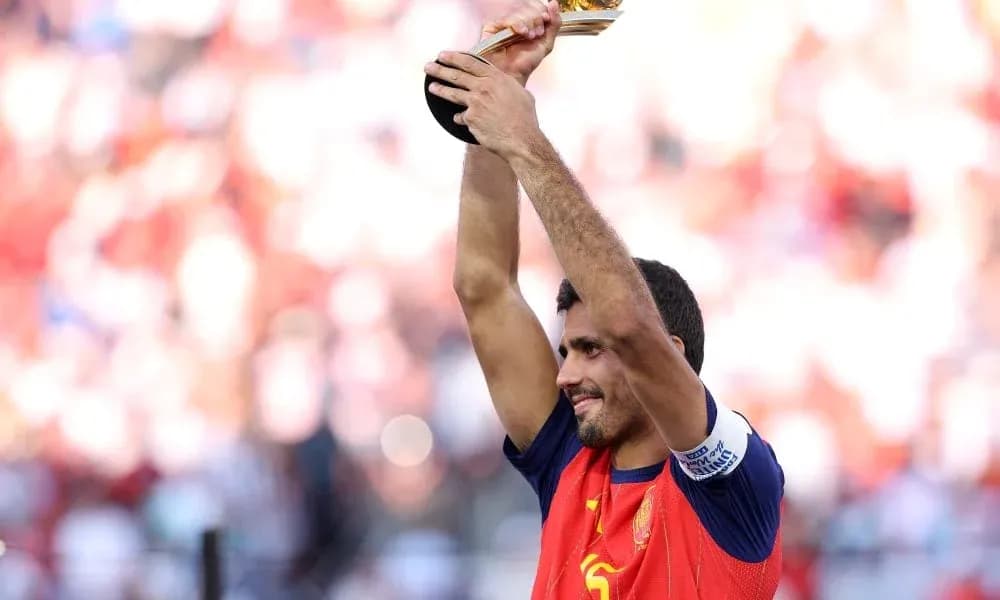
Barcelona Target Rodri to Hijack Real Madrid's Transfer Plans
Barcelona have stepped directly into Real Madrid’s path and gone after their prime target: Manchester City’s midfield lynchpin Rodri.
According to RMC Sport journalist Fabrice Hawkins, the Catalan club have launched a bold late move to hijack Madrid’s pursuit of the Spain international, even though the 30-year-old already has a full personal agreement in place with Los Blancos.
This is not a routine enquiry. It is an ambush.
Barcelona smell an opening
From Barcelona’s side, the timing is no accident. Rodri has entered the final year of his deal at the Etihad Stadium, a rare moment of vulnerability for a player who has come to define Manchester City’s era of dominance.
City face a clear dilemma: sell now or risk losing one of the world’s premier midfielders for nothing next summer. Barcelona intend to lean on that pressure.
There is also a more immediate sporting trigger. Frenkie de Jong’s serious injury, which could rule him out for the rest of 2026, has thrown fresh doubt over his long-term role at the club and left a glaring hole in the heart of Hansi Flick’s team. The need for a new reference point in midfield is no longer theoretical. It is urgent.
Rodri fits that brief almost too perfectly.
The Busquets heir they never signed
Ever since Sergio Busquets walked away, Barcelona have lived with the sense of a missing piece. They patched. They improvised. They never truly replaced him.
Rodri, fresh from a FIFA World Cup in which he took the Golden Ball as the tournament’s best player, is widely seen as the closest thing modern football has to a complete holding midfielder. He dictates tempo, reads danger early, dominates physically, and almost never loses the ball.
Drop that profile into Flick’s structure and the picture changes. With Pedri around him and a coach obsessed with control and verticality, Rodri would not just strengthen Barcelona’s midfield; he would become its axis as they chase the UEFA Champions League they have been staring at from a distance for too long.
For Barcelona, this is not just about beating Real Madrid to a player. It is about finally finding the rightful heir to Busquets and reshaping the team’s identity around him.
Madrid in front, but the race is alive
Real Madrid, though, still hold the advantage. They moved first, reached a comprehensive personal agreement with Rodri, and can offer the emotional pull of a return to his birth city and a squad already stacked with elite talent.
Barcelona do not pretend otherwise. They simply refuse to accept that the story is over.
They know Manchester City must listen to serious offers this summer. They know the clock is ticking on his contract. And they know they are not alone in sensing the opportunity: PSG have already made contact with City to explore a deal of their own.
This is a three-way fight for one of the most influential players in the game.
Deco’s pitch: the keys to Flick’s midfield
So what can Barcelona offer that Madrid cannot? Power. Centrality. Status.
Led by Deco, the sporting department is building a pitch around the idea of undisputed leadership. At Barcelona, Rodri would not be one more star in a galaxy. He would be the cornerstone of Flick’s midfield, the player around whom everything else is built.
The club can point to a project that, domestically at least, has brought tangible success in recent seasons and now seeks a final step up in Europe. They can promise him a team constructed to maximise his strengths and a tactical framework that hands him responsibility rather than sharing it out.
There is also the broader context. Rodri has already spoken in the past about his desire to return to La Liga before his career is over. The question is no longer if, but where.
Madrid offer home. Barcelona offer ownership of a project. PSG lurk with financial muscle and a different kind of appeal.
City, boxed in by the contract situation, know they cannot keep everyone happy.
Some transfer battles are about money. This one is about power, identity and the shape of Spanish football’s next era.



