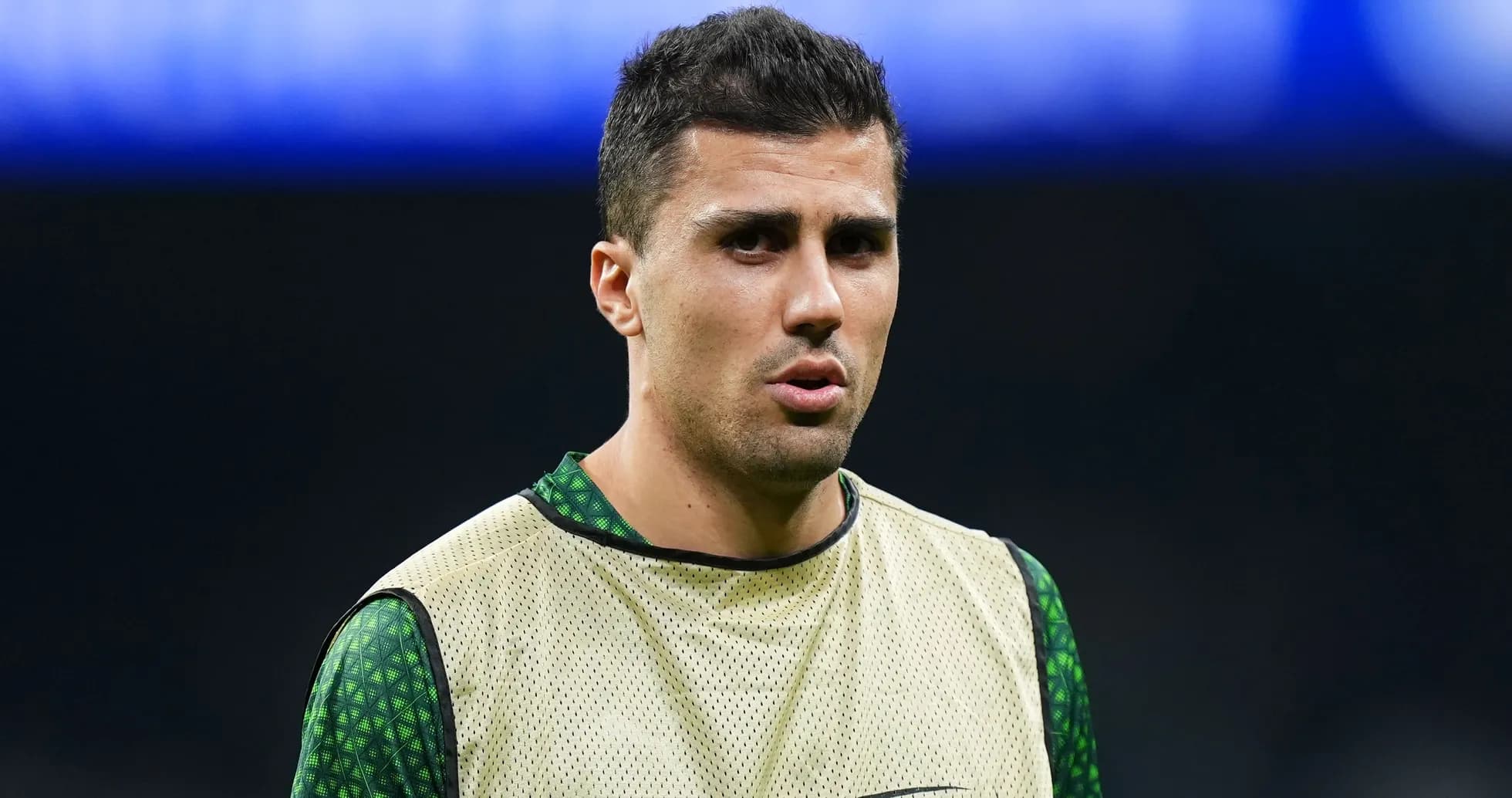
Barcelona’s Strategic Move: How Deco Influenced Rodri’s Decision
For weeks, the story seemed written. Rodri, the metronome of Manchester City and heartbeat of Spain’s midfield, was drifting steadily towards Real Madrid. The Bernabéu had the edge, the money, the momentum.
Then Barcelona shut the doors, killed the leaks, and flipped the script.
Deco’s Detour
The key moment came on Thursday, 30 July. On paper, it was nothing. Barcelona sporting director Deco was due to fly straight from a short break in Croatia to England, where Hansi Flick and his staff were already with the squad preparing for pre-season friendlies.
He didn’t.
Instead, Deco diverted back to Barcelona and stayed more than a day before joining the team. Inside the club, people noticed. You don’t leave Flick and the coaching staff alone with the squad in England unless something serious is happening.
Something was. Club executives had labelled Rodri’s potential signing “strategic” long before. Initial contacts with the player’s camp were already under way, but Deco’s sudden change of plan signalled the start of the real push. From that point, the operation moved into a different gear – and into total darkness.
No briefings. No friendly leaks. No negotiating through the media. Barcelona knew they were fighting Real Madrid for one of the best midfielders in the world, and any noise could tilt the balance back to the capital.
A Wedding, a Hotel, a Turning Point
Timing helped. Rodri happened to be in Catalonia at the end of July, attending a wedding on the Costa Brava. A social event turned into an opening.
Barcelona used it.
A discreet meeting was arranged at a luxury hotel. Deco and Rodri sat down for around two and a half hours, away from cameras, away from microphones. This wasn’t a casual chat. It was a full presentation of a project.
Deco laid out how Barcelona see their future midfield. Rodri at the heart of it. The role he would play, the responsibility, the leadership. He brought Flick’s technical vision into the room as well, explaining exactly why the German wanted the Spaniard as the anchor of his team for years to come.
Until then, Rodri had leaned towards Real Madrid. He had listened to their offer, spoken with them, and a move to the Bernabéu looked the natural next step. But he had not given a final yes.
That meeting changed the equation. The player’s stance shifted. Quietly, but clearly.
Flick on the Line
Deco’s intervention opened the door. Flick’s voice pushed it wider.
Barcelona judged that at this stage, the coach himself had to step in. Directly. No intermediaries, no filtered messages. Flick made several calls to Rodri, outlining in detail how he would build the team around him, the leadership he expected, the responsibility on and off the ball.
This wasn’t just about tactics. It was about status.
In a straight fight with Real Madrid, Barcelona needed to show not only that they wanted Rodri, but that they were prepared to hand him the keys to the midfield. Those conversations underlined that point. They made it clear: this was not just another signing. This was the spine of a new era.
The Hidden Operator
Behind the scenes, another figure helped stitch the whole operation together: Dani Codina, Barcelona’s head of player services.
His name never appeared in the early whispers about the deal, but his influence was significant. Codina knew Rodri from their time together at Manchester City, where they built a close relationship. That bond proved invaluable.
Codina helped arrange the secret hotel meeting between Deco and Rodri, but his work went beyond logistics. He acted as a bridge, reinforcing the trust between player and club, making sure Rodri felt the human side of the Catalan project, not just the sporting pitch.
For a player weighing up two giants of world football, that sense of comfort and familiarity matters. Codina helped Barcelona lean into it.
The Call That Changed the Summer
After the hotel summit, the operation stayed underground. No leaks, no daily updates. Just a steady flow of calls between Barcelona and Rodri’s representatives as the club tried to turn interest into commitment.
Days passed in total media silence.
Then, last Thursday, came the call Barcelona had been waiting for. Those close to Rodri informed the club that the project had convinced him and that negotiations had reached an advanced stage.
The pressure had told. The quiet work, the detour from Croatia, the hotel meeting on the Costa Brava, Flick’s insistence on the phone, Codina’s discreet presence – all of it had combined to drag the deal away from Madrid’s grasp.
Suddenly, Barcelona were no longer chasing. They were closing.
A Strategic Strike at Madrid
Only the final touches remain now. The structure is in place, the will of the player is clear, and Barcelona sense the finish line.
Inside the club, they see this not just as a high-profile signing, but as a cornerstone of their rebuild. Rodri brings experience, authority and a ready-made leadership profile to a midfield in need of exactly that.
For Real Madrid, the blow would be heavy. They were close, they had the advantage, and they were moving for one of the most prominent midfielders on the planet. To lose him not to the Premier League or another league, but to Barcelona, would sting.
For Barcelona, it would be more than a transfer win. It would be a statement that, even in a period of financial strain and sporting reconstruction, they can still walk into the same room as Madrid for the very best – and walk out with the player.
If this deal is completed, the next Clásico midfield battle will carry a very different edge.