
Australia vs USA: A Morning of Boos and Hope
The first roar of the morning in Sydney wasn’t for a Socceroos chance, a crunching tackle or even the teams walking out. It was a chorus of boos.
Every time USA manager Mauricio Pochettino’s face flashed up on the screens at Enmore’s Golden Barley, the jeers rolled around the packed bar. The military flyover before kick-off drew even more venom. This was supposed to be Australia’s morning, and the locals were in full voice.
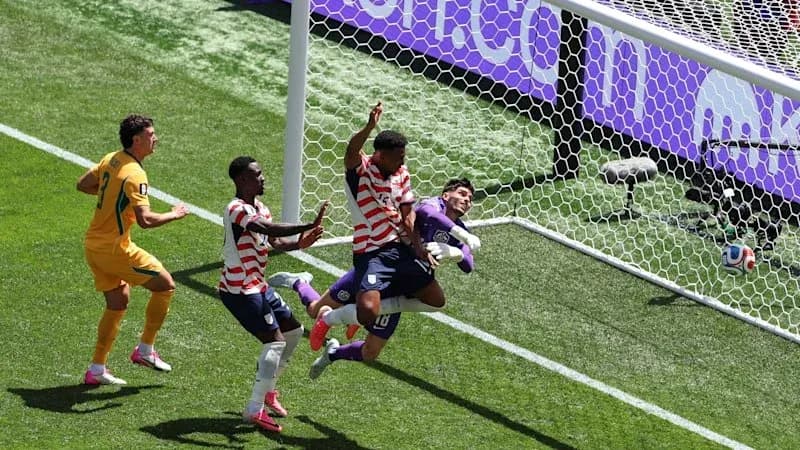
Then Cameron Burgess scored.
For the USA.
In an instant, the noise died. Hundreds of fans, green and gold draped over shoulders and bar stools, fell silent. You could hear the scrape of a chair, the hiss from the taps, the muttered curses under the breath. The early opener felt like a punch to the ribs, and as the half wore on, the blows kept coming.
The USA took control of the ball and never really let it go. Possession swung heavily in their favour, and with it, the mood in the room. When a contentious decision in the build-up paved the way for the Americans’ second goal, the frustration boiled over. On the terraces and in the bar, it was labelled controversial. On the scoreboard, it was brutal.
One punter had seen enough. He threatened to go home early, half turning towards the door before the ritual of football took over again: another sip, another sigh, another glance at the screen.
Half-time arrived like a mercy.
The mood shifted, not to optimism exactly, but to defiance. The bar flooded towards the counter for more pints, the pie warmer was raided, the bathroom queue snaked around tables. No one was actually leaving. Not yet. There were still 45 minutes to play and, crucially, still time for the man who has become the new obsession of Australian football fans: Nestory Irankunda.
“It’s not over yet,” came the call from another fan, half rallying cry, half superstition.
Wise words. Play on.
Tony Popovic turned to his bench. Last weekend’s scorers, Irankunda and Connor Metcalfe, were thrown into the fray alongside Jason Geria. Toure, Velupillay and Burgess made way. Mathew Leckie slid across to the left, Metcalfe took up residence on the right. Fresh legs, fresh hope, and a clear message: if Australia were going down, they were going down swinging.
On SBS, assistant coach Paul Okon cut through the noise with a stark assessment.
“Conceding so early wasn’t ideal,” he said. “It’s hot out there. We struggled a little bit in the heat. We’re not getting our line high enough to put pressure on the ball. But it’s difficult.
“What we don’t want to do is fall out of our structure and start chasing the ball. We need to stay compact as much as possible and obviously try and have enough legs that once we get the ball we can hurt them.
“We’ll see some fresh legs in the second half, a bit of speed to hurt them once we have the ball.”
Speed. Structure. Legs. It all sounded good on paper. The problem? On the pitch, the Americans had been superior everywhere.
Across the country, the story felt much the same.
In Melbourne, the faithful at Fed Square had started their day long before dawn. They queued from 2am, huddling in the dark, then under persistent rain, just to secure a spot in front of the big screen. By kick-off, the square was a sea of ponchos, umbrellas and green and gold, the kind of scene that has become part of the Socceroos’ identity.
The weather didn’t help. The scoreline helped even less. Yet the party refused to die.
Flares crackled, a beach ball bobbed across the masses, and the songs rolled around the square. One fan, Mel, turned up in a Socceroos jersey and a costume that made it look like he was being given a piggyback by Donald Trump. Two decades he’s been coming to Fed Square for mornings like this. Two decades of alarms set at ridiculous hours, of coffee and cold air and shared nerves.
When asked who would win, he didn’t blink: “Aussies of course.”
Nearby, Madison Cambora was living the experience for the first time. First middle-of-the-night alarm, first Fed Square pilgrimage. Even with the USA on top, she insisted the trip had been worth it for the atmosphere alone.
“I hope they come back from this,” she said. “I’m hoping all good things, but it’s not looking good.”
On the evidence, she was right to worry.
The USA weren’t just ahead; they were dominant. Physically, they imposed themselves in every duel. Psychologically, they looked calm, assured, almost comfortable in the hostility. Technically, they were cleaner, sharper, quicker. Every 50-50 seemed to break their way. Every Australian touch seemed to arrive with an American shadow attached.
Australia, by contrast, looked rushed. Passes went astray. Touches bounced off shins. The heat, the pressure, the occasion – it all added up. Mistakes crept in and stayed there.
From the sideline, from the stands, from the bars in Sydney and the square in Melbourne, the same conclusion hung in the air: this was turning into a long, hard watch.
For Popovic, the tactical dilemma was obvious. His side had to attack after the break. They needed a goal to drag themselves back into the contest, and another to make it a real fight. But pushing forward would leave the spaces the USA craved. The Americans had nothing to fear and everything to counter into.
At a minimum, Irankunda had to start the second half. Not as a token gesture, but as a genuine threat, a jolt of electricity to make the USA think twice before pouring bodies forward. Right now, they had it all their own way. Right now, they had nothing to worry about.
The second half would decide whether this was just another brave Australian tale of fans in the rain and hope in the heat – or the first real sign that this Socceroos side can stand up to a team that, so far, has looked a class above.



