
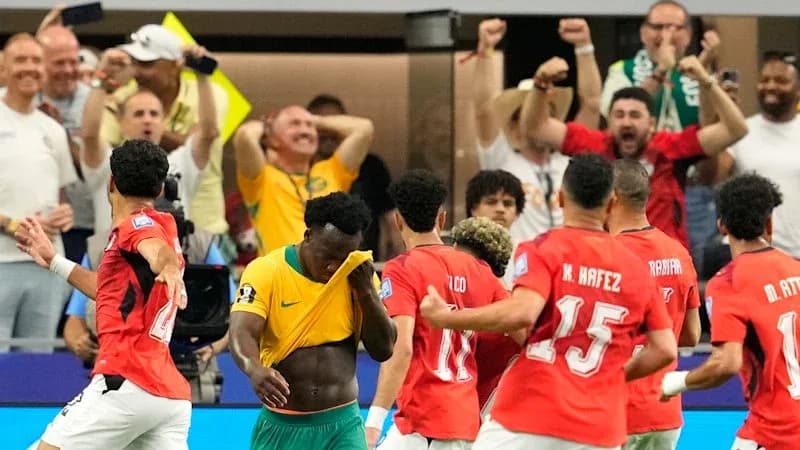
Australia's Struggle Against Egypt: A Game of Inches
Australia went into the break a goal down and with a sense of injustice simmering just below the surface.
The Socceroos trailed 1-0 to Egypt after conceding from a set piece they would normally swat away in their sleep. The defending was uncharacteristically loose, the line slow to step, and a Pharaohs attacker appeared to be played onside. One lapse, one moment of hesitation, and Australia were punished.
Inside the dressing room, the message was blunt. They felt they should have had more protection from the referee – a clear advantage played but no card shown afterwards – yet there was no time to wallow.
“Disappointing, but we’ve got to move on and be better in the second half,” came the verdict. The irritation at the officiating was real; the focus on fixing their own problems even sharper.
Egypt strike, Australia respond
Egypt’s opener cut against the grain of how Australia like to see themselves. Set pieces are usually a point of pride, a platform of strength. Here, they became a soft underbelly.
“We’re disappointed we gave away a cheap goal from a set piece – normally we pride ourselves on that. We were a little bit late getting out, maybe kept him on side,” was the honest assessment.
From there, the pattern of the half took shape. Egypt had something to protect and promptly settled into it. They sat in, broke up play, and leaned heavily on the dark arts. Tackles were fierce, contact exaggerated, every nudge turned into an invitation for the referee’s whistle. It worked. Australia were forced to chase, to run, to fight for every metre.
Yet the side creating the better chances wore green and gold.
Once Australia stitched together five, six, seven passes, the picture changed. Pockets of space opened. The midfield began to breathe. Egypt’s compact block suddenly had seams that could be picked. The belief inside the Australian camp was clear: keep the ball better, and the opportunities will come.
They did.
Aziz Behich sparked one of the half’s best moves, driving at Mohamed Hany deep in Egypt’s defensive third. His surge ended with the ball out of play, but from the resulting long throw by Alessandro Circati, chaos followed. Harry Souttar and Jackson Irvine challenged, the ball broke, and Josh Herrington nodded it into the path of Nestory Irankunda. The teenager recycled it back to Behich, who unleashed a low strike that forced the goalkeeper into a sharp save at his right post.
Moments later, Irankunda was again on the scene, almost turning half-chances into something more. Egypt were wobbling, if only briefly.
Controversy and a costly injury
The tension spiked again inside the Egyptian box. Australia worked the ball into a crowded area where an Australian attacker squeezed between two defenders and managed a weak header on goal. One of those defenders, Ramy Rabia, appeared to have the ball brush his arm. It looked incidental, more ball-to-arm than anything deliberate, but it was enough for Australian players to appeal.
Nestor, gesturing to his own arm, urged the officials to “have a look at that one.” At the back post, Cristian Volpato was hauled down by Mahmoud Hamdy “El-Wensh” or his defensive partner Havez – a clear drag that went unpunished. The referee allowed play to continue on both incidents. No penalty, no review, no respite for Australia.
As those calls went against them, another blow landed. Jordan Bos, one of Australia’s most dynamic outlets, went down and stayed down. For long moments he lay on the turf, before finally being helped to his feet and then carried off by two trainers, unable to put weight on his left foot. It looked bad. The sort of injury that changes a match, and perhaps more than that.
Losing Bos stripped Australia of a key runner and creator on the flank. It also added to the sense that the half was tilting away from them in ways that had little to do with tactics.
Salah subdued, but dangerous
Through it all, Mohamed Salah hovered on the edges of the contest. The Egyptian star has not yet produced his full repertoire, perhaps mindful of the hamstring tightness that has followed him into this window, but his threat never disappeared.
He drifted off the shoulder of Souttar, testing the big defender’s turning circle, and once looked ready to burst clear before Herrington slid across to shut the door. When Egypt won a free kick after Ashour drew a foul under an errant Bos arm, Salah stood over the dead ball. Instead of going for goal, he rolled it square to Attia, whose long-range drive was crisp and powerful. Australia, though, had the back post covered and survived.
Egypt’s approach was clear: make it physical, make it bitty, slow everything down. Hydration breaks, time-wasting, rolling around after contact – every second chewed off the clock was another small victory. Given the flow of chances, they were almost compliments to Australia’s threat.
Which is why the five minutes of added time felt so paltry. A three-minute drinks break, a goal, repeated stoppages, the Bos injury, and yet only five minutes signalled. For a side chasing the game, it bordered on farcical.
A game still there for Australia
At 0-1 down, the task remained steep but far from impossible. Egypt’s lead came from a single moment. Australia had created enough to know they could carve out more.
They were being made to work, to run, to suffer. But the game was there. Get the ball down. String the passes together. Hit those pockets again.
The chances would come.
The question, as the players walked back out, was brutally simple: could the Socceroos finally take them?



