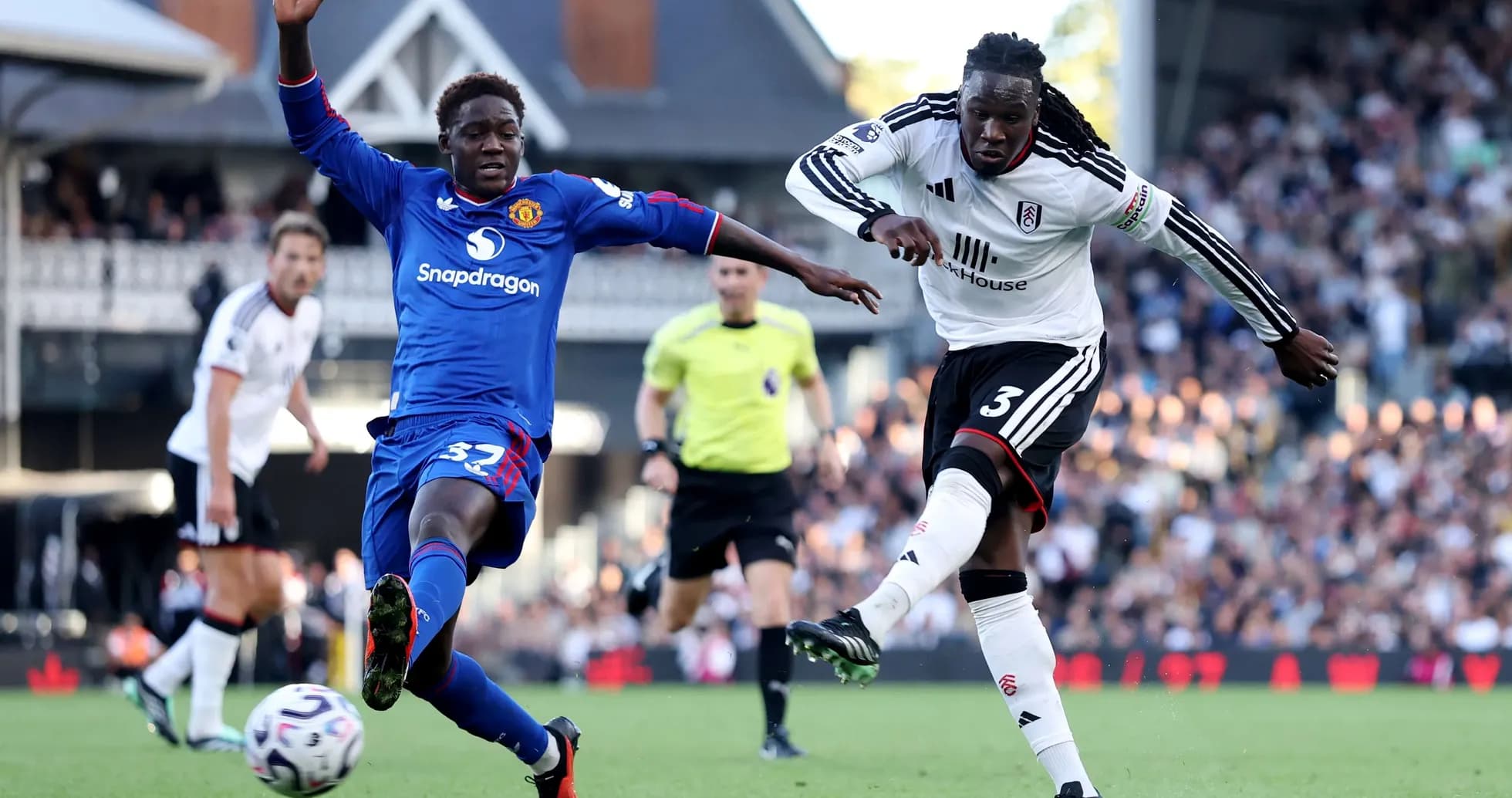
Aston Villa vs Liverpool: High-Stakes Premier League Clash
Under the lights of Villa Park in Birmingham on 15 May 2026, Aston Villa and Liverpool walk out knowing there is no safety net left in a tight Premier League race. Both sides are locked on 59 points, both officially sitting in the “Promotion - Champions League (League phase)” places, and both understand this penultimate-round clash could define whether their campaigns end in celebration or regret. With key names like O. Watkins and M. Rogers for Aston Villa, and creative stars such as Mohamed Salah and D. Szoboszlai for Liverpool, the stage is set for a high‑stakes night where every challenge and every chance could tilt the balance of Europe-bound ambitions.
Season Context
Aston Villa arrive in this fixture as the team ranked 5th with 59 points and a narrow positive goal difference of +4. They have taken those points from 36 matches, scoring 50 goals and conceding 46, a profile of a side that can hurt opponents but also be exposed at times (50 goals scored, 46 conceded). The description attached to their position confirms they are currently in the “Promotion - Champions League (League phase)” zone, so this match is about defending that hard‑earned status as much as chasing anything higher.
Liverpool stand just ahead in 4th place, also on 59 points but with a healthier goal difference of +12. Over 36 league games they have scored 60 goals and conceded 48, underlining a more explosive attack (60 goals scored) but one that still leaves openings at the back (48 conceded). Like Villa, their rank comes with the “Promotion - Champions League (League phase)” tag, and with only two matches left they know that avoiding defeat away from home could be enough to keep them in the driving seat for a Champions League berth.
Form & Momentum
Aston Villa’s recent form string reads “DLLWD”, a run that hints at inconsistency (one win, two losses and two draws in that sequence). Over the full league campaign, their 50 goals from 36 games translate to roughly 1.4 goals per match in attack (50 goals, 36 played), while 46 conceded in the same span gives a similar defensive average of about 1.3 goals against per game (46 conceded, 36 played). That balance makes them dangerous going forward but not fully secure at the back (goal difference +4).
Liverpool come in with the form line “DLWWW”, a pattern that suggests they have found a strong upturn recently (three wins in that five‑game sequence). Their season numbers underline that momentum: 60 goals scored in 36 games means around 1.7 per match in attack (60 goals, 36 played), while 48 conceded leaves them averaging about 1.3 goals against per game (48 conceded, 36 played). That combination of higher scoring output and similar defensive record to Villa (goal difference +12) gives them a slight statistical edge.
Head-to-Head Patterns
Recent meetings between these two have consistently produced high‑intensity contests. On 1 November 2025 at Anfield, Liverpool beat Aston Villa 2-0 in the Premier League (Premier League, season 2025, November 2025), underlining their ability to control the fixture on Merseyside. Earlier that same calendar year, on 19 February 2025 at Villa Park, the sides played out a 2-2 draw in the Premier League (Premier League, season 2024, February 2025), a reminder that Villa can trade blows with Liverpool on home soil. Going back to 13 May 2024, also at Villa Park, they shared a dramatic 3-3 draw in the Premier League (Premier League, season 2023, May 2024), another example of how open and attacking this matchup can become when the game stretches.
Tactical Preview
Aston Villa’s tactical identity this year has been built around a 4-2-3-1 base, used in 32 league matches, with occasional switches to 4-4-2 and 4-2-2-2. That primary shape suits a side that wants a double pivot to protect a defence that has allowed 46 goals in 36 games, while freeing creative and attacking players between the lines. O. Watkins, listed as an attacker and having scored 12 league goals, is the natural reference point up front, supported by the all‑action M. Rogers, a midfielder with 9 goals and 5 assists who has started all 36 league matches (36 appearances, 36 lineups). The absence of Alysson and B. Kamara through injury, plus the questionable status of A. Onana, may thin Villa’s options in attack and midfield, potentially forcing them to lean even more heavily on Douglas Luiz and J. McGinn in the engine room.
Out of possession, Villa’s 4-2-3-1 can drop into a compact mid‑block, but the season’s 46 goals conceded from 36 games show that they can still be opened up when transitions are not well controlled. Their home record in the standings (28 goals scored, 20 conceded) suggests they are more assertive at Villa Park, and the crowd may push them to press higher than usual. However, with Liverpool’s counter‑threat, Villa must balance aggression with discipline, particularly given that key depth pieces in midfield are missing.
Liverpool mirror Villa structurally, also favouring a 4-2-3-1 formation in 32 league games, with occasional moves to 4-2-2-2, 4-3-3 and 4-3-1-2. Their attacking numbers from the standings (60 goals in 36 games) point to a side that builds sustained pressure, often through technically strong midfielders like D. Szoboszlai, who combines 6 goals, 5 assists and high passing volume (2090 passes, 68 key passes, 87% accuracy). Mohamed Salah, listed as an attacker and one of the league’s leading creators with 7 goals and 6 assists, would normally be central to their right‑sided threat, but he is ruled out for this fixture with a thigh injury, a significant blow to their cutting edge.
In Salah’s absence, Liverpool are likely to lean more on C. Gakpo and F. Chiesa in the attacking line, with H. Ekitike’s 11 goals and 4 assists marking him as a major penalty‑box presence. The double pivot in front of the back four, often featuring A. Mac Allister and W. Endo when fit, helps shield a defence that has conceded 48 league goals, a figure that indicates vulnerability when exposed in transition. With Alisson Becker missing through muscle injury and C. Bradley, H. Ekitike, W. Endo and G. Leoni also out, plus I. Konaté and F. Wirtz questionable, Liverpool’s depth will be tested, especially in defensive rotations and late‑game control.
Tactically, this shapes up as a clash between two similar systems where Liverpool’s slightly stronger attack (60 goals) meets Villa’s strong home platform (28 home goals scored, 20 conceded), and where the battle between creative midfielders like M. Rogers and D. Szoboszlai could decide which side controls the tempo. The prediction model’s total comparison tilt towards Liverpool (64.0% to Aston Villa’s 36.0%) reflects their superior underlying numbers and recent form, but the absences on both sides add volatility to what is already a finely balanced contest.
Statistical Snapshot
- Competition: Premier League, season 2025 — 15 May 2026.
- Venue: Villa Park, Birmingham.
- Prediction: Win or draw — Double chance : draw or Liverpool.
- Win Probabilities: Home 10% / Draw 45% / Away 45%.
- Model: Aston Villa 36.0% — Liverpool 64.0%.
Betting Verdict
The prediction model leans towards Liverpool avoiding defeat, and the advice “Double chance : draw or Liverpool” aligns with both their stronger recent form (“DLWWW”) and their superior attacking record (60 league goals). With most bookmakers pricing the away win around 2.20–2.33 and Aston Villa at roughly 2.85–3.02, the market also reflects Liverpool’s edge despite significant injuries. Given Villa’s mixed recent run (“DLLWD”) and the head‑to‑head pattern of Liverpool winning 2-0 at Anfield in November 2025 and repeatedly causing problems for Villa, backing Liverpool on the double‑chance line looks the more robust position. For those seeking a bit more risk, a cautious lean towards the away win at roughly 2.20–2.31 can be justified by Liverpool’s higher goal output and the model’s 64.0% total edge in their favour.