Aston Villa's Early Season Struggles Against Arsenal
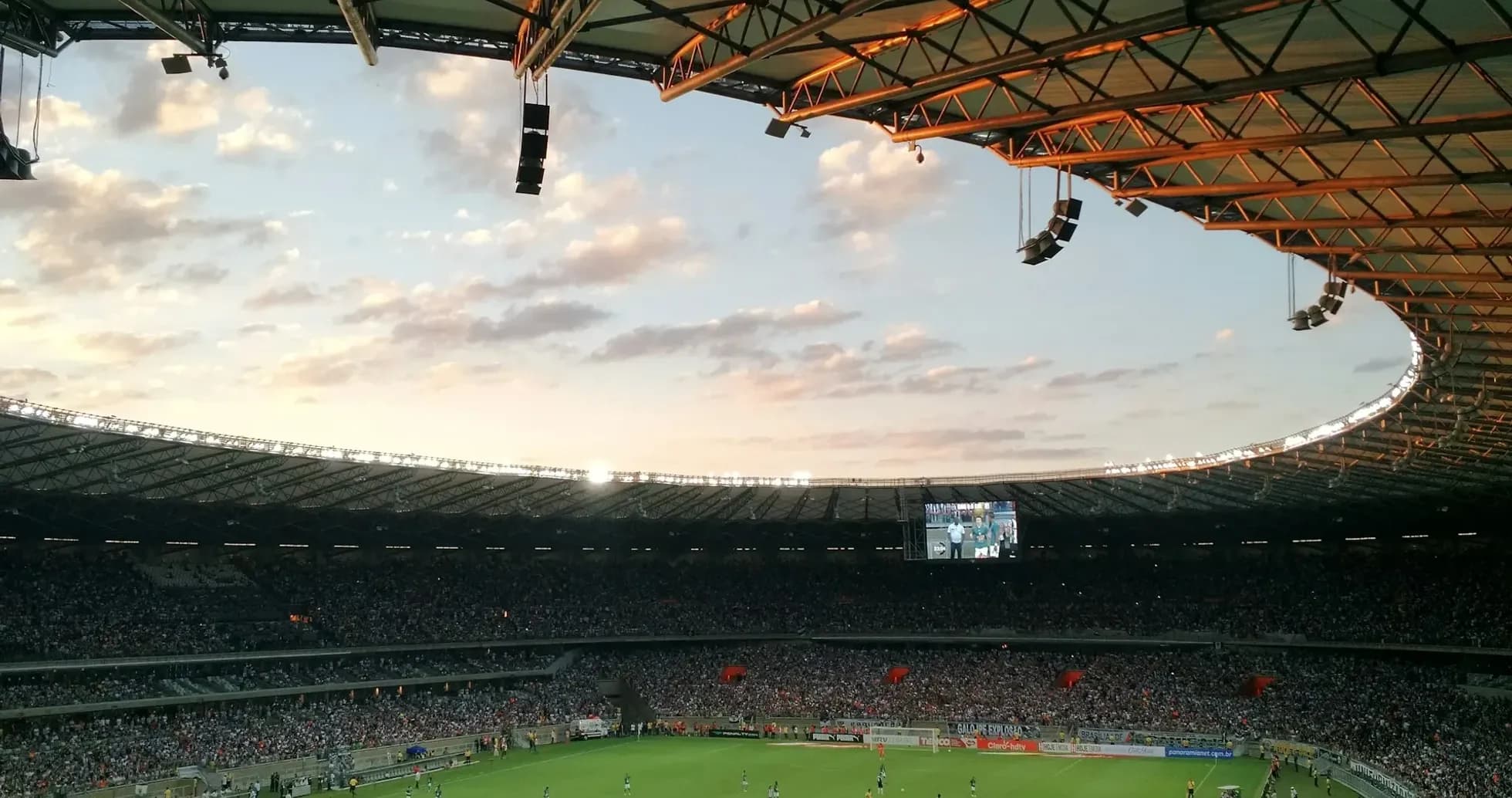
The lights at Villa Park had barely settled when the reality of Aston Villa’s situation crystallised on the scoreboard: a 0–1 home defeat to Arsenal, and with it a stark early-season contrast in direction. Following this result in the Premier League’s Regular Season - 2, Villa sit 19th with 0 points and a goal difference of -5, while Arsenal rise into the slipstream of the summit, 2nd with 6 points and a goal difference of 4. Two games into the campaign, their seasonal identities are already diverging.
For Unai Emery, the shape is familiar but the substance is fragile. Villa lined up in a 4-2-3-1, mirroring Arsenal’s structure but not their cohesion. Across the season so far, Villa have played 2 league matches in this shape, losing both, failing to score in total and conceding 5 in total. At home they have played 1 league game, losing it 0–1; on their travels they have played 1, losing 4–0. The numbers sketch a side that can organise itself on paper but cannot yet impose itself on the pitch.
The absences explain part of the void. L. Bailey’s muscle injury removes a direct runner and natural outlet on the break. Joao Gomes, suspended after a red card, strips the double pivot of bite and ball-winning. B. Madjo, J. Manzambi and A. Onana are all sidelined, further thinning Villa’s options in depth and athleticism. Emery’s solution has been to lean into technical control: B. Kamara and R. Barkley as the holding pair, with J. McGinn, E. Buendia and G. Hemmings supporting N. Jackson.
Yet heading into this game, Villa’s discipline had already frayed. In total this campaign they have received yellow cards heavily clustered late: 33.33% of their bookings arrive between 76–90 minutes, and another 33.33% between 91–105. They have also already seen a red card in the 31–45 window. That pattern – a team chasing, stretched and emotionally on edge – feeds directly into their defensive record: they concede an average of 2.5 goals in total per match, with 1.0 at home and 4.0 away, and have kept 0 clean sheets in total. The tactical story is clear: when Villa have to open up, they unravel.
Within that, McGinn is both heartbeat and hazard. Across the league season he has already picked up 2 yellow cards, ranking among the division’s top carded players. His profile – 23 duels contested with 10 won, 6 fouls drawn and 4 committed – speaks of a midfielder constantly on the edge of the contest. He is the emotional barometer of Emery’s press; when he times it well, Villa can compress space between the lines. When he is late, Villa’s shape fractures and the back four are exposed.
Behind him, the new-look defence of M. Cash, V. Lindelof, P. Torres and I. Maatsen is still an idea more than a settled unit. Villa’s biggest defeats so far – 0–1 at home and 4–0 away – underline that they are conceding without the compensation of counter-attacking threat. In total this campaign they have failed to score in 2 matches out of 2, at home and away alike. N. Jackson’s solitary presence up front is starved of service; Buendia drifts into pockets but with no penalty-box partner, Arsenal could focus on compressing the half-spaces rather than worrying about runs in behind.
Across the halfway line, Arsenal arrive as a side already playing with the certainty of a contender. They too are wedded to a 4-2-3-1 – used in 2 league games so far – but with a very different energy. In total this campaign they have scored 4 goals and conceded 0; at home they have scored 3 and conceded 0, and on their travels they have scored 1 and conceded 0. Two clean sheets in 2 league matches, one at home and one away, have given Mikel Arteta the platform to be aggressive with his front four.
The absences are significant but not fatal. Gabriel Jesus and G. Martinelli are both missing due to transfer negotiations, while W. Saliba and J. Timber are sidelined with back and ankle injuries respectively. That forces adaptation: C. Mosquera partners Gabriel at centre-back, and R. Calafiori steps in at left-back. Yet Calafiori has not merely filled a gap – he has become one of the league’s early creative leaders. In total this campaign he has 2 assists in 2 appearances, with 45 passes completed and 2 key passes, winning 7 of 10 duels. From deep on the left, he is a secondary playmaker, stepping into midfield to overload and then releasing runners.
Ahead of him, B. Saka is the purest expression of Arsenal’s attacking edge. In total this campaign he has 2 league goals from 3 shots (2 on target), with 80 passes completed, 2 key passes and 7 dribbles attempted, winning 15 of 23 duels. He is not simply a winger; he is a pressure point. His duel volume and success show how often Arsenal funnel play through him, trusting his ability to win one-on-ones and draw fouls high up the pitch. Against Villa’s right side of Cash and McGinn, Saka’s insistence on attacking the channel threatens to draw more of those late-game yellow cards that already plague Emery’s side.
The engine of it all is the axis of D. Rice and M. Odegaard. Rice anchors the structure, allowing Arsenal to keep a high line and compress play, safe in the knowledge that, in total this campaign, they have yet to concede a goal. Odegaard, stationed between the lines, knits together Saka, C. Tzolis and K. Havertz. Tzolis himself is quietly influential: in total this campaign he has produced 46 passes with 4 key passes, 3 shots (2 on target) and drawn 3 fouls, even as he sits on 1 yellow card. His tendency to drift inside from the left complements Calafiori’s overlapping surges, creating a layered threat down Arsenal’s left against Villa’s Cash–Lindelof channel.
Defensively, Arsenal’s discipline has been controlled. In total this campaign their yellow cards are concentrated early: 50.00% between 16–30 minutes and 50.00% between 31–45, with no reds and no bookings in the late stages. That speaks to a side that presses aggressively early, then manages the game from a position of control once in front. With no penalties taken or missed in total, their attacking output has come entirely from open play – a sign of structured chance creation rather than reliance on set-piece fortune.
The tactical intersection that defines this matchup lies on the flanks and in the final quarter-hour. Villa’s card profile shows a late-game surge in bookings, precisely when Arsenal, with their control and depth from the bench – options like P. Hincapie, M. Zubimendi, Bruno Guimaraes, M. Merino, E. Eze, V. Gyökeres and N. Madueke – can refresh the press and stretch a tiring back line. If Villa are again forced to chase, the risk of a decisive mistake or dismissal grows.
Statistically and structurally, the prognosis is clear. Arsenal’s perfect defensive record in total, their balanced goal spread between home and away, and the creative form of Saka and Calafiori position them as the hunters in this fixture. Villa, goalless in total and porous at the back, must somehow turn their 4-2-3-1 from a diagram into a living, breathing press that can unsettle Arsenal’s rhythm.
Until they do, nights like this at Villa Park will continue to feel less like opportunities and more like examinations – and Arsenal, with their current solidity and sharpness, look fully equipped to set and pass the test.