
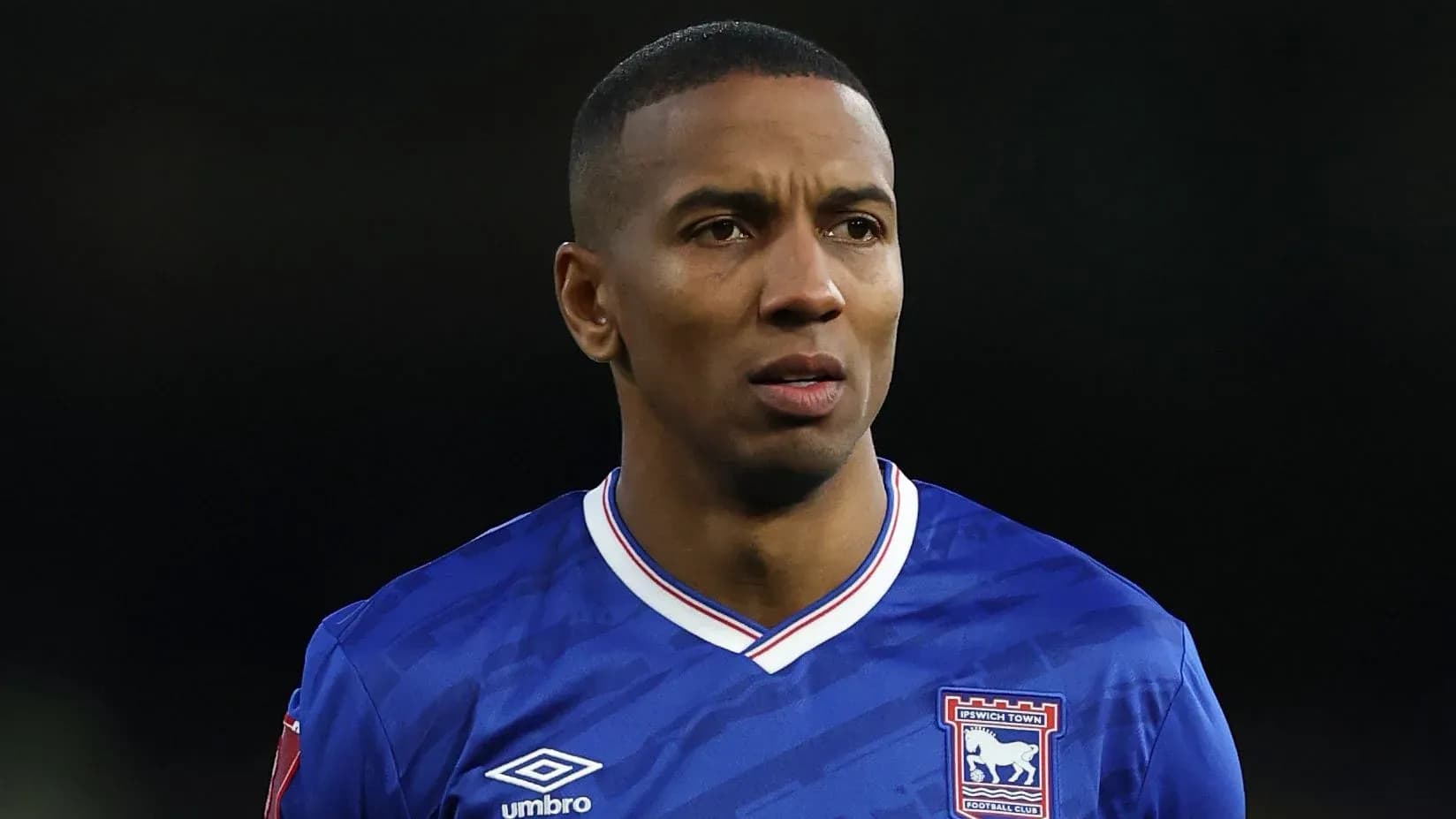
Ashley Young's Journey: From Star Player to Hip Replacement
Ashley Young spent 23 years outrunning defenders, doubts and time itself. In the end, it was his own body that finally caught up with him.
The former Manchester United and England stalwart has revealed he now needs a hip replacement, a brutal reality check arriving just weeks after he officially called time on his playing career at 41. His last act as a professional was at Ipswich Town, helping to drag the Tractor Boys back into the Premier League for the first time in over two decades. The fairytale promotion came with a cost he could no longer ignore.
Speaking on the High Performance Podcast, Young laid out the moment the alarm bells started ringing. A fall on his hip in November led to an injection – and a line in the sand he’d always promised himself he would never cross.
“I went down on my hip in November and had an injection,” he said. “I have always said to myself: ‘If my body is saying you need injections, there is a problem, you need to think about retiring.’”
The diagnosis that followed was stark. The specialist told him he would need a hip replacement in about 10 years. That timeline quickly felt optimistic.
By January, Young was due another injection to get him through to the end of the season. He pushed back, not against the pain, but against the idea of letting his team down.
“I got to January and was due to have another injection which would have got me through to the end of the season,” he explained. “As I was saying to the specialist, ‘I know it is painful, but I want to make sure I do everything I can possibly do to help the team.’”
Then came the moment everything changed.
About a week before the scheduled injection, during what should have been a routine training session at Ipswich, Young went down again. This time, he knew. This wasn’t just wear and tear. This was something breaking.
“About a week before I am about to have the injection, I go down on it in training and I am like ‘this is worse, I know it is a lot worse’,” he recalled.
The numbers underline the struggle. Young still managed 15 appearances across all competitions as Ipswich surged to second in the Championship and clinched promotion, but behind those minutes lay a battle few saw. The pain grew so severe he could not train for two to three months. For a player who built a career on work rate and relentlessness, being sidelined in the week and patched up for matchdays cut deep.
“From January to the end of the season, I literally had two or three months where I couldn't train it was that painful,” he said. “I saw the specialist again and said ‘I'm not going out like this.’”
That defiance defined his career. It resurfaced in the consultation room. Young refused to accept a verdict that his playing days were over.
“I asked him ‘are you telling me I can't play football again, you can say it if you want,’” he remembered. “Trust me if I get an opportunity to be back on the pitch, I'll be back on the pitch.”
He never did get that final cameo on the last day, the romantic few minutes that would have tied a bow on a remarkable journey from Watford winger to title winner at Old Trafford and seasoned leader at clubs across Europe. Yet he found another role, one that mattered just as much to him.
While he could not influence the final match from the turf, he did it in the dressing room and on the training ground. The veteran became a presence, a standard-setter, a voice. And when his body allowed, he went back to work.
“The last two months of the season I was training every day and he was like ‘it is not possible, you shouldn't be training’,” Young revealed. The specialist’s disbelief only underlined the scale of what he was putting himself through.
Ipswich’s promotion on the final day delivered the ending he craved, even without a last run-out in front of the fans.
“It would have been incredible to come onto the pitch for the last game of the season,” he admitted. “But for me to train like I did that week and for us to be promoted on the last day of the season, it was fitting.”
A hip replacement now looms for a player who once seemed indestructible, a reminder that even the most durable careers have a final whistle. Young leaves the pitch not in full flight down the wing, but on his own terms: still arguing with specialists, still demanding more of himself, still refusing to accept that the game has had the last word.



