AS Roma vs Inter: Unbeaten Rivals Share Points in Serie A Showdown
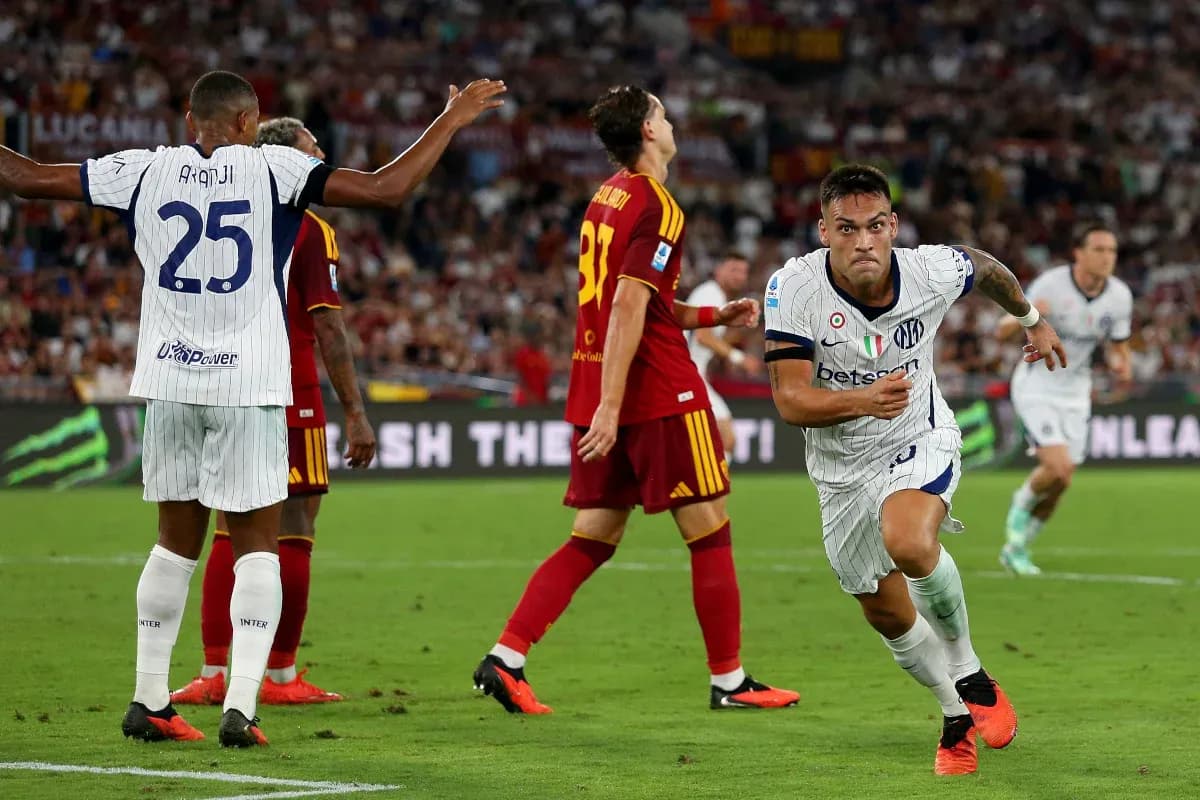
Under the late-afternoon light of the Stadio Olimpico, two unbeaten machines met and refused to break. AS Roma and Inter arrived as the early pace-setters in Serie A’s Regular Season - 5, and a 2–2 draw in Rome felt less like dropped points than a statement of parity between two fully-formed contenders.
Heading into this game, Roma sat 1st with 13 points from 5 matches, an imposing goal difference of 11 built on 14 goals scored and only 3 conceded overall. Inter trailed only on goal difference: also on 13 points from 5, with 15 goals scored and 8 conceded for a goal difference of 7. It was a meeting of the league’s sharpest attack on their travels – Inter averaging 1.5 away goals – against the division’s most complete unit, with Roma scoring 2.8 goals per game overall while conceding just 0.6.
I. The Big Picture – Two Systems, One Storyline
Piero Gasperini Gian set Roma up in a 3-4-2-1, a shape that has become their base this season, used in 4 of their 5 league outings. M. Svilar anchored a back three of G. Mancini, L. Balerdi and Mario Hermoso, with the wing and half-space lanes patrolled by Wesley Franca and N. Molina. In front of them, B. Cristante and M. Kone formed a double pivot, while P. Dybala and M. Soule floated between the lines behind central spearhead D. Malen.
Cristian Chivu mirrored the back three but altered the structure, deploying Inter in a 3-1-4-2. J. Martinez started in goal behind Y. Bisseck, M. Akanji and A. Bastoni. P. Zielinski operated as the deepest midfielder, with a high-energy band of four – A. Diouf, N. Barella, C. Jones and F. Dimarco – stretching Roma laterally. Up front, L. Martinez and M. Thuram formed a classic two-man strike partnership.
Roma’s seasonal DNA at home had been clear: 8 goals scored and 3 conceded across 3 home games, averaging 2.7 scored and 1.0 conceded at the Olimpico. Inter’s away profile was more volatile: 3 goals scored and 2 conceded in 2 away matches, for 1.5 scored and 1.0 conceded on their travels. The draw preserved both teams’ unbeaten records; following this result, their early-season trajectories still look like parallel climbs toward a title race.
II. Tactical Voids – Absences and Discipline
Both sides arrived with key absentees that shaped their tactical choices. Roma were without M. Bah, ruled out with a knee injury. While not a headline name, his absence reduced rotation options in wide and midfield zones, making the selection of Wesley Franca and Molina almost obligatory and increasing the physical burden on Cristante and Kone.
Inter’s missing list was more high-profile. H. Calhanoglu, the usual metronome and set-piece specialist, was sidelined with a muscle injury, depriving Chivu of his primary deep playmaker and long-range threat. D. Spence and J. Stones were also out through injury, thinning Inter’s defensive and wing-back depth. That context made the reliance on Akanji, Bisseck and Bastoni even heavier, with little margin for in-game structural reshaping at the back.
Disciplinary trends hinted at where the game might fray. Roma’s yellow cards this season had clustered late: 37.50% between 61–75 minutes and 25.00% from 76–90, signalling a side that defends aggressively to protect leads. Inter, by contrast, were most combustible just after the interval, with 50.00% of their yellows between 46–60 minutes. In a match that swung from Roma control to Inter resurgence, those patterns were always likely to intersect around the hour mark, when tired legs meet tactical risk.
III. Key Matchups – Hunter vs Shield, Engine Room vs Engine Room
The headline duel was always going to be D. Malen against Inter’s back three. Malen came into the fixture as Serie A’s top scorer with 6 goals from 5 appearances, converting 16 shots (10 on target) through explosive movement and sharp finishing. His presence at the tip of Roma’s 3-4-2-1 stretched Inter vertically, forcing Akanji and his partners to defend space rather than just the box.
Akanji himself arrived as one of the league’s most active defenders: 9 tackles, 2 blocked shots and 8 interceptions in 5 games, with 309 passes completed at a remarkable 94% accuracy. He is both shield and distributor, and his duel with Malen – supported by the covering of Bastoni and Bisseck – was central to Inter’s ability to hold Roma’s early surge and then build from the back.
Behind Malen, the creative axis of Dybala and Soule was designed to exploit the pockets around P. Zielinski. Dybala entered as the league’s leading creator with 4 assists and 23 key passes, dictating Roma’s tempo between the lines. Soule added incision: 2 goals, 1 assist, 12 shots (8 on target) and 13 dribble attempts with 8 successful. Their combined threat forced Inter’s midfield line – Diouf, Barella and Jones – to compress more than they would prefer, occasionally pinning Dimarco deeper than ideal.
For Inter, the “Hunter” was L. Martinez, with 4 goals from 4 appearances and 16 shots. His chemistry with Thuram – 2 goals and 2 assists – underpinned Inter’s 3.0 goals per game overall. Against a Roma defence that had conceded only 3 goals in total this campaign, the question was whether Lautaro’s movement across the front line could pull Hermoso and Mancini out of their structure.
In that sense, Hermoso was Roma’s defensive fulcrum. With 13 tackles, 2 blocked shots and 16 interceptions across the season, plus 304 passes at 87% accuracy, he has been both stopper and first builder. His duels with Thuram, who had won 19 of his 32 league duels and drawn 6 fouls, were a physical and positional chess match.
In midfield, the “Engine Room” battle pitched Cristante and Kone against Barella and Diouf. Diouf’s 3 assists and 13 key passes, coupled with 91% passing accuracy, made him Inter’s vertical conduit, while Barella’s energy and two-way work were vital in contesting second balls against Roma’s double pivot. Control of this zone dictated who could release their wing-backs – Wesley Franca and Molina for Roma, Dimarco and Diouf stepping wide for Inter – and thereby who could pin the other’s back three.
IV. Statistical Prognosis – Title Credentials Intact
Across the season so far, Roma’s numbers tell of a side built on balance: 4 wins and 1 draw in 5, with 3 clean sheets overall and no failures to score. Inter’s profile is more front-loaded: 4 wins and 1 draw, 15 goals scored but 8 conceded, and just 1 clean sheet. Roma’s defensive solidity – 0.6 goals conceded per game overall, with 0.0 on their travels and 1.0 at home – contrasts with Inter’s more open approach, conceding 1.6 per game overall.
In a notional xG landscape, Roma’s 2.8 goals scored per match overall versus Inter’s 1.6 conceded suggests the hosts usually generate enough volume and quality to win most games, especially at the Olimpico. Inter’s 3.0 goals scored per game overall against Roma’s 0.6 conceded points to a clash where something had to give. That it ended 2–2, with Roma racing to a 2–0 half-time lead before Inter hauled themselves level, feels like the statistical midpoint of two powerful trends colliding.
Penalties offered no distortion: neither side had taken a spot-kick in the league campaign, and neither had missed one. This was a game decided in open play patterns, not set-piece randomness.
Following this result, both squads emerge with their identities reinforced rather than questioned. Roma proved they can blitz even the strongest visitors at home, while Inter showed they can absorb a storm and still find goals against the league’s tightest defence. The tactical preview for the rest of their seasons is clear: these are two Champions League-level sides whose next meeting may not just be a top-of-the-table clash, but a rehearsal for where the Scudetto will ultimately land.