Arne Slot's Warning Ahead of PSG Clash
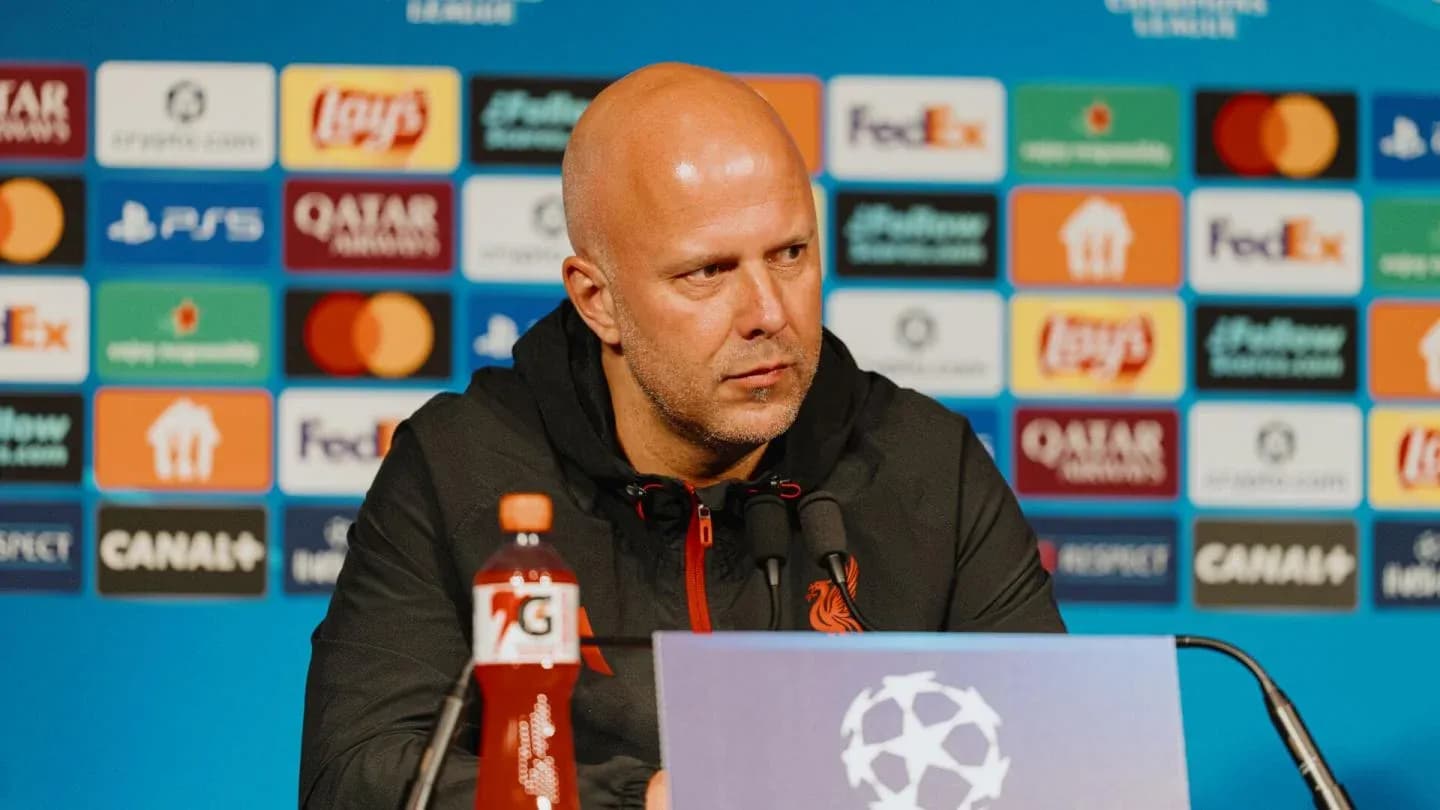
Arne Slot stepped off the Liverpool coach at Parc des Princes carrying more than a suitcase. He brought with him the bruises of a 4-0 defeat at Manchester City, the memory of last season’s escape in this stadium, and a very clear message for his players.
If they repeat the 20-minute collapse from the Etihad, Paris Saint-Germain will bury them.
This is a rematch of last season’s Round of 16 first leg, a night Liverpool somehow stole 1-0 thanks to Alisson Becker’s heroics. Slot knows that performance flattered the scoreline. He also knows there will be no hiding place this time.
“Those 20 minutes we had at City – if we have them tomorrow evening here, we will again concede four goals,” he said. No sugar-coating. No excuses. Just a blunt assessment of a team that has spent the season veering between high-level control and sudden, ruinous lapses.
City scars and a 35-minute blueprint
The defeat at the Etihad still hangs heavy. Liverpool went “toe-to-toe” with City for long stretches, Slot insisted, but football rarely cares for context when the scoreboard screams 4-0.
The damage came in the most punishing zones of a match: just before and just after half-time. Two goals before the interval, a third immediately after, and then a fourth that turned the final half-hour into something closer to damage limitation than a contest. In between, Mo Salah missed two big chances. The game became stretched, players “struggling”, the structure gone.
Slot, though, keeps circling back to the first 35 minutes.
That spell, he believes, is his team’s reference point. Liverpool pressed, passed and competed with a side he ranks, along with Paris Saint-Germain, as one of the two best teams in open play in Europe. For 35 minutes, they belonged at that level.
The problem? Games last 90.
“It’s a challenge for us to be from the first until the last second at the level we were in the first 35 minutes,” he said. “If not, it is going to be a really hard night again, like it was last year where we completely deserved to lose 4-0 over here or maybe more.”
Last season, Liverpool walked out of Paris with a 1-0 win that felt, in Slot’s words, like “robbery”. Alisson’s performance turned a beating into a smash-and-grab. Slot is under no illusion: that game was an outlier in terms of scoreline, not performance.
Virgil’s anger, a club’s disappointment
If Virgil van Dijk’s post-City comments sounded harsh, Slot didn’t attempt to dampen them. He embraced them.
“That is the feeling every player had – and not only every player, but every staff member and every fan and supporter of Liverpool as well,” he said. The disappointment, he added, took “one or two days” to clear before minds could shift fully to Paris.
In between came meetings, both collective and individual. The message: those 20 minutes at City were unacceptable, and the flaws are obvious enough that “everyone can see” what needs to improve.
The challenge now is not diagnosing the problem. It is eradicating it against a team that will punish any hesitation.
From City’s control to PSG’s chaos
Slot drew a sharp distinction between City and PSG. At the Etihad, Liverpool’s early control owed something to City’s positional approach, their willingness to hold shape rather than attack the ball with ferocity.
Paris Saint-Germain, under Luis Enrique, offer no such comfort.
“They don’t give you any second of time to have the ball comfortably at your feet,” Slot said. “It is press, press, press, press, press every second of the game.”
The implication is clear. Those periods where Liverpool drift, where passes slow and concentration dips, will be hunted down in Paris. This is not a team that lets you play your way back into rhythm. It is a team that suffocates you until you crack.
Living with setbacks – and using them
Slot’s Liverpool have had a season full of cuts and bruises. City was the latest, but not the only deep one. He spoke about conceding late at Leeds when leading 3-2, about letting a 2-1 advantage slip against Fulham in stoppage time. If he listed every setback, he joked, the press conference would run out of time.
The pattern is obvious: good spells, then sudden collapses. Usually those dips last five to 10 minutes and cost one or two goals. At City, the slump stretched to 20 minutes and cost four. In Paris, that kind of blackout would be fatal.
Yet Slot sees a strange kind of benefit. “During this year we have become quite experienced in terms of negativity,” he said. Liverpool have been forced to live in uncomfortable spaces, to answer questions about mentality and resilience that previous versions of this club rarely faced.
He wants that anger – from players, staff, fans – to fuel a response. Not just in the dressing room immediately after defeat, but under the lights in Paris.
No favourites, only margins
Asked about favourites, Slot brushed the idea aside. Over two legs, with this level of quality on both sides, the label feels irrelevant to him.
Last season offers the perfect illustration. Liverpool, he stressed, “completely” deserved to lose 4-0 in Paris. Only Alisson kept the scoreline respectable. Then at Anfield, the tie flipped. Liverpool didn’t blow PSG away, but Slot felt they fully merited the win.
The difference this time? PSG kept their core together after lifting the Champions League. Liverpool did not. Slot admitted his side “will look quite different” to the team that walked out here last season, while Paris arrive with continuity, cohesion and the aura of reigning champions.
He has watched them closely. He sees more rotations, more fluency, no drop in standards. If anything, he thinks they might be even more impressive this season.
And yet, he keeps coming back to details. Last year, the tie ultimately turned on penalties, on who held their nerve from the spot, on Donnarumma’s excellence. You can train, you can prepare, Slot said, but there is always a sliver of fortune when it comes to shootouts.
Liverpool never reached that point. PSG did – and rode it all the way to the trophy.
History, inconsistency and Anfield’s promise
Slot did not argue when confronted with Liverpool’s inconsistency. “I cannot debate that,” he said. Performances and results have lurched all season.
His answer lies not in denial but in history.
“This club has always shown that in tough moments, they stand up again,” he said. He referenced the Galatasaray tie: poor away, outstanding at Anfield. He pointed to big European nights, Real Madrid among them, where Liverpool showed they can still live with the continent’s elite.
The problem is repetition. They have “stood up a few times but then fallen down again.” Now, with PSG in front of them and a run of domestic games – Fulham at home, Everton away – stacked behind, they need to prove they can stay on their feet.
Slot knows the narrative: Liverpool as a club that does “very special things in difficult circumstances.” He believes this group has enough quality to honour that history. He also knows Paris Saint-Germain “has a bit of quality as well,” as he put it with a wry smile.
A second chance – and no hiding place
For Slot, this tie is about more than progression. It is a second chance. Another shot at a level that exposed Liverpool brutally at the Etihad and, in performance terms, in this stadium last season.
He refuses to look beyond tomorrow night. Not to the boost that beating the champions of Europe might bring. Not to the path to Wembley. Not even far beyond to the second leg, beyond a quick nod to the importance of bringing something meaningful back to Anfield.
First comes Paris. Then Fulham. Then PSG again. Then Everton. The schedule offers no room for self-pity.
Liverpool arrive in France hurt, questioned, and under pressure. Slot does not run from any of it. He leans into the criticism, uses it, reminds his players that history demands a response.
Now they have to show which version of themselves is real: the side that went toe-to-toe with City for 35 minutes, or the one that crumbled for 20.
In a stadium where they once escaped with what their manager calls “robbery”, there will be no disguising the truth this time.