
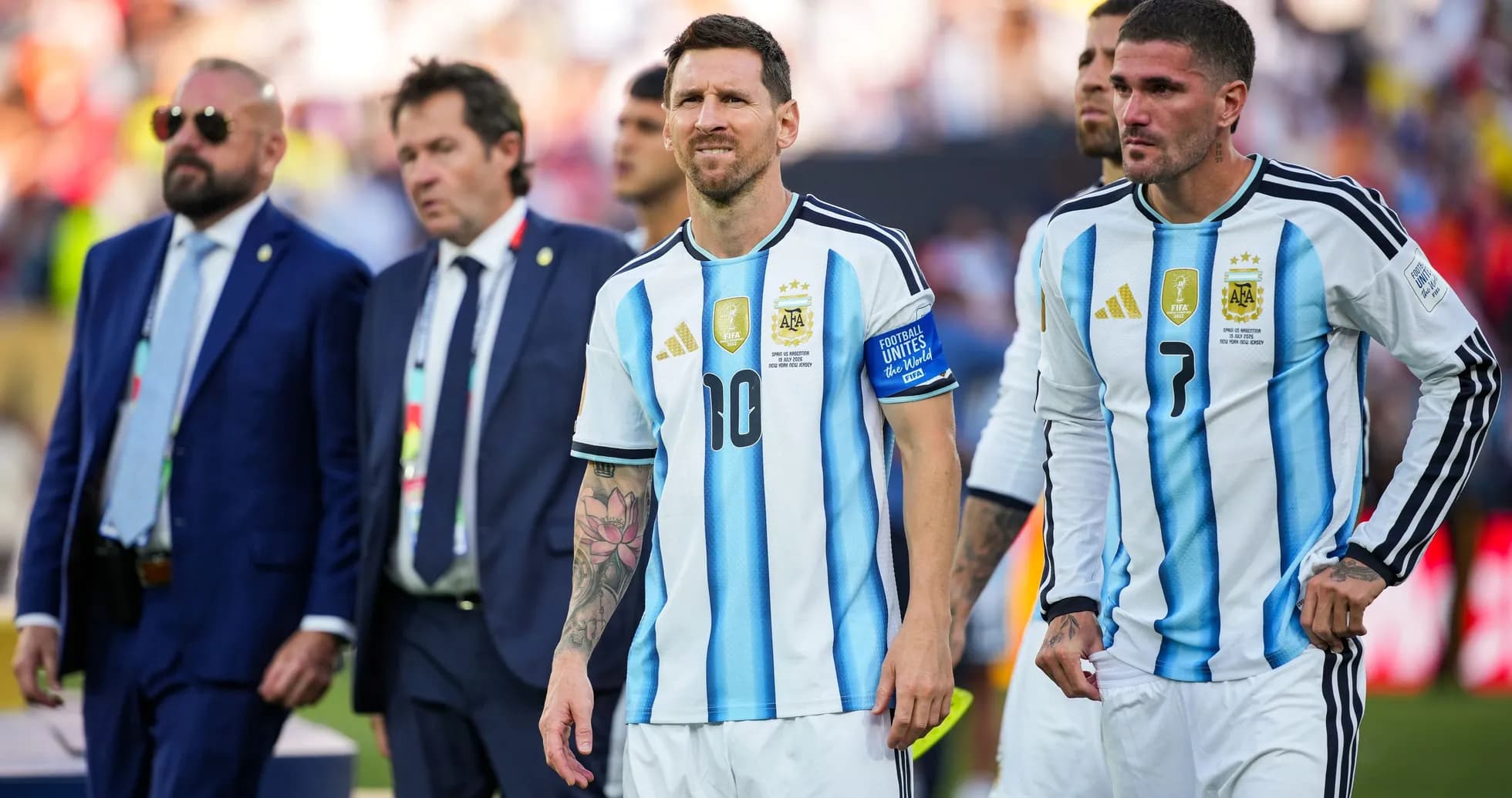
Argentina's Controversial Holiday for Second Place
Argentina flew home without the trophy, beaten 1-0 by Spain in extra time in New York, undone by a Ferran Torres strike and a strangely lifeless performance that failed to produce a single shot on target. Yet the real storm began not on the pitch, but in Buenos Aires.
In a move nobody quite saw coming, the government handed the players and coaching staff the power to choose a national holiday in recognition of their campaign. Not a day of mourning. A day of celebration.
For a runners-up finish.
The decision detonated an instant row.
A Holiday for Second Place
President Javier Milei stayed away from the final itself, leaning into his own superstitions rather than the spotlight of the showpiece. But he made sure his presence was felt online.
Posting on X, Milei wrote: “Given the concern about the celebrations for the achievement reached by the Argentine National Team, I inform the population that, depending on what the Players and the Technical Staff decide regarding the day to celebrate, it will be declared a national holiday.”
With that, the debate ignited.
Many Argentines simply could not square the idea. How do you declare a national holiday after failing to retain the world crown, especially after such a flat display on the biggest stage? Some citizens even wondered if there had been a technical error in the announcement, so out of step did it feel with the country’s unforgiving football culture.
For a fan base raised on Diego Maradona, Lionel Messi and three World Cups, the bar has always been set at the summit. Celebrating second place? To plenty of supporters, that sounded like a step too far.
Public Pride, Private Doubts
The tension lay in the contrast. On one side, a team that had pushed through another long, gruelling tournament, only to fall in extra time. On the other, a performance in the final that offered almost nothing in attack and left the Albiceleste short of their own standard.
Milei, though, doubled down in defence of the squad, and of Messi in particular.
“Thank you so much, players. [We fought] until the end with our boots on. Argentina always at the top,” he posted in a separate message, framing the run to the final as an achievement worthy of recognition, if not outright celebration.
Plenty of fans disagreed. The idea of a parade for a losing side felt hollow to them. Many argued the players themselves would rather slip back to their clubs, reset, and move on from a painful defeat than stand on an open-top bus waving from a position they never wanted.
The End of an Era Looms
Behind the political noise and social-media fury sits a harder football truth: this Argentina side is about to change.
Lionel Scaloni and his staff must now accelerate the transition that has been looming for years. The veteran core that dragged the nation to glory is edging toward the exit, and this campaign, ending in silver rather than gold, may prove the last stand for several icons.
It is widely expected that Messi has played in his sixth and final World Cup. At 39, and now based at Inter Miami, the greatest player in Argentina’s history has yet to officially confirm his international retirement. The silence only sharpens the sense of an era drawing to a close.
The coaching staff’s task is clear. Fresh legs, new leaders, a different spine. The next generation will not just inherit a shirt; they will inherit the demand that comes with it – that Argentina do not mark their calendars for second place.
The country now waits for two answers: which day, if any, the players will choose to celebrate this campaign – and whether Messi will ever pull on the Albiceleste shirt again.



