Anthony Barry's Honest Analysis of England's Performance
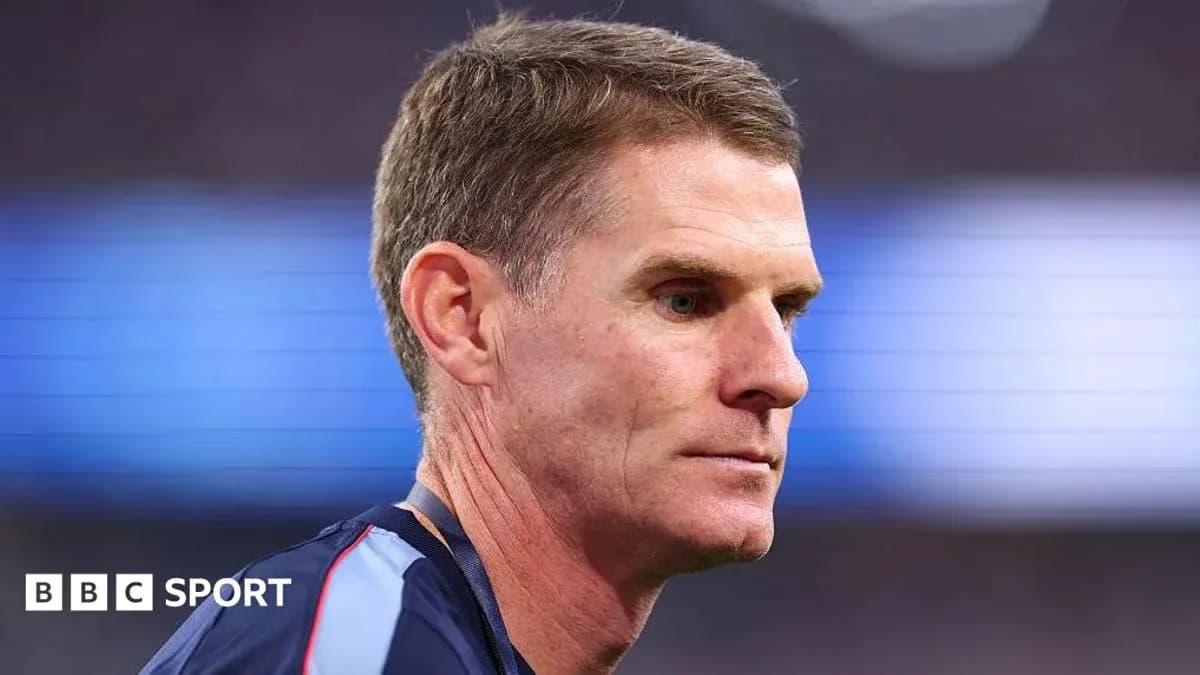
Anthony Barry will continue to front England’s televised half-time interviews at the World Cup, despite his stark on-air critique of the team’s display against Croatia.
The assistant coach offered a blunt, almost forensic breakdown of England’s first 45 minutes in Dallas, with the game finely poised at 2-2. Thomas Tuchel’s side eventually surged to a 4-2 win, but Barry’s words at the interval cut through the usual soft-focus half-time chatter.
Inside the camp, though, there is no sense of controversy. Quite the opposite.
Honest voice, deliberate choice
England staff believe Tuchel’s time at the break is far too valuable to be spent in front of a camera, and they feel the same about asking players to do the job. The head coach is needed in the dressing room, not the mixed zone. Substitutes are being briefed, not prepped for soundbites.
Barry, then, is the chosen conduit. And Tuchel is said to welcome the candour.
His assessment of that chaotic first half against Croatia was anything but sugar-coated. He described it as “a complicated and confusing first half from us really,” pointing to “a lot of nervous energy early on” and suggesting that might be “accepted and maybe expected in the opening game of a World Cup.”
From there, he went straight into specifics. England, he argued, made poor choices in possession, their decision-making clouded rather than clear. They “played long when we should play short and played short when we should play long really,” he said, lamenting the failure to “play through the gaps” and accelerate the game as planned.
The tone stayed sharp. Even the penalty, which you might expect to settle the side, did not shift the pattern in Barry’s eyes. “You’d think the penalty would free us up and allow us to play more like us and look more like ourselves, but again we fall back into some fearful patterns,” he said.
Set-pieces, long a reliable weapon for England, offered a brief sense of control. “Yeah, we’ve always been able to rely on set-pieces. We get the second goal and again we’re hoping that’s the moment to free us up and move forward in the game. But, OK, we concede the second goal late on and now we have to speak about that at half-time.”
For some watching, that level of openness from a serving England coach on live television was jarring. Inside the camp, it has raised no alarms. His forthright tone is seen as an extension of the internal standards, not a breach of them.
A new World Cup ritual
Half-time interviews have become a fresh wrinkle in World Cup broadcasting, described as a “request rather than mandatory.” Some nations have sent out their head coach, others a substitute or a member of staff. Some treat it as a box-ticking exercise. Others, like England with Barry, are leaning into it.
The decision to persist with Barry in that role underlines a willingness to show a more unvarnished side of the operation. It is also a calculated trade-off: access for broadcasters, without dragging Tuchel or his players away from the dressing-room work that actually shapes results.
For now, the balance suits England. They won the game. They kept their internal calm. And their assistant coach told the truth on camera.
Rashford fitness under watch
While the interview debate rumbles on outside, the more pressing concern inside the camp is Marcus Rashford’s fitness ahead of Tuesday’s meeting with Ghana.
Rashford came off the bench in Dallas to score England’s fourth goal, adding a clinical finish to close out the 4-2 win. After the match, though, he reported muscle discomfort and some soreness.
Medical staff are now monitoring the forward, assessing whether the issue is minor enough for him to feature against Ghana. There is optimism that the problem should not rule him out, but his workload will be managed carefully in the build-up.
England move on with points on the board, an assistant unafraid to speak plainly, and a key attacker under watch. The margins only get finer from here.