Andrew Stalbow's Vision for Club Revival
Andrew Stalbow is not promising a Hollywood fairy tale. He made that clear from the start.
"I'm not Ryan Reynolds money, nor is my investor group," he said, drawing an immediate line between his bid and the celebrity-fuelled stories that have dominated the lower leagues in recent years.
What he does bring, though, is something this club has been crying out for: organised, serious backing and a plan that stretches beyond the next crisis.
Both the club's board and its supporters' society have recommended a sale to a consortium led by Stalbow, the co-founder and CEO of a mobile entertainment company. If the deal goes through, he will become the new chairman, the figurehead of a project designed to drag a proud but struggling institution into a more stable future.
The numbers tell their own story. Stalbow has raised £6m from around 50 investors across the globe, a patchwork of belief stitched together from almost every continent. Among them is Curt Smith, co-founder of the band Tears for Fears, adding a dash of pop-culture recognition to a group otherwise built on quieter money and quieter ambition.
The timing feels critical. The club has just been relegated, another jolt in a long, bruising fight to remain viable.
"Many, many people have worked tirelessly over the years to keep this club viable," Stalbow said, acknowledging the volunteers, local backers and long-time benefactors who have propped it up. "This past season, with relegation, has shown just how hard that has become without outside investment, and we're lucky to have had a number of benefactors... without whom this club could not have survived."
Relegation has stripped away any illusions. Survival on goodwill alone is no longer an option.
Stalbow’s pitch is not about instant miracles. It is about building something that can last, and about finally pushing this club into territory it has never reached.
He talks openly about the Football League as the long-term target.
"It's actually the second biggest town or city in England that hasn't made it to the Football League yet," he said, a statistic that stings as much as it motivates. For a fanbase steeped in tradition and frustration, that line lands heavily. It underlines the scale of the underachievement, but also the size of the opportunity.
He knows where his power ends.
"I obviously can't control what happens in 90 minutes on match day," he admitted. The game will always belong to the players, the manager, and the chaos of form and fortune. His job lies elsewhere: "but we want to give the players the best chance of success and ultimately over the next few years, build out the infrastructure at the club that makes the club football league ready."
That word – infrastructure – is where this project lives or dies. Training facilities, recruitment, analytics, matchday operations, commercial growth: all of it feeds into a club’s ability to compete, not just for one season, but for a generation.
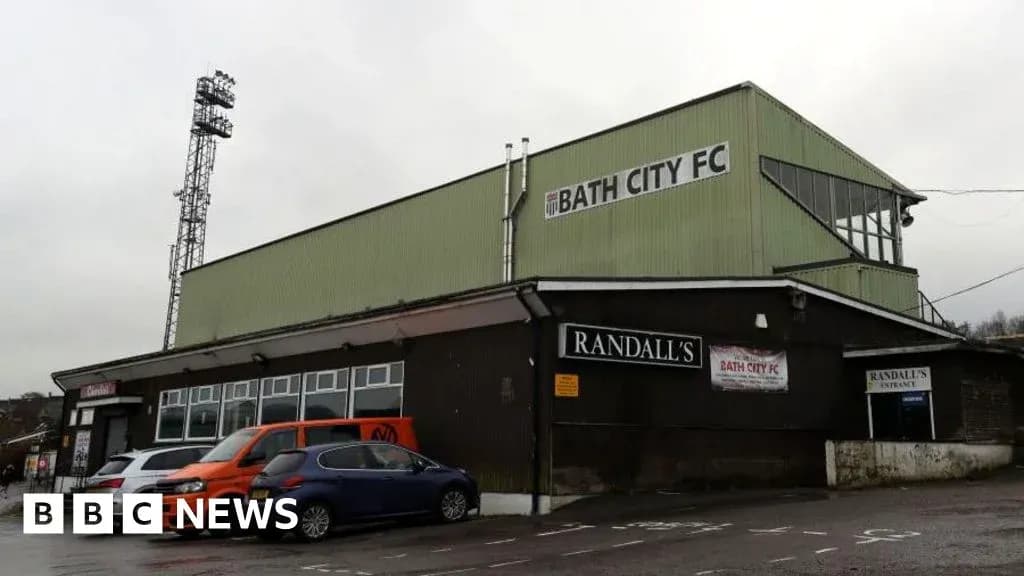
At the heart of it all stands the stadium. Loved, lived in, but tired.
"It's an amazing stadium full of heritage, but it needs a lot of investment," Stalbow said.
That sentence cuts to the emotional core of the takeover. The ground is a symbol of everything this club has been and everything it wants to be. It carries the noise, the memories, the anger, the hope. It also carries the scars of years without serious funding.
Stalbow is stepping into that tension: tradition on one side, necessity on the other. The supporters' society and board have put their weight behind him, a significant show of trust in a landscape where ownership battles have become depressingly familiar.
Now comes the hard part. Turning £6m and a global investor list into a team that can climb, a stadium that can modernise without losing its soul, and a club that can finally break through the Football League ceiling that has hung over it for far too long.