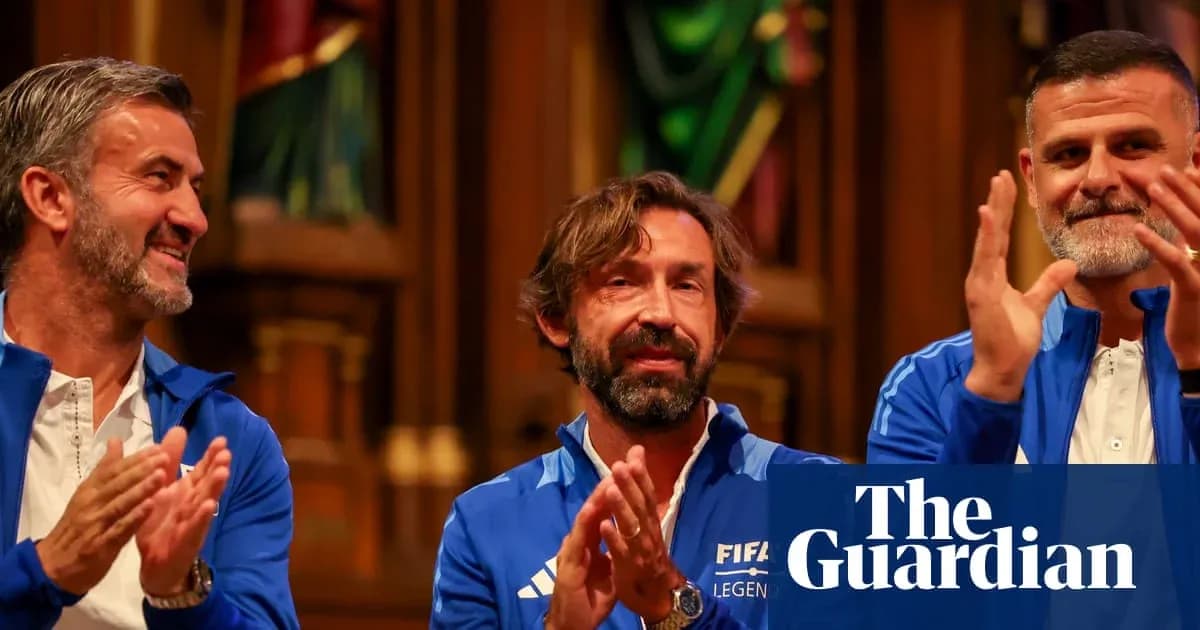
Andrea Pirlo Out of Running for Italy National Team Coach
Andrea Pirlo’s Italy dream is over before it truly began.
The former Azzurri playmaker has confirmed he is no longer in contention to become national team coach, with his commercial ties to a Russian betting company at the heart of the storm that pushed him out of the frame.
Pirlo pushed aside amid political backlash
On Monday, Pirlo took to Instagram to reveal the news. “I heard last night that I’m no longer the candidate for the Italy national team job,” he wrote, drawing a line under a candidacy that had split opinion in football and politics alike.
The controversy centred on his role as an ambassador for Fonbet, a Russian betting firm. Several Italian politicians publicly questioned how the face of the national team could simultaneously front a brand so closely associated with Russia at a time when Italy has backed Ukraine in the war.
Pirlo has consistently defended the partnership. He stressed that the deal stemmed from his work in the United Arab Emirates and insisted it was “exclusively for commercial and sports purposes”, arguing that giving it a political meaning meant attributing to him “beliefs” he has “never expressed and don’t belong” to him.
That explanation did little to cool tempers in Rome.
Political firestorm around a coach-in-waiting
The Italian football federation, FIGC, had turned to Pirlo after a bruising search for a successor to Gennaro Gattuso, who left by mutual consent in April after Italy failed to qualify for a third consecutive World Cup. With Pep Guardiola and Carlo Ancelotti both out of reach, Pirlo emerged as the bold, if risky, choice. He was ready to walk away from his post at Dubai United to take it.
Inside the federation, he had heavyweight backing. Newly-appointed technical director Paolo Maldini supported his candidacy, seeing in his former teammate the profile of a modern, progressive coach who could help drag Italy out of its spiral.
Outside, the mood was far less forgiving.
Pina Picierno, vice-president of the European Parliament, delivered one of the sharpest rebukes. On social media she argued that, after “yet another defeat and another missed World Cup qualification”, Italian football “desperately needed a cultural, ethical and managerial revolution”. For her, “the choice of Andrea Pirlo goes in the exact opposite direction.”
Ignazio La Russa, president of the Senate and a leading figure in prime minister Giorgia Meloni’s party, voiced his unease in typically blunt fashion. Speaking to Ansa, he said he was only commenting because he had been asked, then added: “God help us. Of course I am an Italy fan and Pirlo was a great champion, but as a coach, it is a leap in the dark.”
Carlo Calenda, leader of the Azione party, went straight to the geopolitical fault line. “Anyone who is or has been promoting Russia after 2022 should not hold national office,” he said, leaving no room for nuance.
The pressure finally told. For a federation already under scrutiny after a third straight World Cup failure, the idea of starting a new cycle under a coach embroiled in a Russia-linked row became politically toxic.
Italy back to familiar names
With Pirlo now out, the FIGC finds itself back at square one, still searching for a figure capable of leading a battered football nation out of its longest modern crisis.
The debate has swung back to two men who know the seat, and the weight that comes with it, better than most: Roberto Mancini and Antonio Conte. Both have already carried the tricolore on the touchline, both understand the unique pressure of the job, and both divide opinion in their own ways.
After failed gambles, missed targets and a candidate undone by geopolitics, Italy’s next move will say as much about its footballing future as it does about the uneasy intersection of sport and state power.