Andoni Iraola's Liverpool Revolution: Tackling Set Pieces
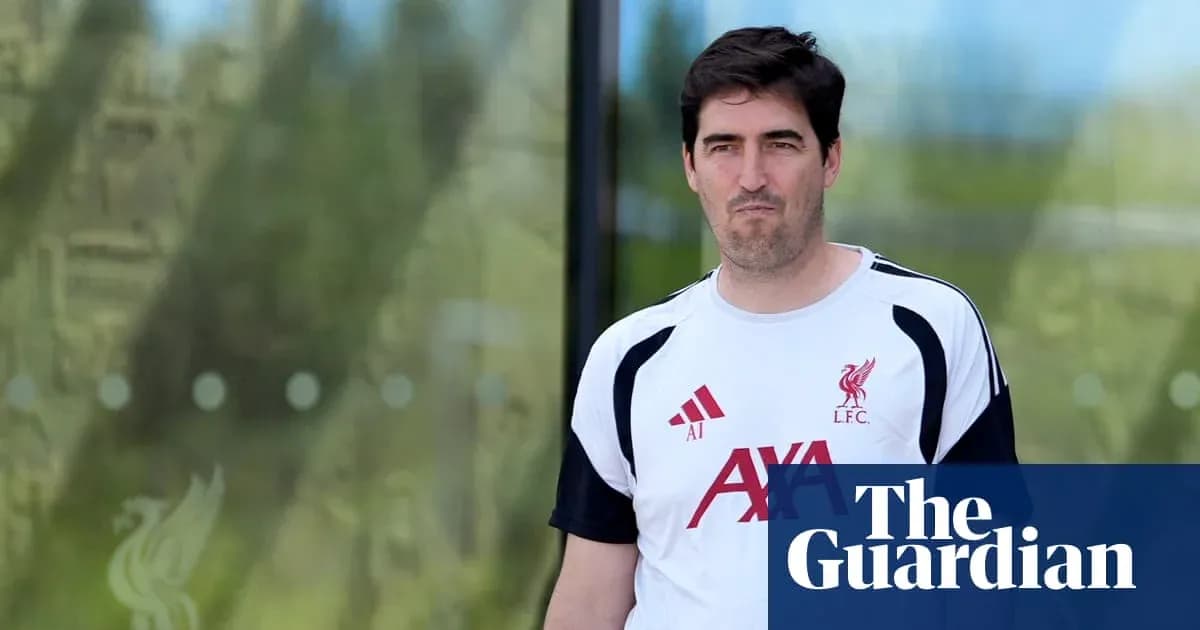
Andoni Iraola did not arrive at Liverpool alone. He brought a blueprint, a trusted inner circle and a clear idea of where one of English football’s great institutions must sharpen up: set pieces.
The Spaniard, who succeeded Arne Slot last month, has quietly reshaped the technical area at Anfield while keeping the core of what worked for him at Bournemouth. Tommy Elphick, a boyhood Liverpool supporter, and Shaun Cooper have followed him north as first-team coaches. Pablo de la Torre, Iraola’s long-time ally, steps in as assistant coach. Alejandro Rosalen takes charge of the goalkeepers after five years at Napoli.
This is not a cosmetic reshuffle. It is the spine of Iraola’s operation.
Trusted lieutenants, familiar ideas
De la Torre is the constant. The pair first worked together at AEK Larnaca, then again at Rayo Vallecano, and have been almost inseparable on the touchline ever since. Iraola describes him as a physical coach, but that barely scratches the surface of their relationship. De la Torre is effectively his right hand, someone who knows his methods, his moods and his demands.
“For me, it was important they came with me,” Iraola said, looking ahead to his first Liverpool game on Saturday, a pre-season friendly against Sunderland in Nashville. The line says everything about how he operates: surrounded by people he trusts, people who challenge and complement him.
His appreciation extends to those he did not initially choose. When Iraola landed at Bournemouth, his planned assistant, Iñigo Pérez, was denied a work permit. It could have been a major setback for a coach stepping into the Premier League for the first time. Instead, it opened the door for Elphick and Cooper.
Iraola calls himself “very lucky” to have found them waiting for him on the south coast. Pérez has since gone on to coach Villarreal, a twist Iraola can now smile about as he contemplates the possibility of facing his old colleague in the Champions League.
The unexpected partnership with Elphick and Cooper worked so well that Iraola felt no need to look elsewhere. They guided him through the nuances of English football culture: dressing-room dynamics, training habits, the details that rarely appear on the tactics board but often decide whether a manager sinks or swims.
Elphick’s playing experience at Aston Villa, Bournemouth, Brighton and Huddersfield gives him a direct line into the mindset of the modern Premier League footballer. He is close enough in age and background to relate; close enough to the pitch to translate Iraola’s ideas into something players instinctively understand.
“I am a little bit older,” Iraola admitted. “Some of the players maybe didn’t know I was a player.” That small confession underlines why he values figures like Elphick and Cooper. They bridge the gap between a coach with a clear philosophy and a squad still getting to know him.
Fixing Liverpool’s blind spot
There is, however, one area where sentiment and backstory matter less than cold numbers. Set pieces hurt Liverpool last season. Badly.
In what proved to be Slot’s final campaign, even as he delivered a league title in his first year, Liverpool conceded 23 goals from set plays. Only Bournemouth (26), Crystal Palace (25) and Leeds (24) were more generous in those moments. For a club with Liverpool’s ambitions, that is a glaring flaw.
Iraola has moved quickly to assign responsibility. Elphick will take charge of defensive set plays. Cooper will focus on the attacking routines, the creative side, the rehearsed chaos that can tilt tight games. Around them, the existing expertise at the club remains crucial.
Set-piece analyst Lewis Mahoney, who impressed in the second half of last season, stays in place and is already embedded in the new structure. Iraola is not ripping up everything he has inherited. He is layering his own ideas on top of a framework that has shown signs of life.
“They are very good coaches,” he said of his staff. “We kind of understand the game similarly and they have different roles in the coaching staff, they help with set pieces also. That’s the reason I continued with them.”
The division of labour is clear. The accountability will be too. If Liverpool are to tighten up at dead balls and regain the aura they once had in both boxes, it will come from this small group of specialists working in sync, day after day, on the training ground.
On Saturday in Nashville, Iraola will step out as Liverpool manager for the first time, with Sunderland providing the opposition and pre-season providing the usual caveats. The scoreline will be forgotten quickly. The structure behind him on the touchline will not.
Liverpool have entrusted Iraola with a squad capable of competing at the very top. He has responded by surrounding himself with the voices he trusts most and by confronting one of the team’s most obvious weaknesses head-on.
If those 23 set-piece goals against start to disappear from the statistics, this summer’s quiet work on the staff sheet may prove to be one of the most decisive moves of Liverpool’s new era.