
Andoni Iraola's High-Press Revolution at Liverpool
Andoni Iraola walks into Anfield with a promise and a warning: the volume is going back up.
Liverpool’s new manager has been hired to drag the club back towards the frenetic, suffocating football that once turned this stadium into a weekly storm. His reputation is built on intensity – a brand of “rock and roll” football that lives off a high press, a high line and very little patience for passengers.
This is not a gentle evolution. It is a reset.
A new shape, familiar chaos
Iraola is expected to build around a 4-2-3-1, a shape that looks simple on paper but, under him, rarely stands still. The structure will be recognisable to Liverpool supporters, the behaviour inside it less so.
The back four will be asked to defend high, squeeze the pitch and live on the edge. The double pivot must run, press and recycle at speed. The three behind the striker will be the first line of defence and the main supply line in attack. It is football played at full tilt, and it will ask serious questions of a squad that has already been reshaped in recent years.
Yet this group, on paper, fits the chaos.
Defence on the front foot
The most striking change may come in the heart of defence. Jeremy Jacquet, fast-tracked after his move from Rennes, is being lined up as a key part of Iraola’s rearguard. His athleticism and comfort defending big spaces make him an obvious candidate for a system that demands courage as much as composure.
Beside him, Virgil van Dijk remains the anchor. The Dutchman’s reading of the game will be vital if Liverpool are to hold such an aggressive line without constantly living in fear of the ball over the top.
On the right, Guela Doue offers energy and range, while on the left Milos Kerkez is being handed a second chance to truly announce himself at Anfield. Under Iraola at Bournemouth, Kerkez showed flashes of the relentless, overlapping full-back the coach craves. Now he returns to that familiar guidance, only this time under the brighter lights and heavier expectations of Liverpool.
Behind them all, Alisson will again be asked to do more than just save shots. In a system that pushes the line up the pitch, his sweeping, his timing and his nerve become part of the defensive plan, not just a safety net.
The engine room: Gravenberch and Szoboszlai
If the defence sets the trap, the midfield springs it.
Ryan Gravenberch and Dominik Szoboszlai are poised to form the base of Iraola’s 4-2-3-1. Gravenberch brings the stride and the ability to break lines with the ball at his feet, while Szoboszlai is built for this kind of football. His pressing numbers and work rate already stood out; under Iraola, they become a central pillar.
Szoboszlai’s role is crucial. He must knit together the aggression out of possession with the fluency in it, stepping higher to join the press and dropping deeper when the build-up needs a calmer head. The Hungarian has the engine, the technique and, perhaps most importantly, the appetite for the kind of relentless work Iraola demands.
Wirtz, Ngumoha and the creative surge
Ahead of them, Florian Wirtz looks set for a season of real responsibility. His movement between the lines, his ability to receive under pressure and his tireless work off the ball make him almost tailor-made for this system. Iraola wants his No. 10 to hunt as much as he creates. Wirtz can do both.
On one flank, the spotlight may fall on Rio Ngumoha. Still young, still learning, but already trusted enough to be mentioned in the same breath as the established names. Iraola has a track record of coaxing rapid growth from talented youngsters, and Ngumoha stands to benefit as the manager looks to blend youth and experience.
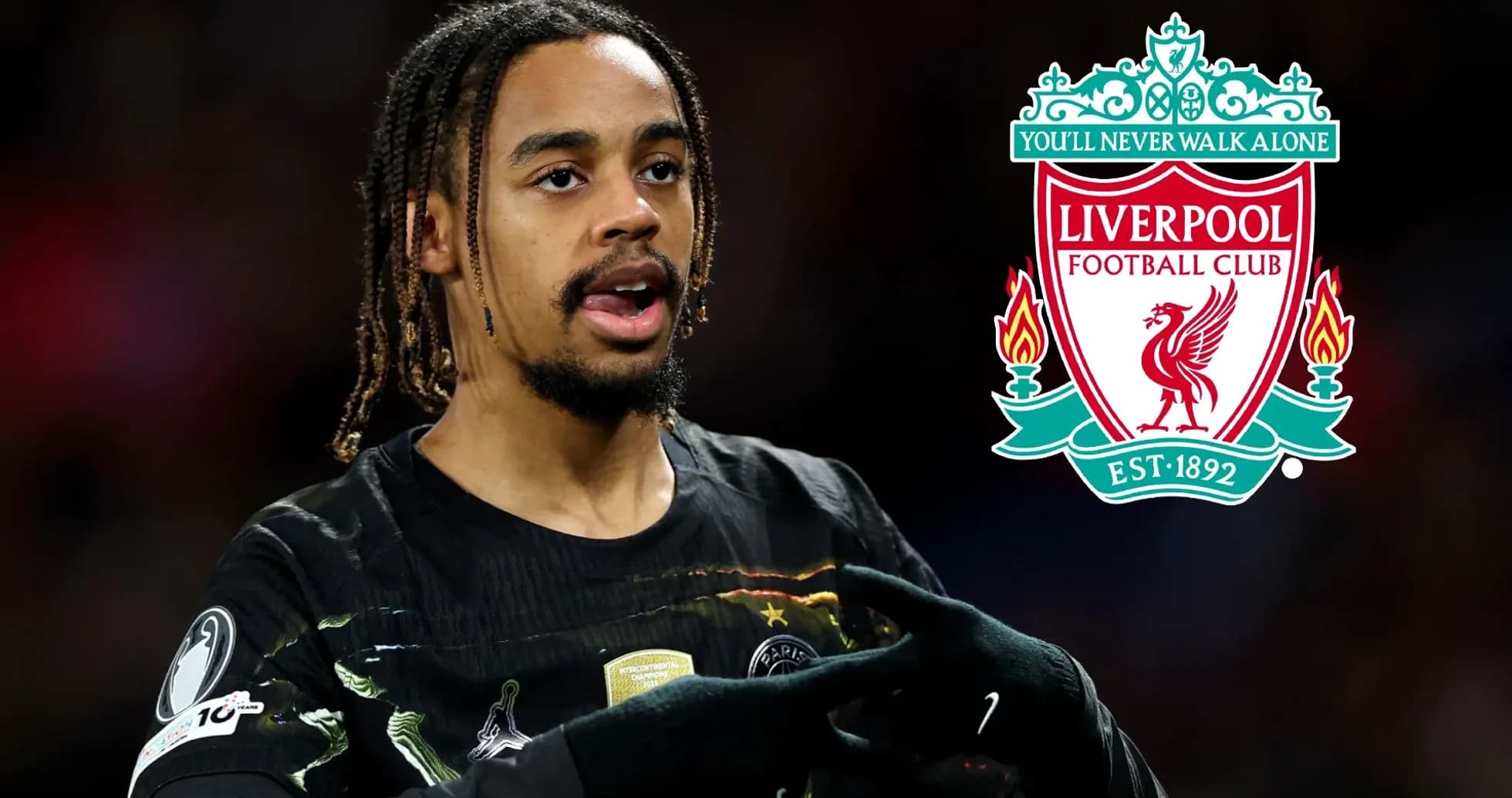
On the opposite side, Liverpool’s gaze remains fixed on PSG’s Bradley Barcola. The Frenchman is a primary target, and if a deal is done, he would walk into this system as a dynamic wide option – a winger who can press, stretch the pitch and carry the ball at speed. In Iraola’s world, wide players do not just wait for service; they trigger the chaos.
Isak to lead the line
At the tip of it all stands Alexander Isak.
The striker will be asked to do far more than simply finish chances. Iraola wants his No. 9 to press centre-backs, cut off passing lanes and set the tone for the rest of the team. For Isak, this could be the platform to rediscover his most ruthless form in front of goal, fed by Wirtz, Szoboszlai and, potentially, Barcola, while thriving in a system that values intelligent movement and sharp combinations around the box.
If he adapts quickly, Liverpool’s attack suddenly looks loaded with variety and menace.
A squad built for the storm
The projected XI tells its own story: Alisson; Guela Doue, Jeremy Jacquet, Virgil van Dijk, Milos Kerkez; Ryan Gravenberch, Dominik Szoboszlai; Florian Wirtz, Rio Ngumoha, Bradley Barcola; Alexander Isak.
It is a side designed to run, to swarm, to suffocate. A team that, if Iraola’s ideas take hold, will look to overwhelm opponents rather than outlast them.
There is still work to do. The squad is evolving, the market remains open, and the tactical details will only truly emerge once the competitive games begin. But the direction is unmistakable.
Liverpool have chosen volatility, risk and high-octane football once again. Now the question is simple: can Iraola turn that noise into trophies, or will Anfield’s new era be remembered for the volume rather than the victories?



