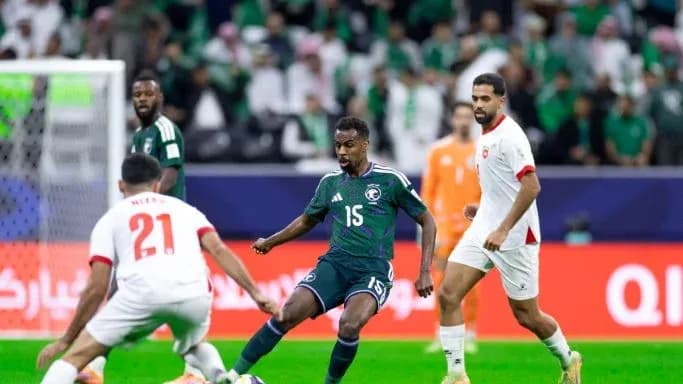
Al-Juwair Crisis Threatens Saudi Arabia's Gulf Cup Bid
The numbers on Georgios Donis’ squad list still add up. The balance on the pitch does not.
Losing Al-Juwair is not just a missing name on the team sheet; it rips out one of the few players capable of dictating Saudi Arabia’s rhythm from midfield. He was the link man, the one who could knit the lines together, slow the game when needed, then burst forward to join the build-up.
Mukhtar Ali’s call-up fills the vacancy, but not the void. He brings different qualities, and that forces Donis back to the drawing board. Roles must be shuffled, responsibilities redistributed. The system itself needs a slight rewrite.
A crisis that lives off the pitch
The real danger, though, doesn’t sit in the tactics board. It lurks in the noise around the camp.
Players read, listen and talk. They see the headlines about their excluded team-mate, hear the management’s statements, feel the reactions ripple through social media. All of that can chip away at focus, especially before a short, unforgiving tournament like the 27th Gulf Cup, where there is barely any time to fix what goes wrong.
For Donis and his staff, managing the ball is now only half the job. Managing the crisis is the other half.
A successful camp needs more than fitness tests and training drills. It needs calm. It needs a dressing room where every player understands that his main task is to train and to play, not to track every new twist in a disciplinary saga.
Saudi Arabia arrive at this Gulf Cup needing a reset. Recent performances have dented their image, and this tournament is as much about rebuilding confidence and correcting the path as it is about lifting a trophy. That mission becomes far more complicated when the conversation shifts from how to develop the national team to who mishandled the Al-Juwair case and who leaked what to whom.
Divided opinions, rising stakes
The controversy is not shrinking. It is growing with every new comment.
Hazazi has already criticised how the matter was handled, describing what is happening as “a distraction” for the national team. On the other side, Al-Mefreg has insisted that regulations must apply to everyone and warned that backing away from them could invite chaos inside the camp.
The squad sits in the middle of that tug-of-war. Before a ball has been kicked, the disciplinary issue threatens to occupy more space than the football itself.
That is how a small internal storm can turn into a full-blown crisis. Close it quickly, deal with it inside four walls, get everyone to respect the decision and move on, and it becomes a footnote: a pre-tournament incident, nothing more. Let it drag on, and it starts to define the narrative.
The difference now is not the size of the original problem. It is how the next few hours are handled.
No room for distractions in a brutal schedule
The calendar will not wait for anyone.
Saudi Arabia open their campaign against Kuwait on 23 September. Three days later, Oman. Three days after that, Iraq to close the group stage on 29 September.
Three games in six days. No breathing space. No room to dwell on interviews, statements or leaked details.
Those matches will test more than tactics. They will test nerve.
A sharp start against Kuwait could mute much of the outside noise and give Donis something solid to build on. A stumble, though, and every question returns with more force. The Al-Juwair affair would no longer be a standalone issue; it would feed into a broader debate about the team’s mentality, its character, its ability to withstand pressure when it truly counts.
The only convincing response will not come at a microphone. It will come with the ball at their feet.
Walking a mental tightrope
It would be an exaggeration to say Saudi Arabia have already “thrown away” their Gulf Cup chances because of the Al-Juwair crisis. The tournament has not even begun. The path out of the group is still open, the objectives unchanged.
One thing is clear, though: they cannot allow this story to grow a little bigger every day while publicly talking about fighting for the title. Those two paths do not run together for long.
If the players manage to separate the incident from the job in front of them, the crisis will likely fade into the background. If it doesn’t, if the argument keeps echoing inside the camp and outside it, Saudi Arabia may find themselves fighting their toughest battle in the one area no coach can fully control: their own heads.