
2026 World Cup Preview: Messi's Last Climb and the Heavyweights
The countdown is almost done. In less than 12 hours the 2026 World Cup will finally crackle into life, and whatever else it is, this one will not be ordinary.
Mexico against South Africa at 8pm tonight is the curtain-raiser, the first act in a marathon of 104 games. It is either the boldest World Cup ever staged or the most bloated. Possibly both.
What’s certain is that the cast is heavyweight.
Spain arrive as reigning European champions and bookmakers’ favourites, armed with the deepest squad in the field and a midfield that looks like it’s been assembled in a football laboratory. France, back-to-back finalists, carry the swagger of a team that knows exactly how to navigate a month-long tournament. England, under Thomas Tuchel, turn up with something they have rarely brought in recent decades: a genuine sense of belief.
And then there is the defending champion.
Messi’s last great climb
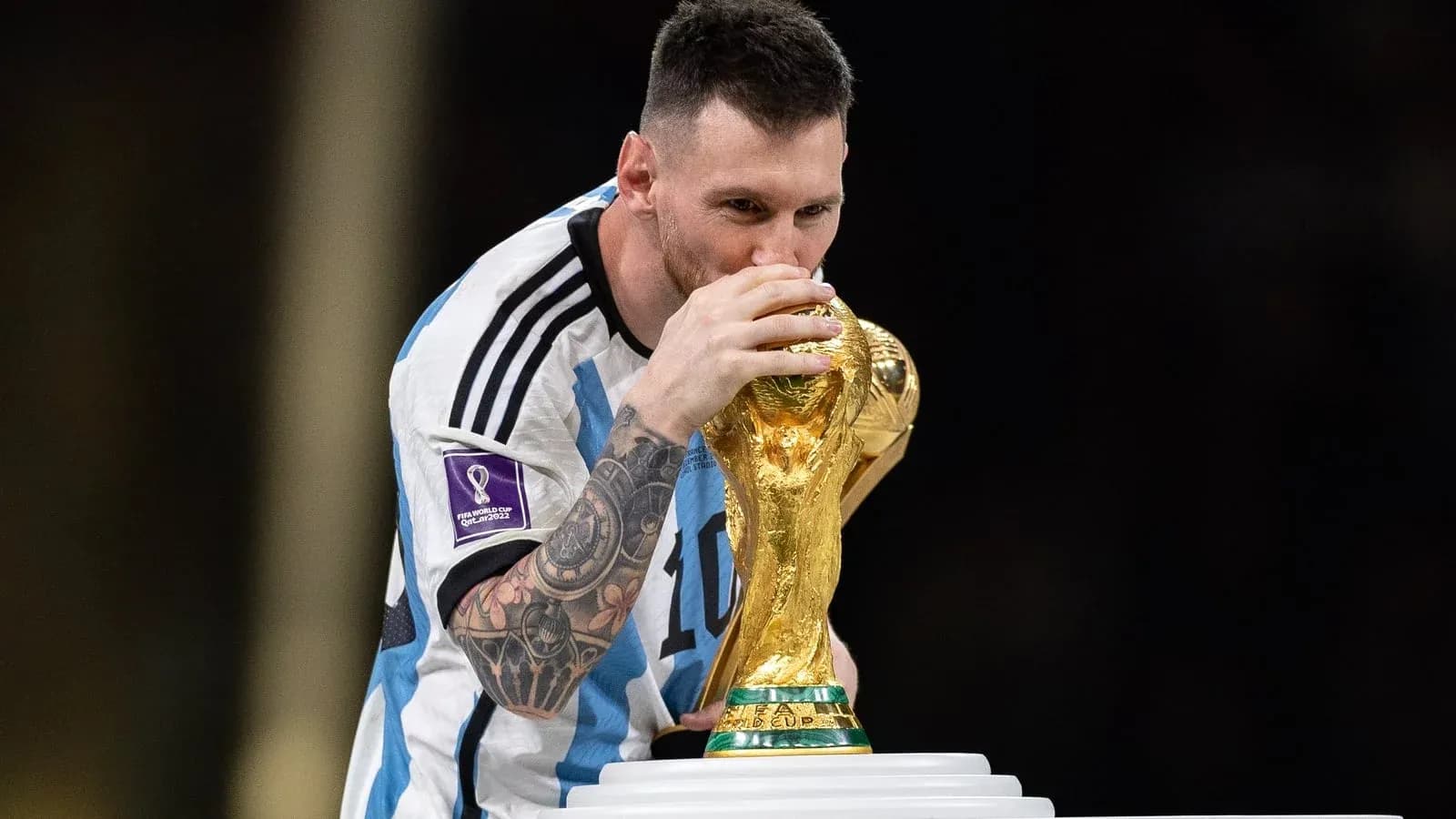
Argentina roll into North America with Lionel Messi still at the heart of everything, still the reference point for a nation that refuses to let go of the dream. At 38, he is chasing history – the first back‑to‑back World Cup triumph since Brazil in 1962, and a second title that would put his name beyond even Diego Maradona in the eyes of many Argentines.
This is framed as one last hurrah, one final ascent. Whether his legs will let him scale that peak again is the central question of Argentina’s campaign.
Brazil, as ever, lurk in the conversation. Carlo Ancelotti has the Selecao now, a reassuringly calm presence on the touchline, and he can call on Vinicius, Raphinha, Marquinhos and a back line that still intimidates. The problem lies between those two lines. The midfield lacks the certainty of past Brazilian vintages, and their qualification campaign was patchy enough to puncture some of the aura.
Portugal’s story is more personal. For Cristiano Ronaldo, this is the last swing at the one trophy that has always stayed just out of reach. His presence guarantees noise, attention, pressure. Whether that sideshow lifts Portugal or weighs them down is another matter entirely.
And, as the old line insists, you never write off Germany. Not under Julian Nagelsmann, not at a World Cup. Colombia, Senegal and Morocco sit in that dangerous bracket too – good enough, organised enough, fearless enough to blow a hole in somebody’s carefully laid plans.
On paper, the football at the sharp end looks glorious. The problem is getting there.
A giant tournament with a soft opening
Forty-eight teams. Twelve groups. A round of 32. This is not a sprint; it’s a long, winding trudge before the real jeopardy kicks in.
The new format leaves a lot of room for early mismatches and fixtures that only stir the blood in the countries involved. Germany v Curacao on Sunday and Spain v Cape Verde on Monday have the look of potential hammerings. Qatar v Switzerland and Uzbekistan v Colombia are unlikely to stop too many remote controls in their tracks.
The tension that used to define the final round of group games has been diluted. The path to the knockouts is broad and forgiving. The top two in each group go through automatically, joined by the eight best third‑placed sides. Two thirds of the field will reach the last 32.
It feels like a structure built to protect the giants and the sponsors who love them. Lose once? No problem. Lose twice? You might still be fine, though the draw will punish you later. There is even a very real chance that Ireland’s famous Italia 90 trick – reaching the knockouts without winning a game – could be repeated.
For many, the World Cup will not really start until the bracket is set and the tournament finally sharpens into straight knockouts. That suits the big nations nursing tired legs and fragile muscles after a brutal club season.
Managing stars, managing heat
The opening weeks will be about management as much as momentum. Messi, Neymar, Lamine Yamal, Bukayo Saka, Nico Williams – all are likely to be wrapped in cotton wool or carefully rationed through the first couple of matches.
Any team that goes the distance will play eight games. Eight. That’s a Champions League campaign crammed into a single summer, with the added twist of travel, time zones and weather that will not forgive the unprepared.
Miami, Houston, Guadalajara, Mexico City: cities where June and July can feel like stepping into a furnace. FIFA has already ordered hydration breaks in the 22nd and 67th minutes of every game, no matter the conditions, and tried to push daytime kick-offs into air‑conditioned stadiums. Even so, the heat will shape the football.
On paper, that should favour Spain, Brazil, Argentina and Mexico, nations used to playing in oppressive temperatures. The ball will slow, legs will tire, and squads with depth and control in midfield will rise in importance.
Spain tick every one of those boxes. Their midfield options are almost absurd, their squad the most complete in the tournament. The only cloud is Lamine Yamal’s hamstring. His fitness for the group stage is uncertain, but Spain have the luxury of time. They can ease him in, then unleash him when the stakes climb.
France, though, sit right on their shoulder.
Deschamps’ last dance, England’s big gamble
If Spain are the favourites, France are the looming shadow. With Kylian Mbappe, Ousmane Dembele, Michael Olise and Desire Doue, Les Bleus possess a front line that can eviscerate any defence in a five‑minute burst. The squad is stacked, the mentality hardened by years of going deep in tournaments.
This is Didier Deschamps’ final tournament in charge. They lost the last World Cup final. They will not come here to admire the scenery. If both France and Spain top their groups, they can only meet in the semi‑finals. That potential clash already feels like the axis on which this World Cup might turn.
England’s story is different, and intriguing. They arrive off the back of a Euro 2024 run that ended in a 2-1 defeat to Spain in the final, and with a new man in the dugout. Gareth Southgate’s cautious, often joyless football has been replaced by Tuchel’s more fluid, high‑intensity approach.
Tuchel has not tiptoed into the job. He has left Phil Foden, Cole Palmer and Trent Alexander-Arnold at home, prioritising players who fit his system over marquee names. It is a bold, confrontational call that will be thrown back at him relentlessly if England stumble.
But it also signals intent. England are not here to be neat and conservative. They are here to run, press, dominate, and finally turn “years of hurt” from a song lyric into something more distant.
Giants with questions, fans with alarms
Brazil and Argentina, for all their pedigree, do not arrive without doubts. Brazil’s midfield balance, Argentina’s reliance on a 38‑year‑old Messi, the sense that both are slightly diminished versions of their former selves – all of it feeds into a World Cup with no single, towering favourite.
Even the fans are being pushed. The schedule stretches patience as much as it tests loyalty. From an Irish perspective the kick-off times are brutal. Brazil’s opener against Morocco starts at 11pm on Saturday night. Argentina begin their title defence at 2am on a Wednesday. Alarm clocks and coffee will be as essential as flags and jerseys.
That, in a way, sums up this World Cup. It demands a lot: time, stamina, tolerance for group games that might feel like exhibitions. It asks supporters in the stands and on the sofa to stay with it through the long, slow opening act.
If the football at the top end catches fire, the complaints will fade. If the semi-finals and final deliver, the expanded format will be easier to forgive.
But only on 19 July, when the trophy is lifted and the last of the 104 games is done, will we know if this sprawling, swollen World Cup was worth the stretch – or if football’s greatest show has finally gone one match too far.



