
2026 FIFA World Cup: A Cultural Festival Across Three Nations
The World Cup has never looked or felt like this.
Forty‑eight nations. Three host countries. Sixteen stadiums stretched from Mexico City’s thin air to Toronto’s lakefront chill and the sprawl of Los Angeles. The biggest World Cup in history finally lands in North America this week, and the continent is bracing for a month and a bit of noise, color and logistical strain on a scale football has never attempted.
Three hosts, three openings, one global stage
The curtain rises first where World Cup folklore runs deepest: Estadio Azteca.
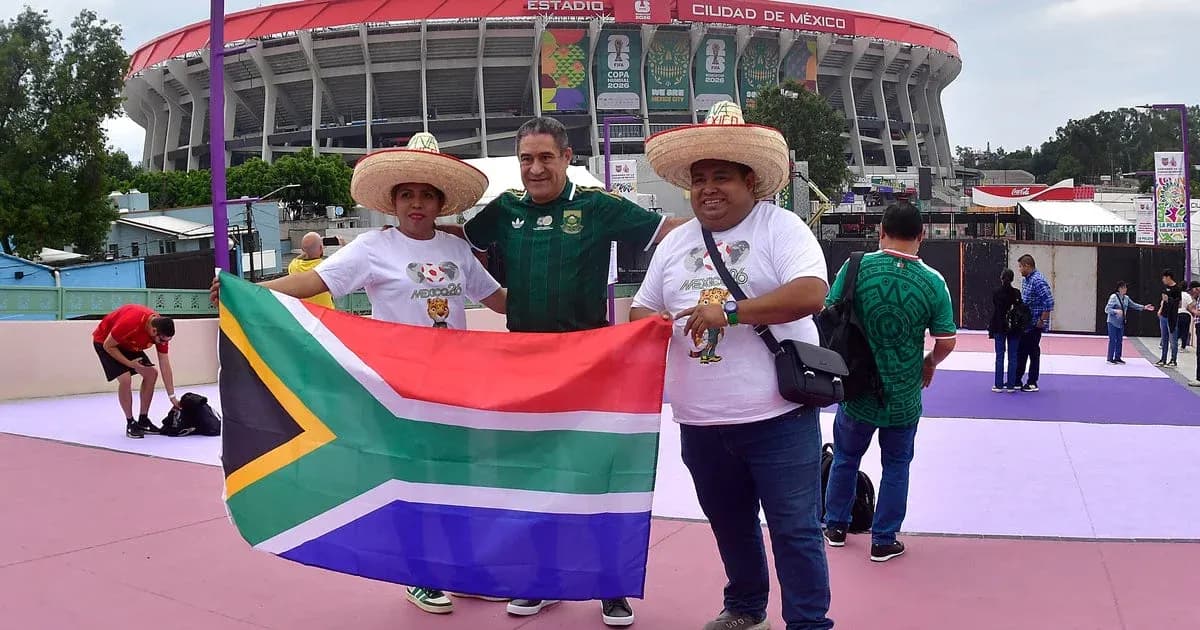
On Thursday in Mexico City, long before a ball is kicked in Group A, Shakira and Burna Boy will walk into a stadium that has seen Pelé crowned and Diego Maradona canonized. At 11:30 a.m. local time (1:30 p.m. ET), they lead the show for “Dai Dai,” the official song of the 2026 FIFA World Cup, flanked by a cast that underlines how aggressively FIFA has leaned into music this time.
Alejandro Fernández, Belinda, Danny Ocean, J Balvin, Lila Downs, Los Ángeles Azules, Maná and Tyla are all slated to appear, part of what FIFA is billing as the tournament’s first full album. It’s spectacle by design, a reminder that this World Cup wants to be more than a football tournament. It wants to be a traveling cultural festival.
Once the fireworks clear, Mexico and South Africa take over at 2 p.m. local (3 p.m. ET). The date and the fixture are a deliberate echo. June 11, Mexico vs. South Africa, the opening game of a World Cup. In 2010, in Johannesburg, it finished 1–1. This time, the déjà vu comes with 80,000 Mexicans roaring inside their own cathedral.
Later that night, Group A gets its second act. South Korea meet Czechia at Akron Stadium in Zapopan, near Guadalajara, at 9 p.m. local (11 p.m. ET), a reminder that the expanded format means more teams, more miles, more late nights.
On Friday, the party splits in three.
Toronto, freshly dressed for the occasion, hosts its own ceremony at BMO Field before Canada’s first World Cup match on home soil, a Group B opener against Bosnia and Herzegovina at 3 p.m. ET. The stadium has swelled from 28,000 to 45,000 seats, and 90 minutes before kick-off, at 1:30 p.m. ET, the Great White North leans into its musical calling card: Alanis Morissette, Alessia Cara, Jessie Reyez, Michael Bublé and others are scheduled to turn the lakeside venue into a concert hall.
On the other side of the continent, Los Angeles prepares for its close‑up. SoFi Stadium, all glass and gleam, stages the United States’ opener against Paraguay in Group D on Friday at 6 p.m. local (9 p.m. ET). The U.S. ceremony starts at 4:30 p.m. local (7:30 p.m. ET), fronted by Katy Perry, Future, Anitta, LISA, Rema and Tyla.
FIFA President Gianni Infantino has framed that lineup as a deliberate mirror of the country itself, saying it “reflects the cultural diversity of the United States and the vibrancy of its many diasporas,” a nod to a nation where football still fights for attention but has never had a bigger stage at home.
For the U.S. Men’s National Team, this is a return to a moment that has lingered for three decades. Their last World Cup match on home soil came on July 4, 1994, a 1–0 defeat to eventual champions Brazil in the Round of 16. This time, they walk out in new Nike kits that borrow from their past, including the iconic stripes from that ’94 summer.
A giant tournament, a giant security operation
A World Cup of this size doesn’t just test squads and coaches. It tests the security apparatus of three countries.
In the United States, the FBI has already shifted tactical teams into Atlanta, Boston, Dallas, Houston, Kansas City, Los Angeles, Miami, New York, New Jersey, Philadelphia, the San Francisco Bay Area and Seattle. FBI Director Kash Patel said the units of crisis response experts will “help support the massive security work involved in protecting players, fans, and visitors.”
In practice, that means fans heading to venues like Gillette Stadium in Foxborough, Massachusetts, should expect long lines and early arrivals. Local officials have warned some may need to turn up more than an hour before kick-off just to clear security.
Marlo Graham, special agent in charge of the FBI’s Atlanta field office, described the build‑up as familiar in one sense and unprecedented in another. The protocols mirror other major events; the difference is duration. This World Cup stretches across 39 days, with thousands of moving parts and millions of people flowing through airports, fan zones and stadium gates.
“Our tactical teams have been practicing commingled with other tactical teams from other agencies for months leading up to this,” Graham said, underlining the scale of coordination.
Immigration and Customs Enforcement officers will also be embedded in the operation. White House border czar Tom Homan stressed that ICE’s “primary focus” during the tournament will be national security, not immigration enforcement, a message aimed at calming fears in host communities and among visiting fans.
The timing is delicate. The tournament arrives after a more‑than‑yearlong push by the Trump administration to tighten entry into the U.S., a policy shift that has already rippled into the football world. Over the weekend, Somali referee Omar Abdulkadir Artan, appointed to officiate at the World Cup, was barred from entering the country. Customs and Border Protection cited “vetting concerns,” and FIFA confirmed his denial of entry, but neither side disclosed further details.
What fans can – and can’t – bring
Inside the gates, another set of rules awaits.
FIFA’s stadium code of conduct lays out a familiar list of banned items: nontransparent bags, weapons, body protection gear, helmets, umbrellas, strollers and chairs are all off limits. The initial regulations went further, prohibiting “bottles, cups, jars, cans or any other form of closed or capped receptacle that may be thrown or cause injury,” along with branded water bottles.
That last point lit a fuse. With matches staged in the height of summer across North America, supporters quickly pushed back on a policy that seemed to penalize those trying to stay hydrated.
“What next? Suncream banned and fans forced to buy it in stadiums?” the Free Lions, a group of English supporters, wrote on X, calling it “just the latest money-grab.”
The pressure told. FIFA World Cup 2026 Chief Operating Officer Heimo Schirgi moved to clarify the rules on social media, confirming that each spectator in U.S. and Canadian venues will be allowed to bring in one soft, plastic, disposable, factory‑sealed water bottle of up to 20 ounces. Hard reusable bottles remain banned.
Inside the stadiums, beverages – from water to sodas and juices – will be supplied exclusively by long‑time FIFA sponsor Coca‑Cola, a reminder of how commercial partners still shape the fan experience as much as any regulation.
A World Cup for the many – if they can pay
The expanded format, with 16 stadiums spread across three countries, means more people than ever will have the chance to see a World Cup match in person. The catch is the price.
Ticket costs for group-stage games have rocketed into the hundreds and, for some fixtures, the thousands of dollars. For many, that has turned a once‑in‑a‑lifetime home World Cup into a harsh calculation.
“It’s an absolutely punishing number with regards to the ticket prices to get into a game,” said Phil Labas, captain of the Chicago chapter of the American Outlaws, the 30,000‑strong U.S. supporters’ group.
Labas has followed U.S. Soccer almost everywhere over the past four years. This time, the cost has pushed him and many fellow Outlaws to the upper reaches of the stadiums they helped fill when tickets were cheaper.
“We’re in the 300 section. We are upper deck in a corner … It’s an absolute travesty,” he said.
The distance from the pitch won’t quiet them. The Outlaws built their reputation on noise and relentlessness, not seat location.
“You’ll hear us, you’ll see us if they pan up, but we will absolutely be there,” Labas promised. For the television cameras, it may be a small detail. For the players, it will sound like home.
Who might own this giant stage?
On the pitch, the expanded field and new format have already turned 2026 into a dream for bookmakers. More teams, more matches, more markets. For bettors, the question is familiar: who survives the chaos?
German economist Joachim Klement has made a name for himself by correctly predicting the last three World Cup winners. His model has thrown up a surprise this time. He likes the Netherlands.
Against a backdrop of traditional favorites such as France, Spain, England and Brazil, Klement has picked a nation that has never lifted the trophy but has flirted with it more than once. The Dutch reached the final in 1974, 1978 and 2010, and he sees a pattern he trusts.
He describes the Netherlands as one of the “teams that are constant outperformers,” a side built on balance rather than a single global superstar.
“I think they have a team that doesn’t have real stars, like [Lionel] Messi for Argentina, but they are a team that is very, very leveled in the performance of every one of the players in the team. So there’s no real weak spot,” he said.
The other factor he points to is more old‑school than algorithmic. Defense.
“They have a really good defense, and in soccer more so than in most other sports, is the saying that offense wins matches, defense wins tournaments.”
For the United States, Klement’s forecast comes with a split screen.
The draw offers opportunity. In Group D, the USMNT share a bracket with Paraguay, Australia and Turkey – a pool he views as relatively even, with a clear path to the knockout rounds and a realistic shot at a quarterfinal run if results break their way.
The problem, in his eyes, lies beyond tactics and talent. It’s cultural.
“The U.S. has so many sports that compete for the talent pool that it isn’t really the dominating, most important sport in the U.S.,” he said. “While if you go anywhere in Europe or Latin America, it’s soccer and then there’s the rest.”
That tension hangs over this World Cup in America’s back yard. The country can fill stadiums, book megastars for opening ceremonies and mobilize federal agencies to secure 39 days of football. The question is what happens after the final whistle in July.
Does this vast, noisy, expensive experiment finally shift the sport’s place in the American hierarchy, or does it leave behind only memories, empty water bottles and another set of stripes in the kit room?



