
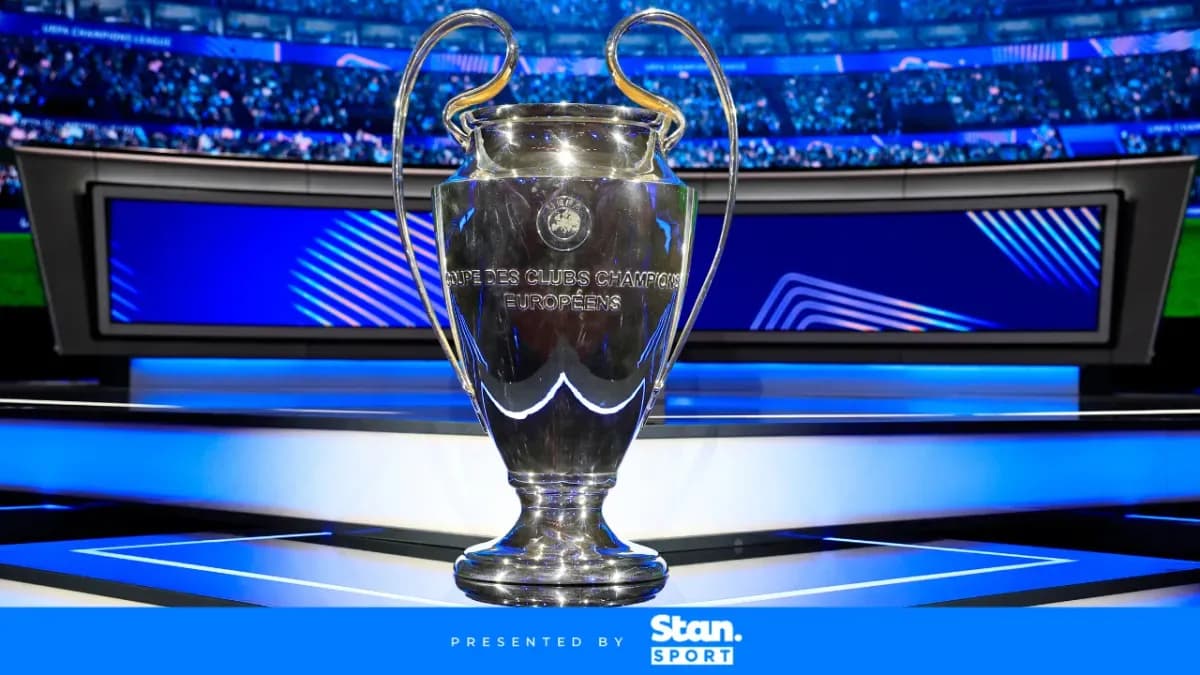
Understanding the 2026-27 UEFA Champions League Format: League Phase and Knockout Rounds
The UEFA Champions League remains Europe's premier club football competition, drawing the continent's top teams into a high-stakes tournament every year. Following a revamp starting in the 2024/25 season, the competition has introduced a fresh format that may still be unfamiliar to many fans.
This explanation breaks down how the new league phase operates and what the knockout stage entails for the 2026-27 season.
From Groups to a League Table: The 36-Team League Phase
Earlier, the Champions League began with 32 teams divided into eight groups of four, known as the group stage. This has now been replaced by a "league phase" involving 36 teams placed in a single table ranked from 1 to 36.
Each team faces eight opponents – four matches at home and four away – decided by a special league-phase draw. Teams earn three points for a win and one for a draw, just like in typical league football.
After this phase, 24 teams advance to the knockout rounds. The top eight teams secure a direct pass to the Round of 16, while those ranked 9th through 24th enter a knockout playoff round. The bottom 12 teams are eliminated entirely, with no fallback to the Europa or Conference Leagues.
Why 36 Teams?
The increase from 32 to 36 teams means two more nations received extra spots based on UEFA coefficients. For 2026/27, these nations are England and Spain.
The "Swiss Model" Explained
This new format is often called the "Swiss model," which refers to how the league phase is structured. Instead of fixed groups, teams face a variety of opponents determined by seeding, allowing for a broader range of matchups and more competitive encounters early on.
How the League Phase Draw Operates
The draw organizes who plays whom in the league phase. Each club plays against eight different teams, balanced to include two opponents from each of four seeding pots. The seeding considers UEFA club coefficients, ensuring a mix of strong and less-experienced teams per matchup.
- Pot 1 (9 teams) includes titleholders PSG*, Bayern Munich, Arsenal, Real Madrid, Inter Milan, Manchester City, Barcelona, Liverpool, and Borussia Dortmund.
- Pot 2 features clubs like Atletico Madrid, Aston Villa, AS Roma, Porto, Club Brugge, Sporting CP, Real Betis, PSV Eindhoven, and Manchester United.
- Pot 3 holds teams such as Napoli, Lille, Shakhtar Donetsk, Bodo/Glimt, Feyenoord, RB Leipzig, Galatasaray, Villarreal, and Slavia Prague.
- Pot 4 contains clubs including Stuttgart, Lens, LASK, Sabah, Como, plus four yet-to-be-determined teams.
*Champions League title holders
No More Europa League Drop-Ins
Unlike before, teams finishing in the bottom 12 after the league phase do not drop into the Europa League or its qualifiers. Their European campaign ends for that season.
Knockout Stage Setup
The knockout phase sees some changes but largely follows familiar principles. With 24 teams advancing, an additional knockout playoff round occurs first.
- Teams placed 9th to 24th enter this playoff round.
- The top eight teams get a bye directly to the Round of 16.
Two draws shape the knockout bracket:
- The knockout playoff draw pairs playoff teams and places the top eight clubs into brackets with potential playoff opponents.
- The Round of 16 draw matches the winners of playoff ties to the top eight clubs.
When and Where is the 2027 Final?
The final is scheduled for Saturday, June 5, 2027. It will be hosted at Madrid's Metropolitano Stadium, home to Atletico Madrid.



