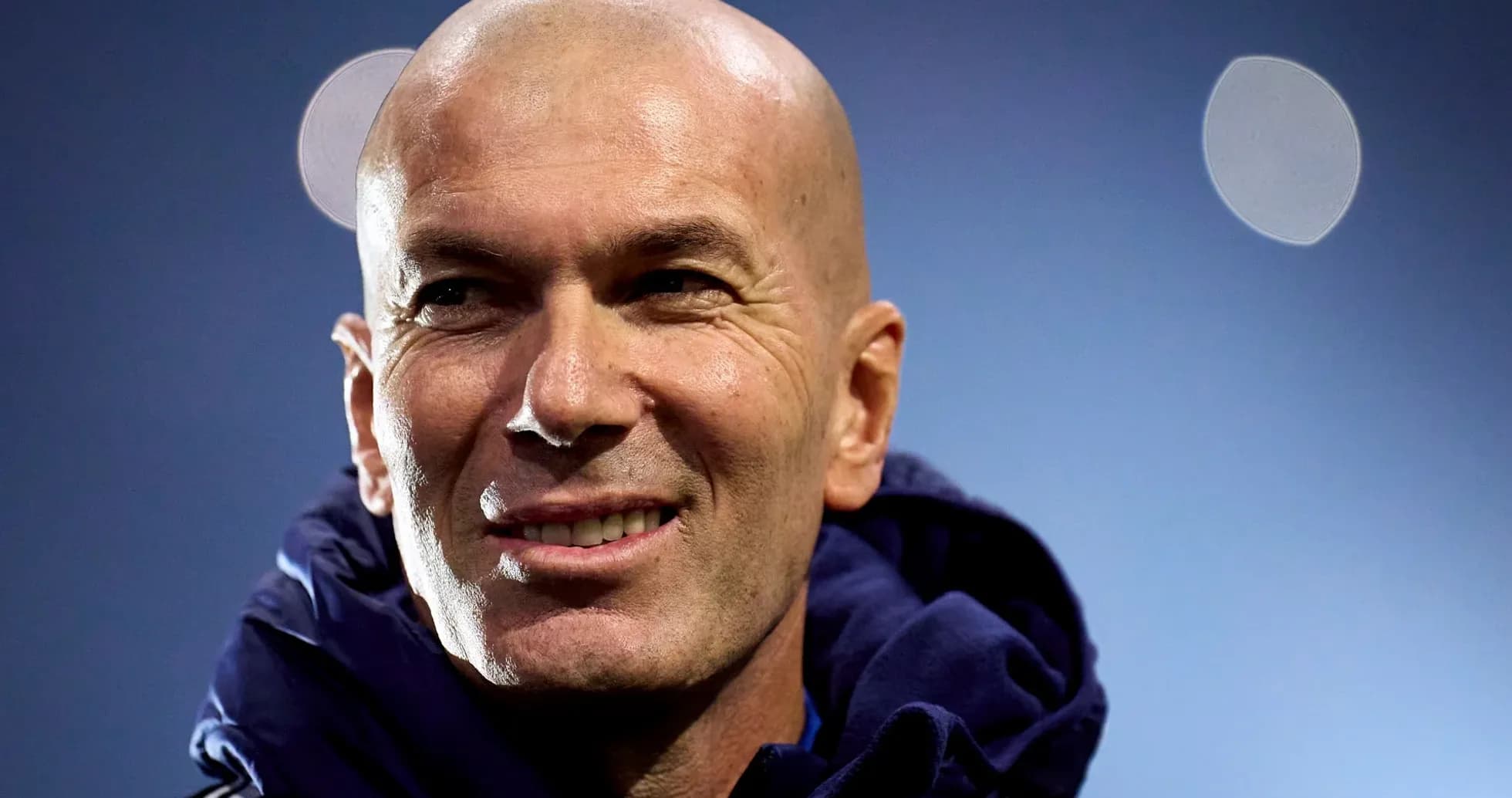
Zinedine Zidane Appointed Head Coach of France National Team
Zinedine Zidane, the most influential French footballer of his generation and one of the game’s great modern coaches, is finally set to step into the role many have long seen as his destiny.
According to ESPN, the 53-year-old has reached a verbal agreement with the Fédération Française de Football to become the next head coach of the France national team after this summer’s FIFA World Cup, succeeding Didier Deschamps, who has been in charge since 2012.
It marks the beginning of a new era and the end of a remarkably long reign.
Deschamps has overseen a decade of stability and success, including a World Cup triumph in 2018 and a runners-up finish in 2022. His tenure has defined the modern identity of Les Bleus. Now the federation is turning to a figure who, for many, embodies French football at its most elegant and ruthless.
Zidane’s return to the national setup comes after a glittering spell in club management with Real Madrid. Across two stints in charge (2016–18 and 2019–21), he built a reputation as a serial winner and a master of high-pressure environments, guiding the Spanish giants to a haul of major trophies and handling some of the sport’s biggest egos with an ease that reflected his own playing days.
The expectation that he would one day coach France has hovered over every career decision he has made since leaving Madrid. Each time a major European club changed managers, his name surfaced. Each time, the same question followed: was he simply waiting for Les Bleus?
Now the path is clear.
For France, appointing Zidane is not just about nostalgia. It is about entrusting the team to a man whose playing career helped reshape the country’s footballing identity. As a midfielder, he was a phenomenon: winner of the 1998 Ballon d’Or and three-time FIFA World Player of the Year (1998, 2000, 2003), a rare blend of artistry and authority.
On the international stage, his legacy is seared into French sporting history. He drove France to World Cup glory on home soil in 1998, then led them back to the final in 2006. His last match for his country ended in infamy, with the red card for that head-butt on Marco Materazzi in Berlin, a moment that has lived alongside his genius in the collective memory.
That duality — brilliance and volatility, legend and controversy — has always been part of the Zidane story. As a coach, though, he has largely swapped drama for control. His Madrid sides were disciplined, tactically sharp and ruthless in decisive moments. Players spoke of his calm authority, the weight his presence carried in a dressing room.
France will now look to that aura to guide a squad stacked with talent but facing the natural transition that follows a long managerial era.
The timing is symbolic. A World Cup will close the Deschamps chapter; Zidane is poised to open the next. For a nation that has grown used to competing for every major title, the bar is brutally high. Anything less than contention will feel like failure.
Zidane knows that pressure. He has lived it, thrived in it, and occasionally exploded under it. Soon, he will carry it again — this time not as France’s No. 10, but as the man on the touchline, charged with shaping the next great French side.