Who Will Be the Best Team at the 2026 World Cup?
The 2026 FIFA World Cup is almost upon us. For the first time in history, 48 nations will compete across three host countries — the United States, Canada, and Mexico — with the final taking place at MetLife Stadium in New Jersey on July 19. The expanded format introduces a new Round of 32, meaning the eventual champions will need to win eight matches to lift the trophy. That demands squad depth, tactical flexibility, and a tournament mentality unlike anything previous World Cup winners have faced.
So which nation has what it takes to go all the way? Here is a breakdown of the leading contenders.
Why the Expanded Format Changes Everything
Before assessing the favourites, it is worth understanding what makes 2026 structurally different from every previous World Cup.
The jump from 32 to 48 teams is not simply a numbers exercise — it fundamentally changes what winning requires. The new Round of 32 means top nations must survive an extra knockout match before the quarter-finals even come into view. Over the course of the tournament, the winning squad will play eight games across five weeks. Rotation matters. Squad depth matters. A single injury to a key player carries far greater risk than in any previous edition.
Spain — The Clear Favourite
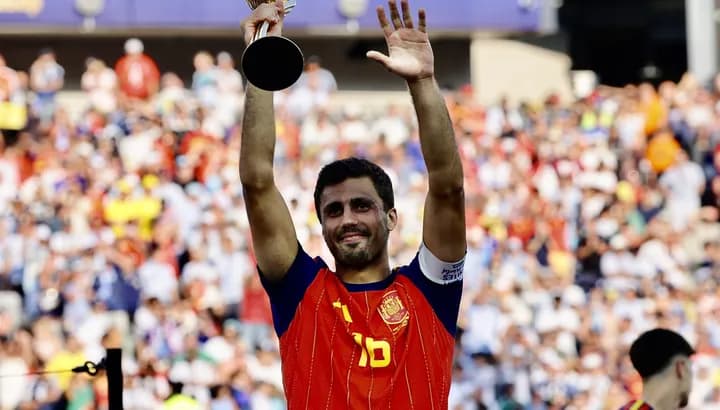
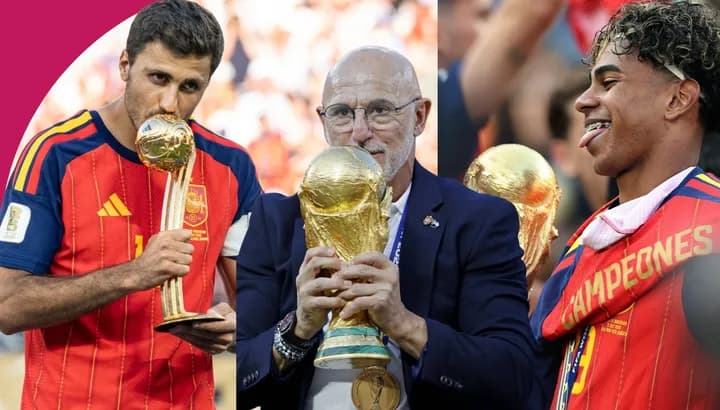
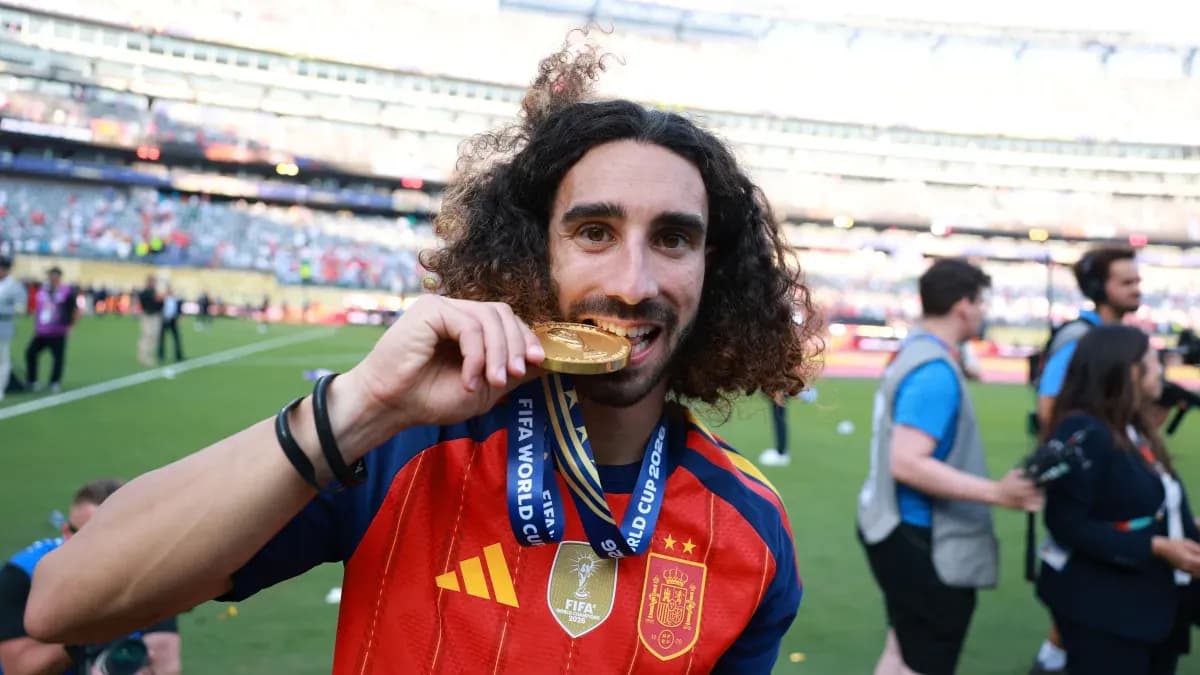
Spain arrive at this tournament as the most complete squad in world football, and the argument for them as outright favourites is a compelling one.
The reigning European champions boast a squad packed with La Liga and Champions League regulars who know how to win under pressure. At the centre of their attack is Lamine Yamal — still a teenager, but already among the most exciting players on the planet after his standout performances at Euro 2024. This will be his World Cup debut, and all the signs point to it being an unforgettable one.
Tactically, Spain remain the most cohesive unit in international football. Their positional play, pressing structure, and ability to control matches through possession gives them an answer to almost any opponent. Their group draw has also been favourable, providing a clear path into the knockout rounds in good form and with minimal damage to their squad.
The only genuine concern is historical. Spain have occasionally stumbled when carrying the weight of favouritism — their exit to Morocco on penalties at the 2022 World Cup being the most recent example. But on current form and squad quality, they are the right pick.
France — The Form Team
If Spain are the market's choice, France are the form team's. Currently ranked number one in the FIFA world rankings, they carry a blend of individual brilliance and collective experience that makes them arguably the most dangerous side in the tournament.
Kylian Mbappé is the central figure. The 2022 Golden Boot winner enters this tournament at 27 and at the absolute peak of his powers following his move to Real Madrid. He is just two goals away from France's all-time international scoring record and within striking distance of Miroslav Klose's all-time World Cup record of 16 goals. If Mbappé is locked in — and there is every reason to believe he will be — France become near unstoppable.
Beyond their talisman, France carry genuine depth in every position. The spine of the side that reached the 2022 final remains largely intact, and their group draw looks very manageable on paper.
The concern is well-documented. France have a habit of underperforming relative to their talent in knockout football, and results in the March 2026 international window — including a draw with Uruguay and a defeat to Japan — raised some eyebrows. These are concerns worth noting, but not dealbreakers for a squad of this quality.
Argentina — Champions Defending Their Crown
No nation has retained the World Cup since Brazil did it back-to-back in 1958 and 1962. Argentina will attempt to do exactly that, and there is a compelling case — as well as a romantic one — to be made for them.
Lionel Messi, now 38, arrives at what is almost certainly his final World Cup. Whether he can replicate the brilliance of Qatar — seven goals, four assists, and one of the greatest individual tournament performances in football history — is the great unknown. His physical output has naturally declined, but his football intelligence and ability to deliver in decisive moments remain extraordinary.
Crucially, Argentina are not a one-man team. The core of Lionel Scaloni's squad that triumphed in Qatar is largely intact. They topped CONMEBOL qualifying with authority and have lost just once since the start of 2025. This is a group of players who know how to win a World Cup together, and that shared experience is invaluable when the pressure is at its highest.
The historical caveat looms large, however. Defending the title is one of football's most difficult feats, and no team has managed it in over 60 years.
England — Perennial Nearly-Men or Finally?
Every four years, England arrive at a major tournament carrying the weight of six decades of hurt. In 2026, the argument for them is arguably stronger than it has ever been — and the doubts are equally persistent.
Jude Bellingham, Cole Palmer, Bukayo Saka, and Harry Kane represent a generation of English footballers who have not just played at the highest level in European club football — they have thrived there. Kane is England's all-time leading scorer with 78 international goals. The talent is undeniable, and England's recent tournament record — a semi-final in 2018, a final at Euro 2020, a semi-final at Euro 2024 — shows a team that is consistently progressing.
The counter-argument centres on manager Thomas Tuchel's pragmatic approach. A draw with Uruguay and a defeat to Japan in March 2026 raised serious questions about whether England's defensive structure is stifling their attacking quality. The market is not fully sold, and nor are many neutral observers.
If Tuchel finds the right balance between defensive solidity and attacking freedom, England are genuine dark-horse champions. If the cautious approach persists, another near-miss is the more likely outcome.
Brazil — Dangerous and Rebuilding
Brazil open their campaign against Morocco — one of Africa's strongest sides — which says something about the challenge ahead under Carlo Ancelotti. The former Real Madrid manager has brought defensive structure to a Brazilian team that has historically lacked it, while Vinicius Junior and Raphinha provide genuine elite quality on both wings.
This is a squad in transition, rebuilding its identity under a world-class coach. They are dangerous, and should not be underestimated in the outright market.
Germany — Talent Without Experience
Germany are expected to cruise through a very forgiving group draw, but the real question is whether they have the tournament experience to go deep when it matters. Florian Wirtz and Jamal Musiala are two of the most gifted players in world football right now, and if they click in tandem, Germany can trouble anyone.
The squad lacks the serial winners of previous German generations, but the raw talent is undeniably there. A quarter-final or beyond is a realistic expectation.
Portugal — Ronaldo's Last Dance
Portugal head to 2026 with a genuinely talented squad built around a 40-year-old Cristiano Ronaldo, who continues to defy logic and the passage of time. Beyond their captain, Roberto Martínez has a wealth of options to work with — perhaps more than any single tactical system can fully accommodate.
How far Portugal go will depend largely on whether Martínez can get the best out of a squad with enormous potential but occasional inconsistency at tournament level.
Netherlands — Facing a Warning Shot
The Netherlands open their campaign against Japan — a side that defeated England in March 2026 and can no longer be considered easy opposition by anyone. For the Dutch, it is an immediate reminder that the expanded format will not be forgiving, even from the very first game.
The Netherlands have the quality to go deep in this tournament, but their opening fixture is a genuine test that could set the tone for everything that follows.
The Dark Horse: Norway
Norway are making their first major tournament appearance in a generation, and they arrive with the most compelling dark-horse case of anyone in the field: Erling Haaland.
The most prolific striker in world football is finally on the World Cup stage. Norway will not dominate possession or outplay the elite nations tactically — but in the expanded format, where one great performance can carry a well-organised side deep into the bracket, Haaland's presence makes them genuinely dangerous. A quarter-final is realistic. A semi-final is not impossible.
For anyone willing to embrace the risk, Norway represent one of the most intriguing stories of the entire tournament.
Notable Absence: Italy Fail to Qualify Again
No preview of the 2026 World Cup is complete without addressing Italy's absence. The four-time world champions have failed to qualify for a third consecutive tournament, falling to Bosnia and Herzegovina in the UEFA play-offs.
It is a remarkable and ongoing collapse for a nation that won the World Cup as recently as 2006. Their absence from the bracket removes one of football's traditional dark-horse threats and opens up routes for several European rivals.
The Verdict
Best overall pick: Spain. The most complete squad, the strongest tactical setup, and genuine tournament pedigree. They are the right choice.
Best value: France. Mbappé at his peak, the number one FIFA ranking, and a squad built for exactly this tournament. Hard to look past them.
Best each-way option: Argentina. Messi's final World Cup, a battle-tested squad, and a favourable group draw. Back them to reach the final at minimum.
Best speculative punt: Norway. Haaland on the world stage, finally. Their outright price will be long enough to make a small stake very worthwhile.
Team to approach with caution: England. The talent is there, but questions about Tuchel's setup are legitimate. At similar prices to France in the outright market, they are the less attractive option.