West Ham's 3-2 Victory at Bolton Signals New Hope
The away end at Bolton did not want to leave. West Ham’s players had long finished their celebrations, but still the songs rolled on into the Lancashire night, 4,500 travelling supporters clinging to a feeling that has been in painfully short supply.
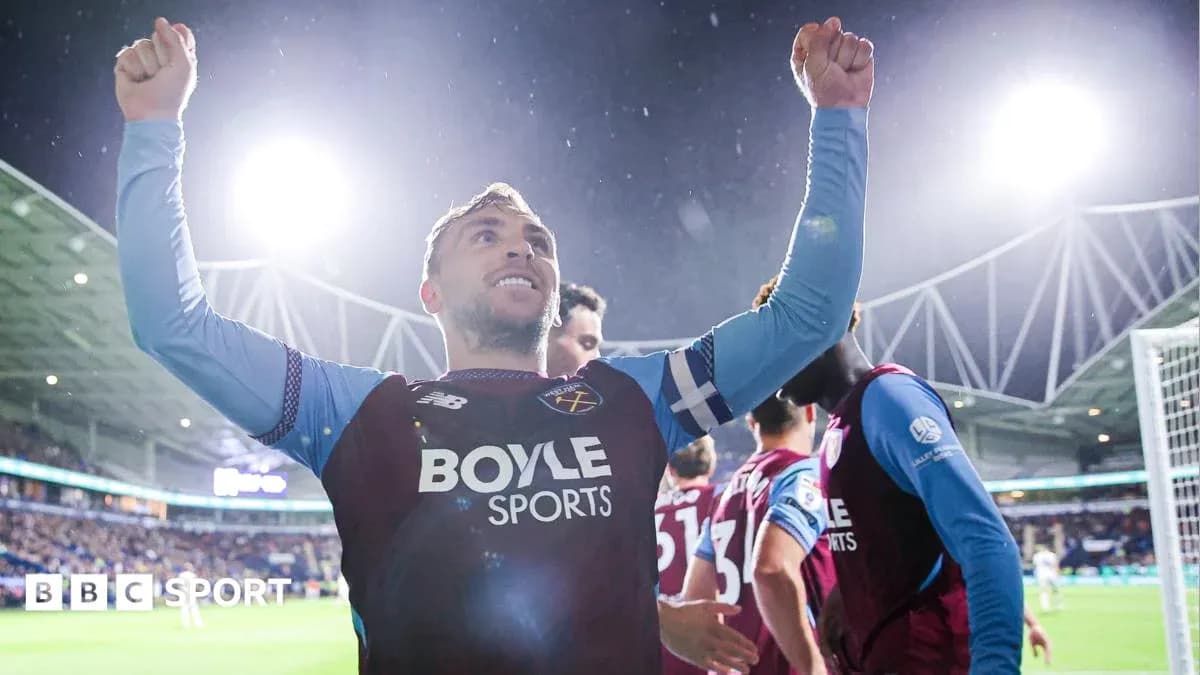
Jarrod Bowen gave them the soundtrack.
The captain, talisman and walking reminder of better days struck early, then again late, to bookend a wild 3-2 win and haul West Ham to the top of the Championship. Three league victories on the spin – something they had not managed since December 2023 – felt like more than just a statistic. It felt like a line in the sand.
Back then, that winter surge persuaded the board to offer David Moyes a new contract. He never signed it. The offer was withdrawn, the form fell off a cliff, and by May West Ham were relegated. The mood since has rarely risen above grim resignation.
So the supporters stayed. They applauded every last player. They delayed the long journey home that, for many, would not end until the early hours. This was a night to savour.
The soundtrack in the away end veered between homage and hostility. There were the familiar choruses about bubbles and West Ham being “massive”, and plenty of love for Bowen. But the loudest, most sustained chants were aimed at former chairman David Sullivan – and none of them were flattering.
Sullivan was nowhere to be seen at Bolton. He has, though, been a regular presence this season: at every home game and even at Watford for last month’s 1-1 draw. For some around the club, that level of visibility has come as a surprise.
When the 77-year-old resigned as chairman in June, saying he wanted to focus on fighting allegations raised in a joint BBC Panorama and Times investigation, many assumed it was the start of a full exit. His departure, coupled with Karren Brady standing down as managing director in April, was seen as a key reason behind a remarkable surge in ticket sales.
West Ham shifted 50,000 season tickets for their first campaign outside the top flight since 2011. Their average league crowd at the London Stadium already tops 60,000. The 53,369 who turned up for the EFL Cup first-round win over Portsmouth set a record for that stage of the competition.
Yet Sullivan remains.
If the complex share agreement announced on 3 September is completed as expected in the coming weeks, he will hold 40% of the club. He is still in the picture, still an important figure. Just not the dominant one he once was.
Inside West Ham, they talk about this summer as a rupture with the recent past.
Czech billionaire Daniel Kretinsky, owner of Royal Mail, is now chairman and is expected to become the largest shareholder with 46%. Chief executive Karim Virani has quickly earned respect for his willingness to front up, engage with supporters and tackle issues that matter to them – not least the club badge, altered in 2016 to coincide with the move from the Boleyn Ground.
Director of football Nils Koppen has genuine weight in recruitment meetings. Transfer business is no longer the mysterious, back-channel affair that infuriated so many. Decisions now go through the proper football and executive structures, rather than being sprung on staff at the last moment.
The scale of the overhaul this summer underlined that shift. Twelve players were sold, including Crysencio Summerville and Mateus Fernandes, and nine arrived.
West Ham smashed the EFL transfer record by paying £22m to Celtic for Belgium international Arne Engels. Yet it is another signing that insiders point to as the clearest sign of a new way of working.
Edvin Austbo, the 21-year-old forward named Norway’s young player of the year after spearheading Viking’s shock Eliteserien title win, had been tracked over a long period before West Ham moved decisively for him at an initial £10m. That kind of patient, data-led, collaborative recruitment is exactly what they say was missing in the past.
This being West Ham, though, nothing is entirely simple.
Lingering over the ownership picture is Amanda Staveley. Her deal in July with former co-chair Vanessa Gold triggered the pre-emption rights process that ultimately led to the current reshaping of the shareholding, with Kretinsky and Sullivan increasing their stakes, and fellow investors Tripp Smith and Terry Brown doing the same.
On paper, if Staveley were to agree terms with Sullivan and Smith – who is set to hold 11% – she could end up with more than half the club. Any such move would again be subject to pre-emption rights, so nothing is straightforward, but the possibility hangs in the air.
Sullivan, for his part, has spoken positively in private about Kretinsky and is understood to be frustrated that the recent ownership wrangling dragged attention away from the transfer window. Those are not the words of a man itching to ignite another civil war at the London Stadium.
Plenty of fans are not so sure.
“It seemed Sullivan was going when he stepped down, but that hasn’t happened,” said Simon Lane, a season ticket holder from north Wales, leaning on a barrier outside the away end 90 minutes before kick-off.
“No-one really knows what to make of it all. Does he want more shares? Does he want to get out? Why would he do a deal with Kretinsky and then sell the whole thing?
“It’s difficult to know what is for the best really. Some fans do like what Amanda Staveley did at Newcastle but Kretinsky puts the right people in place and Karim is talking with fans, which is what we have wanted.
“I am optimistic for the season though.”
On the pitch, that optimism has firm foundations. In Bowen, Engels and a supporting cast full of energy and quality, West Ham possess star power that most Championship sides simply cannot match.
Nuno Espirito Santo knows that talent alone will not carry them back to the Premier League. Not at this club. Not with its history of internal battles and sudden lurches in direction.
Stability and unity are not words that have often sat comfortably alongside West Ham’s name in recent years. Nuno senses the chance to change that.
“I hope it’s better,” he said. “I think it’s the belief of everybody, starting from the ownership to the staff, to the players, and fans, that we are trying to improve and have better days.
“What I see, and feel is unity in all the departments of the club. Five thousand fans on a Tuesday night. (What happened in the past) is behind us. It’s very important to be unified. There is no other way.”
The table says West Ham are leading the chase. The stands, at Bolton and at home, say something even louder: after years of division and drift, this club has a chance to pull itself together.
Whether the boardroom can keep pace with the team on the pitch may yet define their season.