
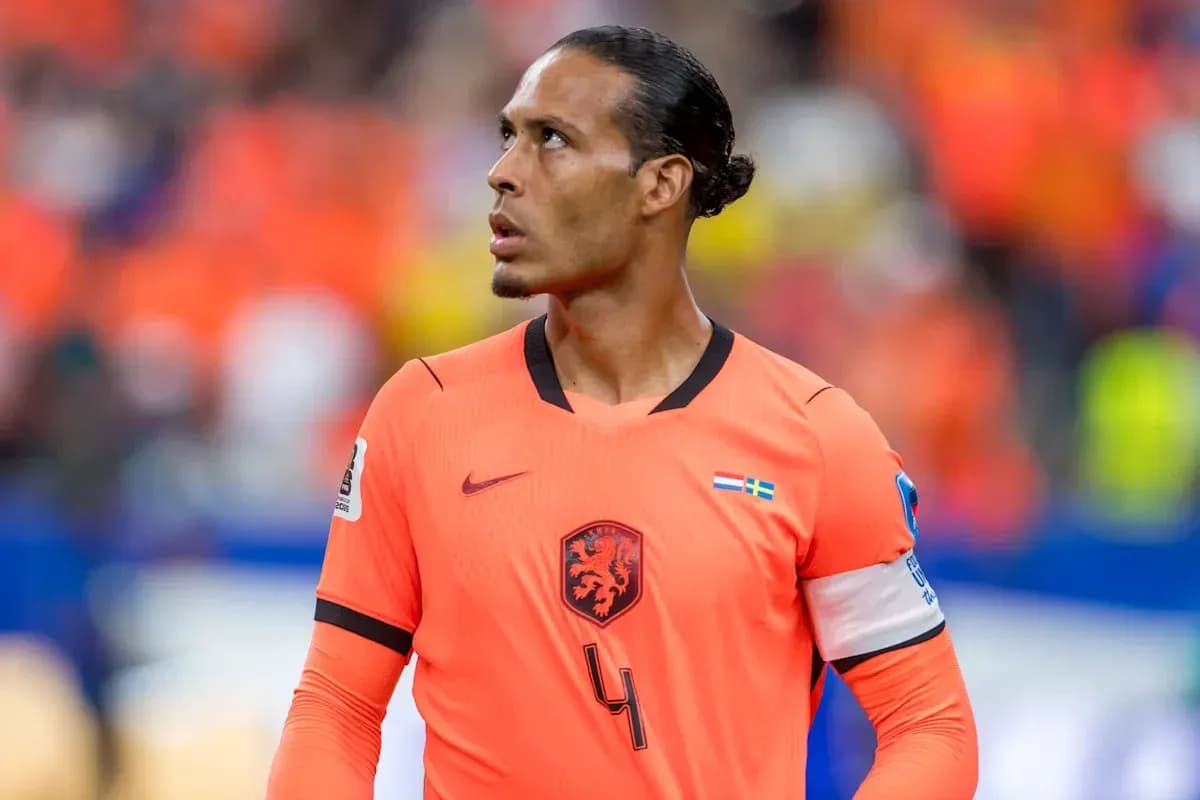
Virgil van Dijk Faces Backlash After World Cup Exit
The Netherlands expected a deep run. They got a gut punch instead.
Knocked out by Morocco on penalties after conceding a stoppage-time equaliser, the Dutch left the World Cup with a familiar cocktail of regret and recrimination. At the centre of the storm: Virgil van Dijk, the captain, the symbol of this era, and now the lightning rod for a furious inquest back home.
Driessen’s broadside: “Time is up”
De Telegraaf did not wait long to set the tone. Columnist Valentijn Driessen, one of the most abrasive voices in Dutch football media, tore into both Van Dijk and outgoing national coach Ronald Koeman, accusing them of betraying the identity of the Netherlands.
“Ronald Koeman and Virgil van Dijk have betrayed everything our national team stands for,” he wrote, a line that cut through the post-match noise and ignited debate across the country.
Driessen argued that the shift to a back three during the tournament was not a bold tactical tweak but a concession to Van Dijk’s shortcomings as organiser-in-chief. In his view, the captain failed to marshal the defence in the group stage, forcing Koeman into a system that moved away from traditional Dutch principles.
Then came the equaliser against Morocco, the moment that will be replayed for years. Driessen laid the blame squarely at Van Dijk’s feet, accusing him of losing his man and allowing the decisive run into the box that led to the late goal. His verdict was brutal and unambiguous: Van Dijk’s “time is up.”
For a player regarded as one of the finest defenders the Netherlands has produced, it was an extraordinary public dismantling – and a raw reflection of a nation that believed this World Cup could, and should, have lasted longer.
One lapse, one collapse
Strip away the emotion and the picture is more complex.
Van Dijk will know he failed in the key moment. With the Dutch clinging to their lead deep into stoppage time, Morocco surged forward and the Liverpool defender could not shut down the run into the area before the cross was converted. For a centre-back whose game is built on reading danger early, owning his box and imposing order in chaos, it was a jarring lapse.
But to reduce an entire campaign to a single defensive error is to ignore how knockout football works. Matches at this level hinge on inches. The Netherlands had chances to kill the tie long before Morocco’s late surge. They did not take them. The punishment was ruthless.
Across most of normal time, Van Dijk did what he has done for years: he won headers, cleared danger, and kept Morocco’s frontline largely at arm’s length. The Dutch defence, while not flawless, held firm for long stretches before that final, fatal crack appeared.
Playing hurt
After the dust settled, Koeman added a crucial detail. Van Dijk, he revealed, had been struggling with a calf problem in the latter stages of the game. The injury had been “bothering him badly,” yet the captain stayed on through extra time, determined to see the job through.
That context matters. A central defender operating at less than full capacity in a stretched, late-stage knockout tie is vulnerable. Mobility dips. Recovery runs slow. The half-yard that usually separates a clearance from a chance starts to disappear.
Van Dijk chose to stay on despite the discomfort, a decision that speaks to his sense of responsibility as captain. He gambled his body on the hope of dragging his country into the semi-finals. The gamble did not pay off, and now every frame of that equaliser is being used as evidence against him.
Legacy under the microscope
This is the price of status. Van Dijk has spent more than a decade at the top, building a reputation as one of Europe’s elite defenders, a leader whose calm presence steadies those around him. He has carried that aura into the national team, where expectations are unforgiving and memories of great Dutch defenders loom large.
One bad night does not erase that history. It does, though, sharpen the focus. When the captain falters at the decisive moment, the criticism is louder, the language harsher, the judgments more final. Driessen’s claim that his “time is up” taps into a wider question: is this the end of Van Dijk’s peak years in orange, or just a brutal chapter in a longer story?
What comes next
For now, the immediate priority is recovery. The World Cup exit has taken its toll emotionally and physically. Time away from the international spotlight will help, as will the chance to reset before the new domestic season.
The Netherlands will soon move into a new cycle, with fresh qualifying campaigns and another tournament on the horizon. Decisions will be made about systems, personnel and leadership. Van Dijk’s role in that conversation will be scrutinised more closely than ever.
Driessen’s tirade may not speak for the entire Dutch football public, but it has ensured one thing: when Virgil van Dijk next pulls on that orange shirt, every touch, every duel, every defensive decision will be judged against this night and this criticism. How he answers it will shape not just the end of his international career, but how it is remembered.



