Viking FK's Two-Headed Coaching Revolution in Champions League
Norwegian champions Viking FK walk into Wednesday night’s Champions League tie against VfB Stuttgart carrying something far rarer than an underdog tag. They arrive with two head coaches, equal in status, shared in power, and absolutely convinced this is the future.
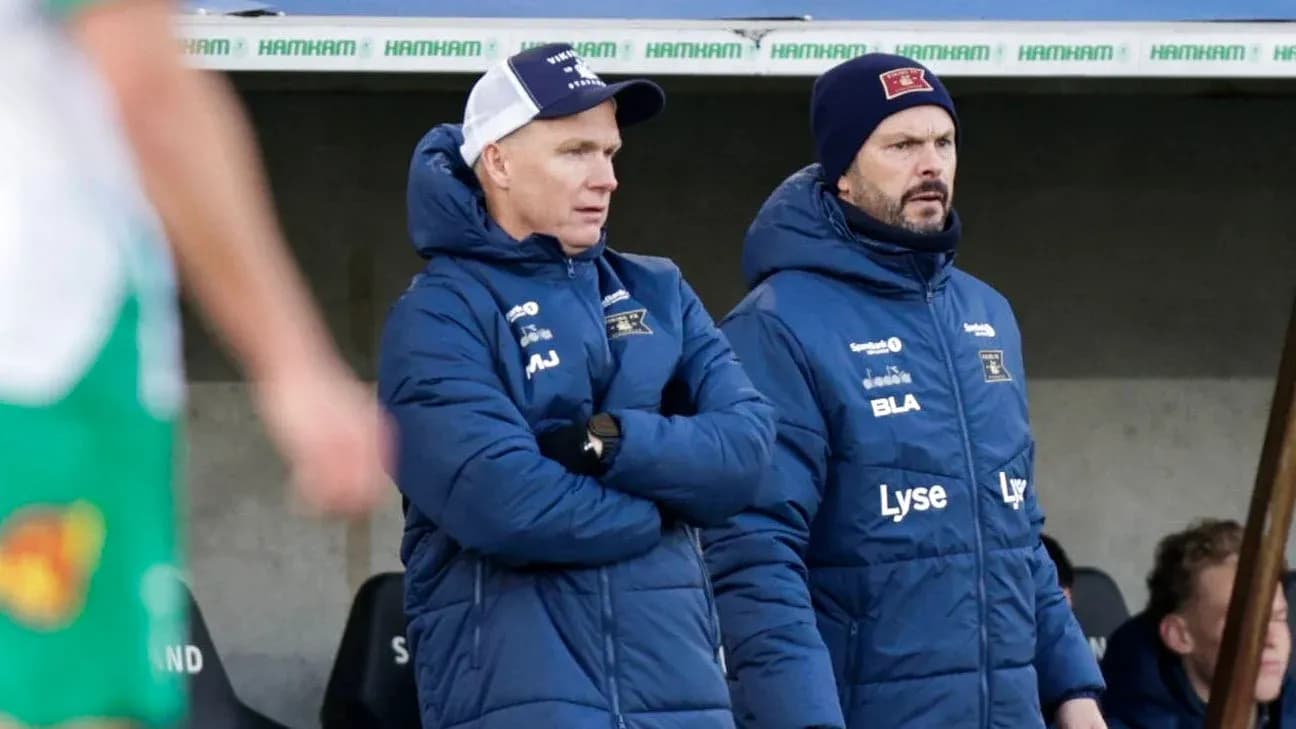
Since January 2021, Morten Jensen and Bjarte Lunde Aarsheim have run Viking side by side. No manager with a trusty assistant in the shadows. No clear hierarchy. Just two men sharing every major call.
They pick the team together. They shape the tactics together. They front up to the cameras together.
And the experiment has not just survived. It has thrived.
A Bold Idea That Changed a Club
What started as a bold structural gamble has turned Viking into one of the most compelling stories in Scandinavian football. Under Jensen and Lunde Aarsheim, the Stavanger club climbed from hopeful contender to outright champion, lifting their first Eliteserien title in 34 years in 2025.
That breakthrough did not arrive as a one-off surge. Viking have stayed in the fight. Season after season, they have held their ground near the top, pushing hard alongside Bodo/Glimt in the title race and refusing to drift back into mid-table anonymity.
The co-coaches’ fingerprints are everywhere: a clear identity, aggressive but organised football, and a squad that looks completely aligned with the message coming from the touchline.
Jensen’s reaction after their play-off victory over Dinamo Zagreb, which sealed Champions League group-stage football, cut through the usual clichés. He called the achievement “overwhelming and everything we’ve ever dreamed of.” For a club that had waited since 1992 to return to this level, the word did not feel excessive.
Shared Power, Shared Burden
On matchdays, the structure is as striking as the results. Jensen and Lunde Aarsheim split responsibilities, workload, and media duties. One does not overshadow the other.
Lunde Aarsheim’s connection to Viking runs deep. He sits eighth on the club’s all-time appearance list, a former midfielder who once did the hard running on the pitch and now does it in the technical area. That history gives the setup extra weight. This is not an outside consultancy project; it is a reinvention led from within.
Their partnership is built on trust and clarity rather than compromise for its own sake. Decisions are shared, not blurred. The squad know exactly who leads them: both of them.
Tripic, the On-Pitch Conductor
Every system needs a conduit. For Viking, that role belongs to captain Zlatko Tripic.
He is the voice on the pitch, the player who translates the co-coaches’ ideas into tempo, aggression, and structure. When Viking need calm, he slows the game. When they need a spark, he provides it.
Tripic delivered when it mattered most in Europe. He scored in both legs of the play-off against Dinamo Zagreb, dragging Viking over the line and into the Champions League main stage for the first time since the early 1990s. Those goals were not just about progression; they were the payoff for four years of shared leadership.
A 1,150km Test of a Philosophy
Now comes the next examination: the MHP Arena, VfB Stuttgart, and a 1,150-kilometre journey from Stavanger into one of Europe’s toughest environments.
The stage could hardly be better suited to what Viking are trying to prove. A club with two head coaches, built on collaboration in a sport obsessed with singular managerial power, stepping into the glare of the Champions League.
Jensen and Lunde Aarsheim will carry their framework with them to Germany: one gameplan, two voices, one team. The task is simple to describe and brutal to execute – impose their style on a Bundesliga side and turn a clever idea into a historic result.
If Viking can make this work under the lights in Stuttgart, the question will no longer be whether co-management can succeed. It will be who dares to copy them.