Valencia's Tactical Masterclass Over Sevilla in La Liga
At Estadio Ramón Sánchez Pizjuán, Valencia beat Sevilla 2-0 in La Liga’s Regular Season - 29, a match defined by Valencia’s ruthless efficiency against sterile home dominance. Both sides started in a 4-3-3, but Carlos Corberan’s team controlled the key spaces without the ball, conceding possession yet dictating where Sevilla could play. Valencia’s vertical transitions and superior shot quality (xG 1.81 to 0.4) underpinned a controlled away performance. Sevilla’s heavy second-half rotation only amplified their structural issues in the final third, while Valencia calmly managed the game through compact spacing, disciplined pressing triggers, and intelligent game-state management.
Scoring Sequence & VAR
The opening phase saw Sevilla trying to build through Lucien Agoumé and Djibril Sow, but Valencia’s front three pressed asymmetrically, steering play toward the flanks and away from central progression. An early forced change for Valencia at 26' reshaped the visitors’ left side: At 26', J. Vazquez came on for J. Gaya, but the defensive block remained cohesive.
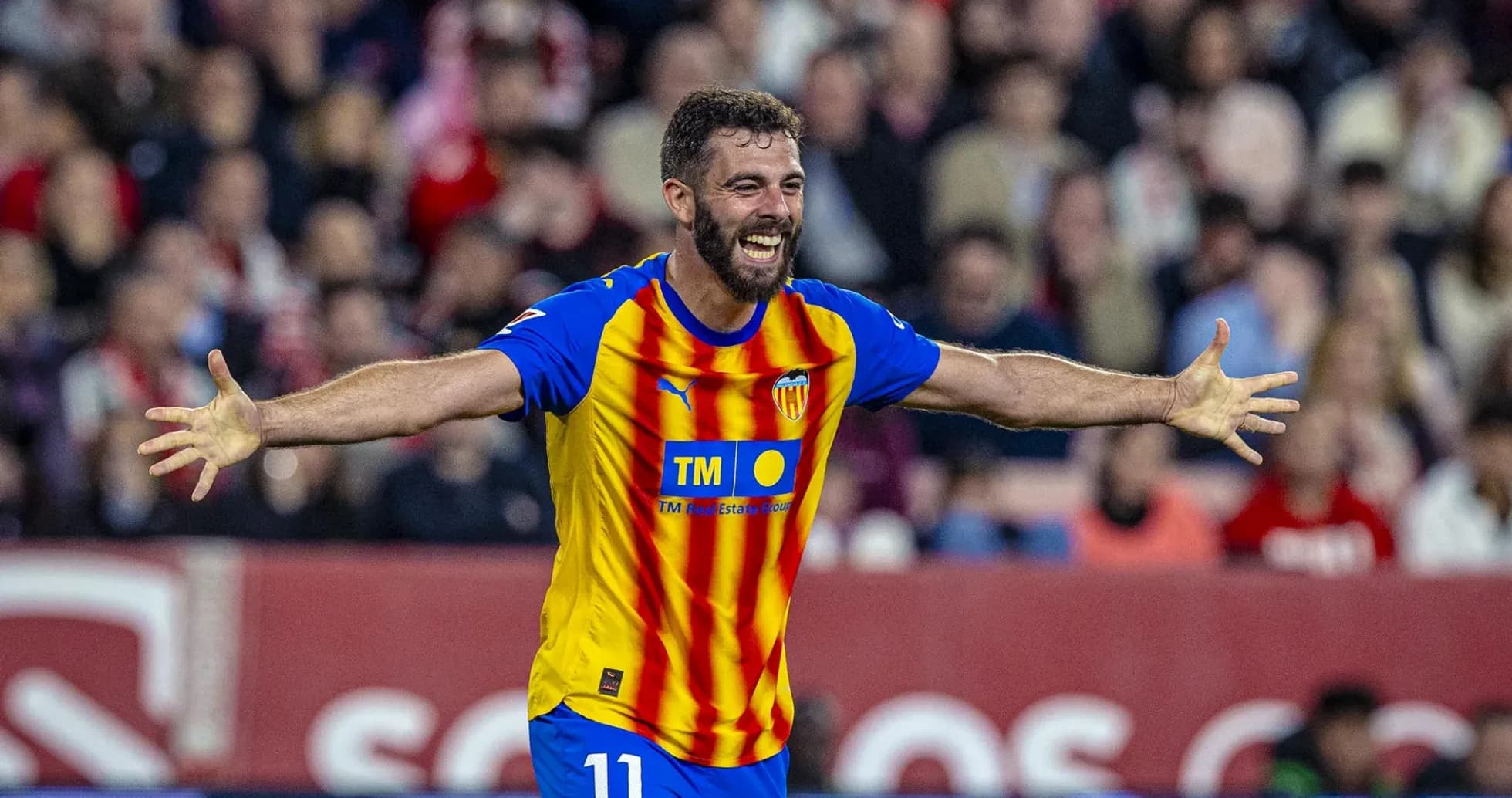
The breakthrough arrived at 38'. Sevilla lost their structure after an attacking phase, leaving space between midfield and defense. Valencia broke quickly, and H. Duro finished a direct move to make it 0-1, punishing Sevilla’s poor rest-defense and slow counter-press.
Just before the interval, Valencia doubled their lead. At 45', L. Ramazani struck after a well-timed run and a precise assist from L. Rioja, again exploiting Sevilla’s disorganized defensive transitions and the gap between full-back and center-back on the home left. The score was 0-2 at the break.
There were no VAR interventions and no disallowed goals. The second half, despite Sevilla’s aggressive substitution wave, did not change the scoreline. Valencia managed the tempo, limited clear chances, and protected their penalty area with composure.
Tactical Shifts & Personnel
Both teams started in 4-3-3, but the interpretation of the shape diverged sharply. Sevilla tried to construct patiently with N. Gudelj and Kike Salas initiating from the back, full-backs G. Suazo and C. Azpilicueta providing width, and a narrow front three looking to combine inside. Valencia, meanwhile, set a mid-to-high block with H. Duro leading the press and L. Ramazani and L. Rioja curving their runs to lock Sevilla’s pivots.
The first big tactical jolt came for Sevilla on 37'. At 37', A. Adams came on for C. Azpilicueta, pushing Sevilla into a more aggressive, attack-minded posture down the right. Suazo effectively became a single full-back, with Adams higher as a wide forward, but this unbalanced the rest-defense. Just one minute later, Valencia exploited that loosened structure for Duro’s opener.
At half-time, Matias Almeyda went all-in. In a triple move at 46', At 46', B. Mendy came on for L. Agoume. At 46', I. Romero came on for A. Sanchez. At 46', J. A. Carmona came on for J. Sanchez. This reconfigured Sevilla into a more direct, vertical side: Carmona offered overlapping energy, Mendy added ball-carrying and forward passing from midfield, and Romero brought fresh legs up front. The intention was clear: increase tempo, break Valencia’s compact block through individual initiative rather than slow circulation.
Later, Almeyda continued to churn his front line. At 71', Oso came on for R. Vargas, and at 73', Castrin came on for D. Sow, further tilting the side toward attacking risk. Despite Sevilla seeing 5 of their shots blocked by the Valencia defense, their persistence never translated into high-quality chances; Valencia’s back four and midfield three stayed narrow, defended the box aggressively, and tracked runners diligently.
Corberan’s changes were about energy management and maintaining structure with a two-goal cushion. Around the hour mark, he refreshed his attack: At 66', L. Beltran came on for L. Ramazani, and at 67', U. Sadiq came on for H. Duro. Beltran’s introduction added defensive work and ball retention on the flank, subtly shifting Valencia toward a more conservative 4-5-1 out of possession, with Sadiq as an outlet for long clearances and hold-up play.
In the final phase, Valencia locked the game down. At 80', D. Lopez came on for A. Almeida, and at 89', Pepelu came on for J. Guerra, reinforcing central zones and closing passing lanes between Sevilla’s lines. Yellow cards reflected the tactical tension rather than chaos: Agoumé’s 28' booking for a foul came as he tried to stop a Valencia transition, underlining Sevilla’s struggle to control counters. Lucas Beltrán’s 74' yellow for Valencia signaled their willingness to break play and disrupt Sevilla’s rhythm. Neal Maupay’s 90+5' card for argument summed up Sevilla’s frustration more than any tactical shift.
The Statistical Verdict
The numbers underline the tactical story. Sevilla had more of the ball (59% to 41%) and more total shots (13 to 9) but generated just 0.4 xG, reflecting a barrage of low-value attempts from poor zones and under pressure. Valencia, with fewer shots, produced 1.81 xG, a clear marker of their superior shot selection and the quality of their transitions.
Sevilla’s passing volume (494 passes at 84% accuracy) dwarfed Valencia’s 351 passes at 76%, but much of it was sterile circulation in front of a compact block. Valencia’s structure forced Sevilla wide, funneled crosses into well-defended areas, and limited clean looks on goal. Both goalkeepers made only 2 saves each, emphasizing how well Valencia protected the center and how rarely Sevilla broke through meaningfully.
Valencia prevailed through defensive resilience and attacking efficiency. Their block absorbed pressure, their pressing triggers induced rushed decisions, and their forwards maximized the few openings they created. Sevilla’s multiple structural tweaks never solved the core issue: an inability to destabilize Valencia’s compact 4-3-3/4-5-1 and to translate possession into genuinely dangerous chances.