
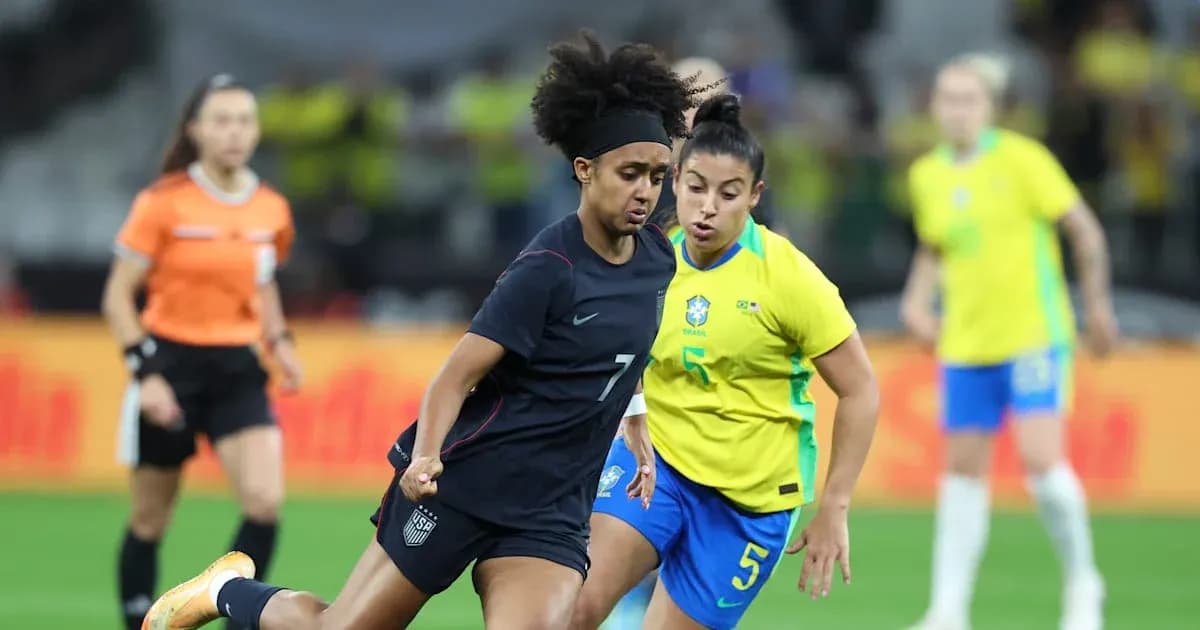
U.S. Women's National Team Faces Hostile Atmosphere in Brazil
The U.S. women’s national team are used to being the destination. Opponents fly in, play in front of largely friendly crowds, and fly out again. Noise, yes. Hostility, not so much.
Brazil changed that.
Emma Hayes took her new-look side into the cauldron on Saturday and watched them get a crash course in South American football: whistles, jeers, heavy challenges, and a 2-1 defeat that stung as much as it educated.
A hostile welcome
From the opening whistle, the U.S. walked into a wall of sound. Every touch came with a soundtrack. Cheers for Brazil, howls for the visitors, a constant shrill of whistles that never really dipped.
“It was an amazing atmosphere,” Hayes said, and it was clear she meant it in the most demanding sense. You can talk about this kind of intensity in team meetings. You can show clips, play crowd noise in training. It still doesn’t replicate 90 minutes of being the villain.
For many in this younger U.S. squad, this was their first taste of it. No soft landing. No comfort zone.
On the pitch, Brazil added a different kind of pressure. Physical, direct, happy to embrace chaos. The U.S. had to deal with a game that never settled, never really flowed their way.
Fast start, faster response
For a brief moment, it looked like the visitors might silence the stadium. Sophia Wilson struck early, her first goal since returning to the national team, and the U.S. had the perfect platform.
It didn’t last.
Brazil hit back with a quick-fire double, turning 0-1 into 2-1 inside the first 15 minutes. The home side fed off the crowd, the noise rising with every tackle and transition. The U.S. never quite wrestled control back.
Hayes’s team had half-chances, flashes rather than waves. Brazil defended with conviction, and the Americans struggled to carve out the kind of clear openings they expect of themselves.
Learning to live in the chaos
Inside the camp, there was no attempt to pin the result on the referee, the crowd, or the conditions. The message was clear: this is about us.
“It’s difficult when it’s a game like that, when you’re being thrown to the ground multiple times and calls aren’t going your way,” captain Lindsey Heaps admitted. The frustration was obvious. So was the resolve.
“But it’s up to us – it’s that mental capacity to stay in a game like that,” she said. The U.S. did stay in it. They didn’t unravel, even as the match grew more fractious.
Heaps pointed to emotional control as one of the team’s biggest areas of growth over the past year. On nights like this, that growth gets tested. Staying level-headed, still creating chances, still believing there’s a way back – those are habits built only under stress.
Wilson echoed that sentiment. She knew the U.S. let their early advantage slip, but she also saw value in the experience.
“We needed to do a better job of controlling the game and keeping that lead,” she said. “But it was a really good test for us, and we felt what it is like to play here in their home country. I think we can take what we need to from this game and the nice part is we get to go again in a few days.”
That “again” is exactly what Hayes wants.
Hayes leans into the discomfort
Rebuilds rarely happen in comfort. Hayes has been blunt about that. If the U.S. want easy, they stay at home, book a friendly in Los Angeles, and enjoy a pleasant evening in front of a supportive crowd.
They chose Brazil instead.
“I am so happy for the experience,” Hayes said. “If we want things to be easy, we stay at home and play in LA or somewhere else. We don’t want easy.”
With World Cup qualifiers looming in November and the possibility of returning to Brazil for the 2027 Women’s World Cup, these nights matter. The hostile whistles, the contentious challenges, the feeling of being penned in – all of it forms part of the education.
The defeat will sit with them for a few days. It should. But it will also fuel Tuesday.
Fortaleza awaits
The second match of this double-header, on Tuesday, will be the 45th meeting between the U.S. and Brazil. History leans heavily toward the Americans, but the recent trend does not. The U.S. are staring at the prospect of a third straight loss to Brazil.
This time, the backdrop changes. Fortaleza steps in with its own edge, its own atmosphere, its own brand of discomfort.
The U.S. know what’s coming now: the noise, the physicality, the chaos. The question is no longer whether they can handle it.
It’s whether they can turn that chaos into a statement performance, in a country they may have to conquer again when the stakes are far higher.



