
Tottenham's Season Review: From Chaos to Hope
Tottenham did not so much finish their Premier League season as survive it. Two points from the Championship, four head coaches in 12 months, a treatment room bursting at the seams and a fanbase braced for the worst on the final day.
They stayed up. Barely.
Now the club is tearing into itself.
An internal review is under way at Spurs that stretches from the dressing room to the data room, from the psychology of ‘Spursy’ collapses to the very turf under their boots. Nothing, not even the club’s showpiece retractable pitch, is off limits.
De Zerbi’s rescue act – and the fallout
Tottenham’s season only veered away from catastrophe when Roberto De Zerbi finally found a pulse in a lifeless campaign. Eleven points from the last six matches dragged them clear of relegation on a fraught final day and gave the Italian just enough breathing space to start shaping the club in his image.
The late surge has not disguised how close they came to disaster. Two points. That was the gap between a club built for Champions League nights and the financial cliff edge of the Championship.
Inside the boardroom, the fallout has been brutal. Sporting director Johan Lange’s position is under serious threat after a chaotic year that saw four different head coaches pass through the technical area. The Dane may yet be nudged into a supporting or handover role if, as expected, Spurs bring in a heavyweight sporting director to front a new football structure.
“Astronomical” injuries and a broken body
The numbers behind Tottenham’s collapse are stark. No Premier League side suffered more injuries. Not just niggles – serious problems, season-shaping absences.
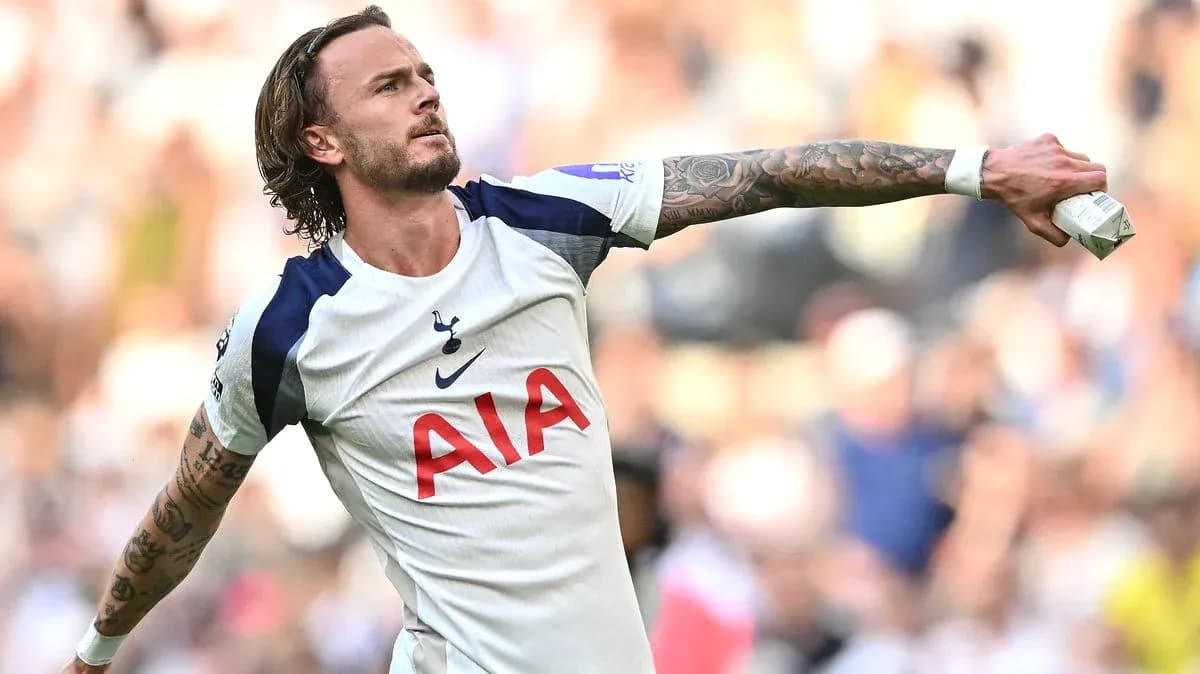
James Maddison, only recently back after a partially torn anterior cruciate ligament finally gave way last summer, did not bother to hide his anger when he spoke after the win over Everton.
“Our situation with the injuries has been worse than any other club,” he said. “People try and say ‘Oh, but we’ve got this and that’, but ours is astronomical, and we need to look at why that is.”
The club has taken that message to heart.
Enter Dan Lewindon: the fixer
The man leading the overhaul is Dan Lewindon, appointed performance director in February after leaving the City Football Group. He walked into Hotspur Way the day before Thomas Frank departed and found a performance and medical operation that had been in churn for years.
Under Geoff Scott, the long-serving head of medicine and sports science, there had been stability. Scott left in 2024 after more than two decades and is now at Nottingham Forest. Since then, the conveyor belt has barely stopped: director of performance services Adam Brett and head of sports science Nick Davies both exited after just a year.
Nick Stubbings arrived last summer from Brentford as the men’s medical lead, following Frank and other former Bees to north London. But it is Lewindon who now holds the scalpel.
With a background spanning football, tennis and rugby at elite level, he has been tasked with solving a problem that has left Spurs with double figures of absentees across each of the past three seasons. Inside the club there is a growing belief that he, alongside De Zerbi, can finally change that narrative.
Coach and performance chief in lockstep
De Zerbi and Lewindon have already formed an important alliance. The pair are understood to speak regularly about reshaping Tottenham’s performance and medical departments to match the standards of Europe’s best.
Peter Charrington, the club’s non-executive chairman, has publicly backed that direction, confirming moves to “modernise our football operation, with a significant focus on raising standards across medical and performance”.
De Zerbi has impressed staff behind the scenes by refusing to gamble recklessly on players’ fitness, even under intense pressure for results. Medical staff talk of a head coach who is clear, consistent and willing to listen. Those who have sat in meetings with him describe a manager hungry for feedback, determined to get decisions right on when to bring players back rather than rushing them to chase a short-term win.
For a club that has too often chased quick fixes, that change in tone matters.
A pitch under the microscope
The review has gone deeper than muscle loads and rehab protocols. It has gone under the grass. Literally.
Tottenham are investigating whether the Tottenham Hotspur Stadium’s retractable pitch – which slides under the South Stand to allow NFL games and concerts – has contributed to a worrying run of anterior cruciate ligament injuries. Spurs have suffered five ACLs in recent years, a figure the club accepts is “too many”. Real Madrid, who also use a retractable surface, have faced similar scrutiny after a spate of injuries.
Early independent testing on matchdays has so far found no difference in bounce or spring between the stadium pitch and the training surface at Hotspur Way. That has not closed the case. More detailed, long-term analysis is planned to ensure nothing has been missed.
Some incidents are simply brutal luck. The club views the ACL injuries to Xavi Simons and Wilson Odobert as examples of misfortune rather than malpractice. The handling of Xavi’s injury at Molineux was reviewed and backed internally: the player wanted to continue but could not, and Spurs believe the physios took appropriate precautions and avoided further damage.
Even so, the question lingers: is there something in the environment, or the way Spurs work, that keeps dragging players back to the treatment room?
Tackling the ‘Spursy’ mindset
The problem is not only physical. This is a club that has worn the ‘Spursy’ label like a scar – a shorthand for collapses, near-misses and late-season stumbles.
Lewindon has pushed hard for a new lead psychologist to be appointed, working full-time with players and the staff around them. The brief is simple and ruthless: harden the minds, not just the muscles. Help them cope with the pressure that comes with playing for a club that expects to be in Europe, not glancing anxiously at the bottom three.
De Zerbi sees himself as part-coach, part-psychologist. That has been clear in his approach. He has held frequent one-on-one meetings, worked to rebuild fragile confidence and used video packages of players’ best moments – at Spurs and former clubs – to remind them who they are at their peak.
The late-season revival did not come from tactics alone. It came from players who, for the first time in months, believed again.
A new model: pods, not production lines
On the medical side, Lewindon is preparing a structural shift. Spurs are exploring a pod-based model in which small groups of four to six players are surrounded by a dedicated physio and sports scientist.
Instead of staff spreading themselves thinly across the entire squad, the idea is to narrow their focus. Like teachers with fewer pupils, they should gain a deeper understanding of each player – their body, their position, their habits, even their personality.
That, Spurs hope, will lead to sharper decisions on training loads, match preparation and return-to-play timelines. It also dovetails neatly with De Zerbi’s belief that elite performance starts with understanding the individual: their family life, their role on the pitch, the way they respond to stress and expectation.
Rebuilding trust in the treatment room
One of the quieter problems at Tottenham has been trust. Some players, at times, have preferred to lean on medical staff from previous clubs or their national teams, or on privately hired performance experts, rather than fully buy into the club’s own department.
This is not unique to Spurs. Modern footballers often have entourages of specialists around them. But Tottenham want to pull those strands together rather than fight them.
The plan is to create a single, agreed treatment and performance strategy for each player – one that club staff, personal trainers and international medics all sign off on. No mixed messages, no competing programmes, no confusion about who is in charge.
Transfers, managers and the cost of chaos
The review is expected to lead to changes in personnel behind the scenes once Lewindon completes his work. New ideas, new voices, better integration between departments.
Recruitment will not escape scrutiny either. Spurs are already looking at the profile of players they bring in, with a view to signing more robust footballers capable of coping with De Zerbi’s intense, high-energy style. Availability, as the saying goes, is a skill. Tottenham intend to buy more of it.
Inside the club there is also a frank admission that the managerial carousel has taken a toll on players’ bodies. Each new head coach arrived with different training demands, often ramping up intensity to make an early impression. Players, desperate to impress in return, pushed themselves to the edge. The result: more soft-tissue injuries, more setbacks, more games without key names.
That cycle has to stop.
A line in the sand
Tottenham know they cannot live through another season like the one they have just endured. The margins were too fine, the warning too loud.
De Zerbi has given them a foothold, a sense of direction. Lewindon has given them a plan. The changes they are making – to minds, muscles, methods and even the pitch beneath their boots – will not transform results overnight. The club accepts that.
But if this course correction works, the story around Spurs could shift from ‘Spursy’ collapses and injury crises to something far more dangerous for their rivals: a team that is fit, focused and finally built to last.



