
Tottenham's Reset: From European Dreams to Premier League Survival
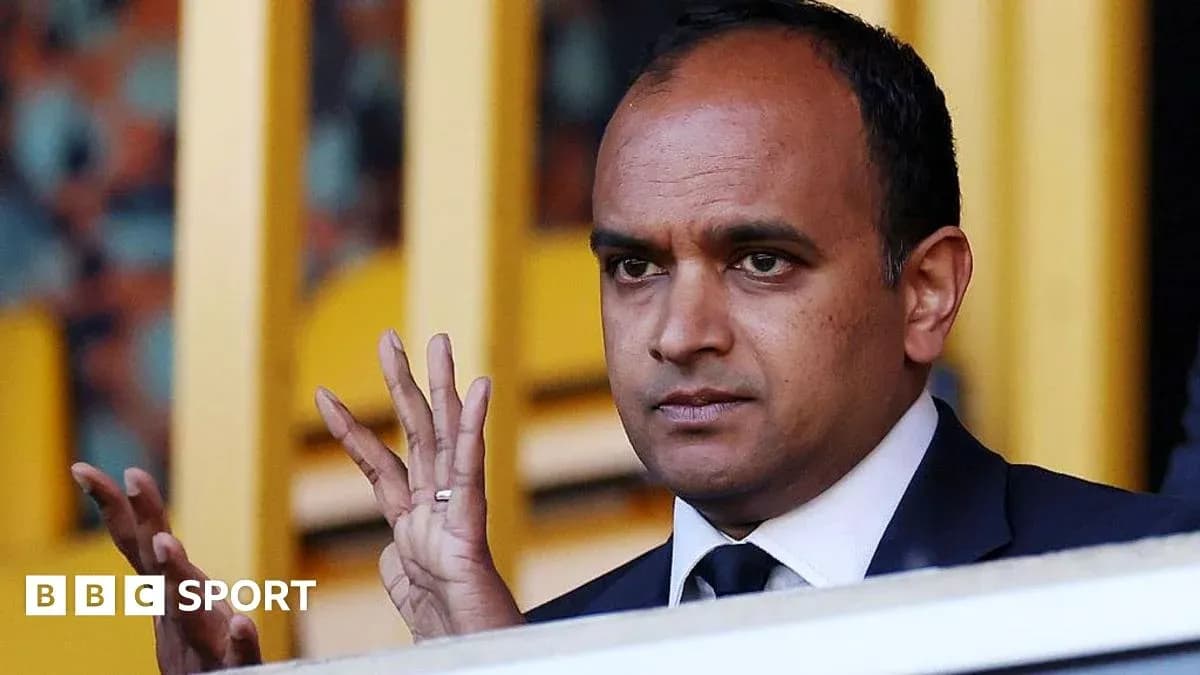
Vinai Venkatesham walked into Tottenham Hotspur last June talking about Europe. He ended his first season clinging to the Premier League cliff edge, celebrating survival with the sort of hollow relief that tells its own story.
“It was just a huge outpouring of relief,” he admitted after a final‑day win over Everton finally dragged Spurs over the line. Relief, not pride. Survival, not progress.
For a man hired to modernise a super-club, the scale of what he found behind the curtain has forced a brutal conclusion: this is not a tweak, not a turnaround. This is a reset.
From European ambitions to a relegation fight
On day one, Venkatesham thought he had a platform. Tottenham had just finished 17th under Ange Postecoglou, but they had also lifted the Europa League, their first trophy since 2008. The squad contained seasoned internationals. The stadium and training centre were the envy of the league.
“On my very first day, what I thought would be a realistic target for the men’s first team would be competing for European places,” he said.
Then he looked closer.
“A few months after I joined, when I was no longer an outsider, I would have told you the club was in a significantly worse state in some places than I thought.”
The verdict was stark. On the business side – stadium operations, commercial – Tottenham were, in his words, “really strong”. On the football side, over the past five years, the Premier League had accelerated. Spurs had not kept up.
“When you look at where Tottenham were in many of those areas, compared to where I believe other Premier League clubs are, there was a significant gap. In some areas really quite worryingly so.
“I don’t think that there was what I would call a relentless obsession with football success.”
The training centre, he pointed out, is “amazing, one of the best, if not the best in the world”. Yet it “looks more like a five-star hotel than it does a performance environment”. That, he says, will change this summer. So will the level of expertise around the football operation. It has to.
Thomas Frank: the slow unravelling
For a brief spell, it looked like the new era might not be so painful. Thomas Frank, appointed last June, lost just one of his first 10 games in all competitions. The mood flickered. The table didn’t look quite so ominous.
Then the slide began.
By February, when Spurs finally sacked Frank, the only real surprise among supporters was that he had lasted that long. Venkatesham and sporting director Johan Lange were accused of dithering, of watching the season burn.
He rejects that idea.
“There’s been plenty of coverage that the club was passive during this period. And that’s absolutely not true,” he said.
Behind the scenes, they weighed everything: results, the probability Frank could turn it around, the impact a change might have on the January window, the fixture list, and the thin, unpredictable market for interim head coaches.
The calculation still led them into trouble.
The De Zerbi pursuit and the Tudor misstep
Once Frank had gone, Tottenham aimed high. They moved for Roberto de Zerbi as a permanent appointment, sounding out the Italian as he prepared to leave Marseille.
They didn’t get him. Not then.
De Zerbi, Venkatesham confirmed, was initially unwilling to take the job mid-season. That hesitation pushed Spurs towards a left-field solution: Igor Tudor on a short-term basis.
It was a gamble they knew carried risk. Tudor had managed in “very high-profile and high-pressure environments”, made “an immediate impact” at previous clubs and brought a very different personality to Frank. That contrast, they felt, might jolt a flat dressing room.
But he had no Premier League experience. The risk bit hard. Tudor lasted seven games before leaving by mutual consent.
Asked if it was a mistake, Venkatesham did not dance around it.
“It didn’t work out. I think it’s very clear it didn’t work out. And I don’t think that is in question. I don’t think anybody would argue anything else.”
For a fanbase already seething after back-to-back 17th-place finishes, it became another flashpoint.
From Levy’s lightning rod to Venkatesham’s storm
For 25 years, Daniel Levy absorbed most of the anger when things went wrong. His departure in September removed that lightning rod. The spotlight, and the fury, have since shifted.
Venkatesham has felt it.
“I understand the frustration around supporters. I think Tottenham supporters have been frustrated for some time. This is two 17th-place finishes in a row. It’s clearly not good enough.”
He insists he has not considered walking away.
“The club had some serious challenges that it needs to address on the football side. We know what those are. We are addressing them. We are fixing them. Those challenges have not disappeared overnight. They built up over many years.
“I wish I could wave my magic wand and fix them overnight, but that is not possible. It takes some time to fix those issues.
“So I have complete confidence in what we’re doing, how we’re doing it. But supporters are rightly impatient. So I have to weather that storm.”
The abuse, he says, has often crossed the line.
“It’s not easy. You have to develop a thick skin. I’m helped by the fact that I’ve been in football for a while, for the last 15 years, so it’s not new to me.
“It’s a game of opinions, and I have absolutely no problem with being criticised. I’ve got no problem with anyone in the game being criticised, it’s just part of the job.
“The challenge in football is that that criticism frequently goes way past the line for players, referees, executives.”
De Zerbi’s shock therapy
The mood around the training ground changed when De Zerbi finally walked through the door. Late, but not too late.
He took 11 points from seven games and kept Tottenham in the Premier League. More importantly, those inside the club talk of a jolt of belief, a clarity of idea, a dressing room that suddenly feels alive again.
“I think he has made an extraordinary impact so far,” Venkatesham said.
“We have to recognize that it’s early days, and we also need to recognize that he’s come into a very specific situation.
“It is hard to underestimate the scale of the challenge he walked into. And it’s hard to describe what a significant impact he has had in the dressing room with all the players.
“I think he’s an excellent coach, and we think that he plays the style of football that our supporters and the broader football public want to see.”
This time, De Zerbi is not a stop-gap. He is expected to be central to everything that happens next, especially recruitment.
Raising the ceiling, rebuilding the squad
Tottenham have already moved off the pitch. Talks have been held with former Borussia Dortmund sporting director Sebastian Kehl. The wage ceiling has been raised to attract a higher calibre of player. The message is blunt: the squad is not right.
“The squad needs work and the squad hasn’t got the right balance,” Venkatesham said.
“We need experience and leadership and also that kind of physical robustness to play in the most demanding league that exists.
“We need to strengthen the club over multiple transfer windows but this transfer window, in particular, is going to be critical.”
The stadium is world class. The training ground is pristine. The commercial operation hums. None of that counts for much if the team keeps flirting with the drop.
Tottenham have survived. Now comes the real question: can Venkatesham’s reset, and De Zerbi’s football, drag this club back to where he thought it belonged on day one – or has the Premier League’s race already moved on without them?



