Tottenham's Dual-Surface Pitch Under Scrutiny for Player Injuries
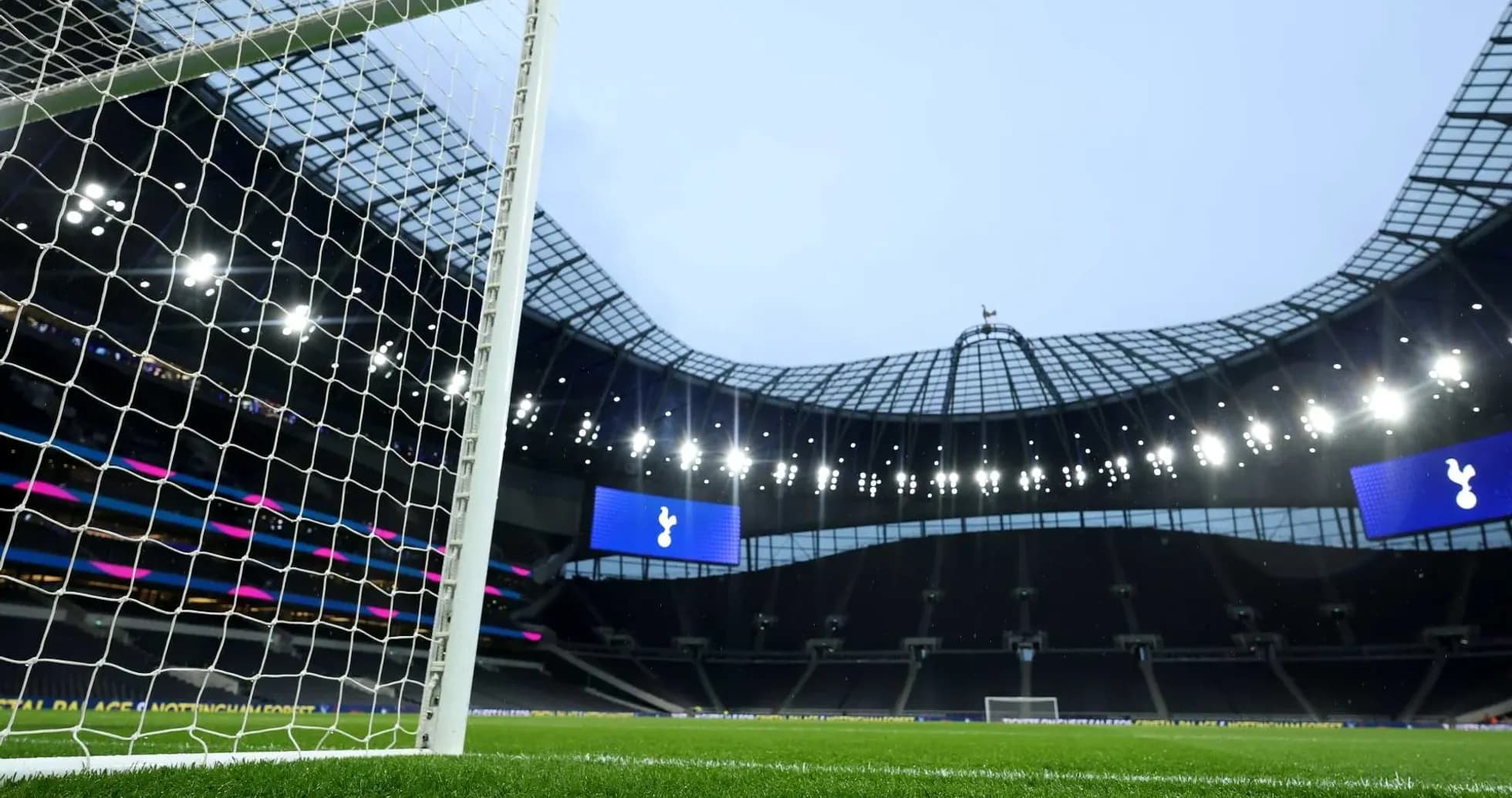
The Tottenham Hotspur Stadium was built to be a statement. A sliding grass field that disappears to reveal an artificial surface for NFL and concerts; a gleaming, multi-purpose arena that screams modernity and revenue streams.
Now that same engineering showpiece is under suspicion. Not for how it looks. For what it might be doing to players’ legs.
A hi-tech marvel under the microscope
According to Sky Sports, Spurs’ new performance director Dan Lewindon has launched a deep review into whether the club’s dual-surface pitch is playing a part in a worrying spike of serious leg and ligament injuries, particularly at home.
Independent testing has already been done on the bounce and surface tension. The science, so far, refuses to give a clear verdict. The data is inconclusive, so the club is now pushing on with further analysis, benchmarking the Tottenham surface against others across the Premier League.
The concern is not theoretical. It is personal.
Dejan Kulusevski. Radu Dragusin. Wilson Odobert. All have suffered major setbacks on that pristine strip of grass in N17. James Maddison partially tore his ACL in a home game against Bodo/Glimt, then later ruptured it completely. Each incident adds another layer of anxiety, another question for Lewindon’s team to answer.
Spurs are not alone in their unease. Real Madrid are conducting their own investigation into a cluster of ACL injuries since the installation of a retractable pitch at the revamped Santiago Bernabeu. The industry’s cutting edge has collided with the game’s most brutal injury.
A department under strain
Lewindon’s work has not stopped at the turf. His three-month review has, according to reports, exposed deeper structural issues inside Tottenham’s performance operation.
The club hierarchy increasingly believes there has been too little integration between medical and coaching staff, too few shared decisions, and too many players falling into a cycle of repeat injuries. Silos instead of a united front.
Spurs’ response is to go smaller, not bigger. The plan is a “small-team approach”: specific physios assigned to groups of around six players, tasked with tailoring individual training plans and sharpening the quality of physical preparation. Fewer faces, more accountability. More detail, less drift.
Four managers, one body of players
The pitch and the performance department are only part of the story. The dugout has been a revolving door, and the players’ bodies have paid the price.
In the space of a single year, four different head coaches have led the team: Ange Postecoglou, Thomas Frank, Igor Tudor and Roberto De Zerbi. Each brought different methods, different tactical demands, different training loads.
For a squad already stretched, that constant tactical whiplash has been brutal. Players have had to lurch from one intensity to another, from one physical profile to the next. Inside the club, there is a growing belief that this lack of continuity has pushed the risk levels up, as muscles and ligaments struggled to keep pace with each new regime.
The Xavi Simons flashpoint
Amid the broader injury crisis, one incident has become a lightning rod. Xavi Simons’ season-ending ACL rupture at Wolves triggered a wave of anger from supporters and scrutiny from outside.
During that win at Molineux, Simons went down, received ice spray, and was allowed to return to the pitch before eventually being stretchered off with a ruptured ACL. To many watching, it looked like a clear misjudgement.
Inside the club, they see it very differently. Tottenham have defended their medical staff robustly. Lewindon is understood to have been very satisfied with how the situation was handled. Simons wanted to continue. An ACL test is notoriously difficult to perform at pitchside in the heat of a Premier League game. On that basis, the decision to let him try to play on has been deemed correct internally.
Crucially, Spurs insist his brief return did not cause any further damage. The injury, in their view, was already done.
That episode, though, was only one flashpoint in a grim opening spell for De Zerbi. In his first three matches, Cristian Romero and Destiny Udogie also suffered serious injuries, compounding the sense of crisis.
The Italian is now pushing hard for stronger support structures around the squad. He wants a team psychologist brought in to help knit together the performance and medical departments, and to improve communication in a group that has been stretched to breaking point.
Maddison’s blunt verdict
From the dressing room, the frustration has a human face and a clear voice. James Maddison has been outspoken about the scale of the problem.
“Our situation with the injuries has been worse than any other club,” he said. “People try and say, ‘Oh, but we’ve got this and that’. But ours is astronomical, and we need to look at why that is.”
He is not interested in turning every incident into a conspiracy. Sometimes, he argues, it really is just the brutality of elite football.
“Sometimes it can just be unlucky, sometimes it can be a coincidence, like me doing my ACL or [Dejan] Kulusevski getting a horrendous knock off [Marc] Guehi. That’s not the medical team, that’s not the pitch or all the theories that you see, sometimes that’s rubbish.”
Yet Maddison is absolutely convinced about one thing: the injuries changed the season.
“We’ve been a bit unlucky,” he said. “But like I said, the big names that we’ve missed, it does affect you and you can’t just deny that. Myself, Kulusevski and [Mohammed] Kudus, and [Rodrigo] Bentancur missed three months and whatnot. If you had had them for the whole season, we wouldn’t have been in this situation, I strongly believe. That’s just not me being naive, that’s just a fact. But it is the situation we find ourselves in, and I am just proud of the lads to dig deep today.”
For a club that found itself fighting to stay clear of relegation, that belief stings. It also underlines what is at stake in Lewindon’s review.
Tottenham built a stadium to host the future of sport. Now they are racing to prove that its most celebrated feature is not quietly wrecking the present.