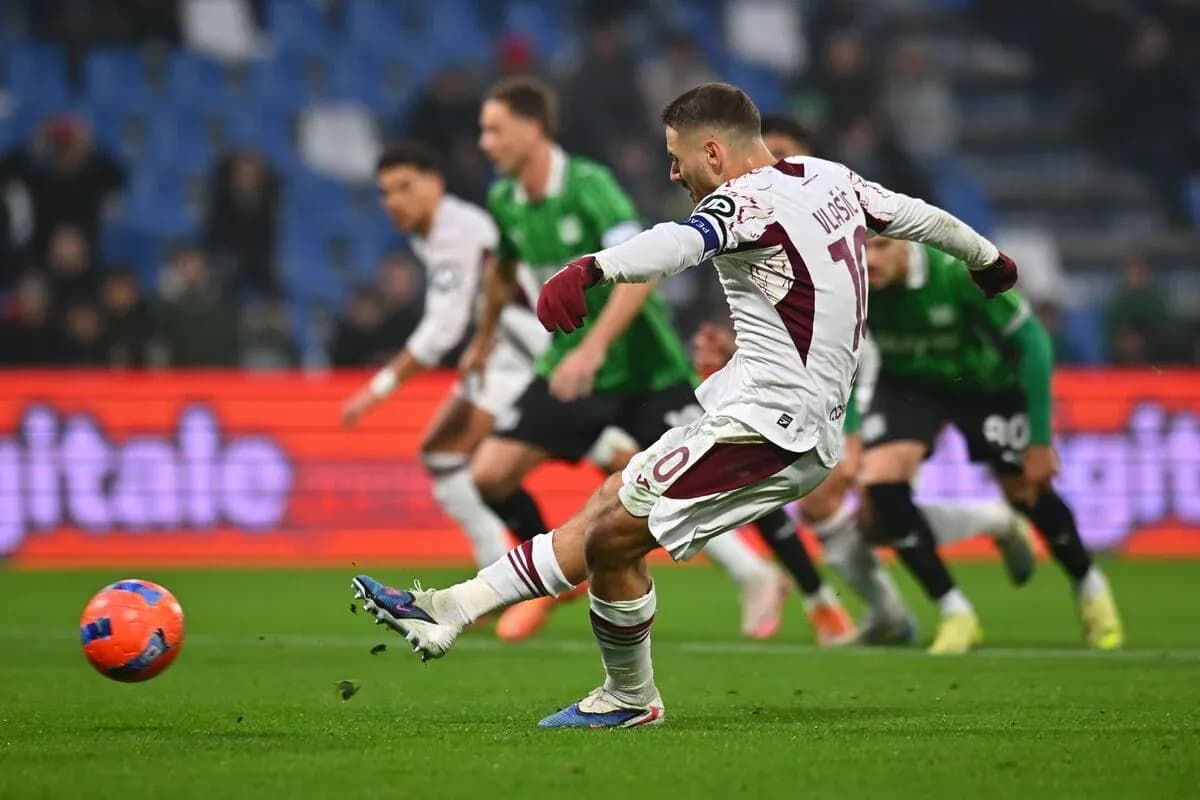
Torino 2–1 Sassuolo: Serie A Comeback Reshapes Mid-Table
Torino 2–1 Sassuolo at Stadio Olimpico Grande Torino, a comeback that reshapes the mid-table picture in Serie A. Torino climb from 44 to 47 points and ease further away from any late relegation anxiety, while also closing the gap to the top half. Sassuolo, stuck on 49 points, miss a chance to consolidate their top‑10 position and edge towards the European conversation.
The game’s first flashpoint came on 38 minutes when Luca Lipani was booked for holding, a sign of Sassuolo’s need to break up Torino’s early pressure. The second half exploded into life on 51 minutes: first, Luca Marianucci went into the book for tripping, and from the same spell of momentum Sassuolo struck. Kristian Thorstvedt arrived from midfield to finish a move engineered by Lipani, whose pass unlocked the home defence for the opener.
Torino’s response was immediate and aggressive. On 59 minutes Leonardo Colucci made a double change, with Marcus Pedersen replacing Valentino Lazaro and Duván Zapata coming on for Alieu Njie, adding fresh power on the right and in the box. Fabio Grosso answered on 63 minutes, withdrawing Lipani for Ismael Koné and introducing Domenico Berardi as Cristian Volpato’s replacement to sharpen Sassuolo’s attacking edge.
The game grew more heated on 64 minutes when Matteo Prati was booked for roughing, but Torino channelled that edge into an equaliser. On 66 minutes Giovanni Simeone levelled the match, finishing clinically after Enzo Ebosse pushed forward from the back and supplied the assist to make it 1–1.
Colucci doubled down on midfield energy a minute later, as Emirhan Ilkhan replaced Prati on 67 minutes. The decisive moment followed quickly: on 70 minutes, substitute Pedersen capped his impact by scoring Torino’s second, converting from close range after a strong contribution from Zapata, whose assist turned the game on its head.
Grosso turned to his bench again in search of a response. On 75 minutes Ulisses Garcia replaced Josh Doig at left-back, and a minute later M’bala Nzola came on for Andrea Pinamonti to refresh the central striking role. With Torino now protecting a lead, Sassuolo sought more control in midfield; on 84 minutes Nemanja Matić made way for Darryl Bakola, adding legs in the centre.
The closing stages were fragmented. Thorstvedt collected a yellow card for tripping on 86 minutes, reflecting Sassuolo’s frustration. In the same minute, Torino rotated their attack and left flank: Sandro Kulenović replaced Simeone, and Niels Nkounkou came on for Rafael Obrador. Nkounkou was quickly in the referee’s notebook for holding on 89 minutes as Torino dug in to defend their advantage. Deep into added time, at 90+3 minutes, Gvidas Gineitis received a yellow card, the final act of a tense finale that Torino ultimately managed out to secure all three points.
Fixture Statistics & Tactical Audit
- xG (Expected Goals): Torino 2.82 vs Sassuolo 2.1
- Possession: Torino 48% vs Sassuolo 52%
- Shots on Target: Torino 4 vs Sassuolo 7
- Goalkeeper Saves: Torino 5 vs Sassuolo 2
- Blocked Shots: Torino 4 vs Sassuolo 3
The numbers suggest a finely balanced contest tilted by Torino’s sharper exploitation of key moments. Sassuolo had more of the ball and more shots on target (52% possession, 7 shots on target), forcing Alberto Paleari into five saves, but Torino generated the higher xG with more volume and better shot quality (18 total shots, xG 2.82 vs 2.1). That profile underpins the idea of Torino’s attack being more incisive when it mattered, while Sassuolo’s pressure was less efficiently converted into clear chances. The 2–1 scoreline broadly reflects the underlying chance creation, with Torino marginally ahead on expected output and translating that edge into the comeback win.
Standings Update & Seasonal Impact
Torino started the night 12th on 44 points with a goal difference of -18, having scored 41 and conceded 59. The 2–1 victory adds three points and a +1 swing to their goal difference: they move to 47 points, 43 goals for and 60 against, for a new goal difference of -17. That keeps them in the safety of mid-table and nudges them closer to the pack chasing the top half, trimming the gap to sides like Sassuolo above them.
Sassuolo came into the fixture 10th on 49 points with a goal difference of -2 (44 scored, 46 conceded). Defeat means they remain on 49 points, but their goals for rise to 45 and goals against to 48, shifting their goal difference to -3. That dents their push for a higher top‑half finish and leaves them vulnerable to being reeled in from below, while also widening the gap to the fringes of the European places.
Lineups & Personnel
Torino Actual XI
- GK: Alberto Paleari
- DF: Luca Marianucci, Saúl Coco, Enzo Ebosse
- MF: Valentino Lazaro, Matteo Prati, Gvidas Gineitis, Rafael Obrador
- FW: Nikola Vlašić, Alieu Njie, Giovanni Simeone
Sassuolo Actual XI
- GK: Arijanet Murić
- DF: Woyo Coulibaly, Sebastian Walukiewicz, Tarik Muharemović, Josh Doig
- MF: Luca Lipani, Nemanja Matić, Kristian Thorstvedt
- FW: Cristian Volpato, Andrea Pinamonti, Armand Laurienté
Expert's Post-Match Verdict
Colucci’s in-game management was the decisive factor. Torino’s structure in a 3‑4‑2‑1 gave them enough stability to ride out Sassuolo’s spells of possession (48% vs 52%), but it was the timing and profile of the substitutions that flipped the contest. Pedersen and Zapata directly combined for the winner, while Ilkhan’s introduction helped Torino contest the midfield after Thorstvedt’s opener. The home side translated a slightly superior xG into a winning margin (2.82 vs 2.1), underlining the effectiveness of their attacking adjustments.
For Grosso, Sassuolo’s approach delivered territorial control and more efforts on target (7 vs 4), yet the defensive structure faltered once Torino increased the tempo down the flanks. The removal of Lipani, who had assisted the opener, coincided with a loss of grip in midfield, and later attacking changes failed to restore cohesion. Statistically, Sassuolo created enough to take something from the game, but their inability to protect a lead and their less efficient finishing turned a competitive away performance into a damaging defeat in the race for top‑half security.