Spain’s New World Order: A Footballing Renaissance
There was a time when Spain walked into every tournament as if the trophy already had their name etched on it. From 2008 to 2012, La Roja didn’t just win; they rewrote the sport’s grammar. Euro, World Cup, Euro. The rest of the world chased shadows while Spain passed teams to death.
Then the lights went out.
The crash after that golden era was brutal. A decade of failed resets, early exits and identity crises forced a proud football nation to swallow its pride. The entitlement vanished. The scars stayed.
Now, as Spain head to the 2026 World Cup in North America, the mood is very different. The arrogance has gone. The belief hasn’t.
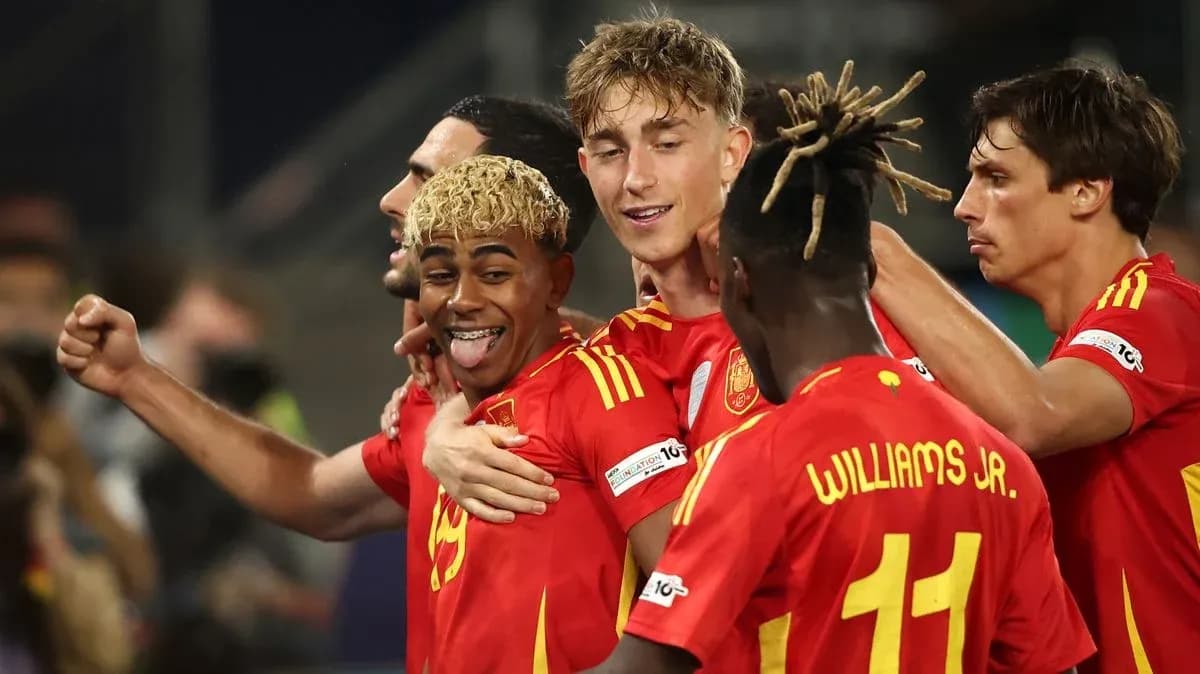
They arrive as European champions, fresh from a ruthless Euro 2024 campaign in which they cut through Croatia, Italy, Germany, France and England. Luis de la Fuente’s side didn’t just lift the trophy; they re-established Spain as a modern superpower with a clear idea of who they are and how they want to play.
For Spanish-American journalist and ITV World Cup presenter Semra Hunter, this version of La Roja is not burdened by the old “win or bust” hysteria. It is something more dangerous: a “beautifully structured” machine that knows it can go deep again.
From Spoiled to Sober
The relationship between Spain and its national team has been rewritten.
Once, every squad walked into a storm of impossible expectation. Anything less than perfection felt like failure. That suffocating pressure has eased, replaced by a more mature realism.
Hunter sees a fanbase that has finally learned from its excess. The country gorged itself on success from 2008 to 2012 and convinced itself that dominance was permanent. When the fall came, it was savage. Tournament disappointments piled up. The aura evaporated.
That bruising decade hardened the public. Doubt became the default setting, and De la Fuente felt it keenly before Euro 2024. The scepticism peaked just in time to fuel a backlash.
Going into the tournament, the manager was hammered from all angles. The squad selection was questioned, the style doubted, the ceiling dismissed. “Almost no hope,” as Hunter puts it. The players responded by tearing through the competition with a chip on their shoulder and a point to prove. They emerged as the standout side of the summer.
Now the mood is different. The trust is back. The fans believe again, but without the old ultimatum. The demand is no longer “win or you’re failures.” It’s “we know you’re good enough to compete with anyone.”
That is a far healthier place to start a World Cup.
The Yamal–Williams Anxiety
If Spain are to climb to the summit again, their two most electrifying weapons must be ready to explode, not merely participate.
The camp is quietly sweating over the fitness of Lamine Yamal and Nico Williams, two wingers who tilt the pitch and tilt the odds.
Yamal, still only 18, picked up a hamstring injury in April. He is expected to make the World Cup, but no one can say with certainty what version of him will show up on opening day. A fully sharp Yamal changes everything. A half-fit one is a different story.
Hunter doesn’t mince her words about their importance. In her eyes, they are two of the most unique wide players in the game, the kind that give Spain an edge they simply don’t have without them. Yamal brings chaos. He drifts inside, toys with defenders, and has already started to occupy that “Messi zone” between the lines, where one touch or one feint can flip a match.
Williams, Spain’s breakout star at Euro 2024, suffered his own hamstring issue in May. The early signs are kinder; he is expected to return in time to train properly before the tournament. His direct running, aggression and end product turned him into a nightmare for full-backs last summer.
Spain’s structure, Hunter insists, is strong enough to win games without them. But to go all the way? To survive the razor’s edge of knockout football? They need both at full throttle.
Midfield: An Embarrassment of Riches
If there is one area where Spain still live like royalty, it’s the middle of the pitch.
Rodri anchors everything. The Manchester City midfielder is the metronome and the shield, the player who dictates tempo and snuffs out danger before it grows teeth. Beside and ahead of him, a carousel of talent rotates: Pedri, Gavi, Dani Olmo, Martin Zubimendi, Mikel Merino, Fabian Ruiz. It is a department that most nations can only dream of.
For Hunter, two names are beyond debate. If Rodri and Pedri are fit, they start. End of discussion.
Pedri brings the subtlety and imagination that turns possession into incision. Gavi adds bite and fury, the controlled aggression that Spain once lacked. Dani Olmo can pierce lines, arrive in the box and finish like a forward. It’s a blend of craft, grit and goals.
The injury to Fermin Lopez, though, stings. The Barcelona midfielder, who delivered 30 goal contributions this season, broke his foot and underwent surgery, ruling him out of the tournament. Hunter believes he could easily have been Spain’s breakout star, a fresh face to light up the summer.
Yet even here, Spain’s depth softens the blow. Zubimendi offers a direct understudy to Rodri. Others can shuffle roles. Versatility is baked into the Spanish footballing education. They are, as Hunter puts it, “completely spoiled for choice.”
The Old Wound Up Front
For all the elegance in midfield, one familiar flaw still glares back from the team sheet.
Spain do not produce classic, ruthless No.9s. They haven’t for a long time.
Hunter calls it their most obvious weakness. Since the days of David Villa and Fernando Torres, La Roja have not fielded a truly lethal “fox in the box” – the kind of striker who turns half-chances into goals and needs only one touch to decide a knockout tie. Alvaro Morata has carried the burden with honesty and effort, but he has never been that cold-blooded finisher.
Real Sociedad’s Mikel Oyarzabal is expected to lead the line at this World Cup, just as he did so decisively in the Euro 2024 final against England, where he scored the winner. He is intelligent, technically polished and tactically disciplined. He fits the system.
What he doesn’t do is terrify defences in the way Spain’s midfielders can. The goals, once again, may have to come from everywhere rather than from one ruthless spearhead.
In a tournament defined by fine margins, that lingering question at centre forward refuses to go away.
A Nation of Football Thinkers
Spain’s influence on the modern game stretches far beyond its national team.
Pep Guardiola, Mikel Arteta, Unai Emery, Xabi Alonso, Andoni Iraola – the list of Spanish coaches reshaping the Premier League is long and growing. That export line is no accident.
“In Spain, football is a language,” Hunter says. From childhood, players are drilled not just in technique but in ideas. Systems. Structures. Solutions. The whiteboard is as central as the ball.
Everyone has a theory. Everyone has an opinion. Everyone, in their own mind, is a bit of a philosopher.
That culture travels. When Spanish managers move abroad, they take that tactical obsession with them. Guardiola and Xabi Alonso, as Hunter notes, were already coaches on the pitch during their playing days, orchestrating games with their brains as much as their boots.
The values are consistent: the collective over the individual, collaboration over ego, humility over hype. Those traits define not only the managers but the players who grow under them. It’s why Spain, even in their lean years, rarely lose their identity.
The Path Through the Group
The World Cup draw has handed Spain a group that looks manageable on paper, but with a sting in the tail.
Cape Verde are debutants, unknown at this level but buoyed by the fearlessness of a first appearance on the biggest stage. Saudi Arabia are organised and disciplined, capable of frustrating more talented sides if taken lightly.
Spain should still have too much for both.
The real test in the group is Uruguay, a side Hunter treats with clear respect. Uruguay are intense, aggressive and streetwise. They know how to turn a game into a fight, how to drag opponents into uncomfortable territory. Their technical quality is often underestimated, but it is there, layered beneath that rugged edge.
If Uruguay decide to rough Spain up, they can. That clash of styles could define the group.
Hunter expects Spain to navigate it. Seven to nine points, top spot, and a smooth passage into the knockouts is her prediction. From there, she sees no reason to lower the bar.
She believes Spain can go all the way to the final. Pressed on it, she goes further still.
Her pick to lift the World Cup?
Spain.