Sassuolo vs Roma: A Tactical Analysis of the Serie A Women's Clash
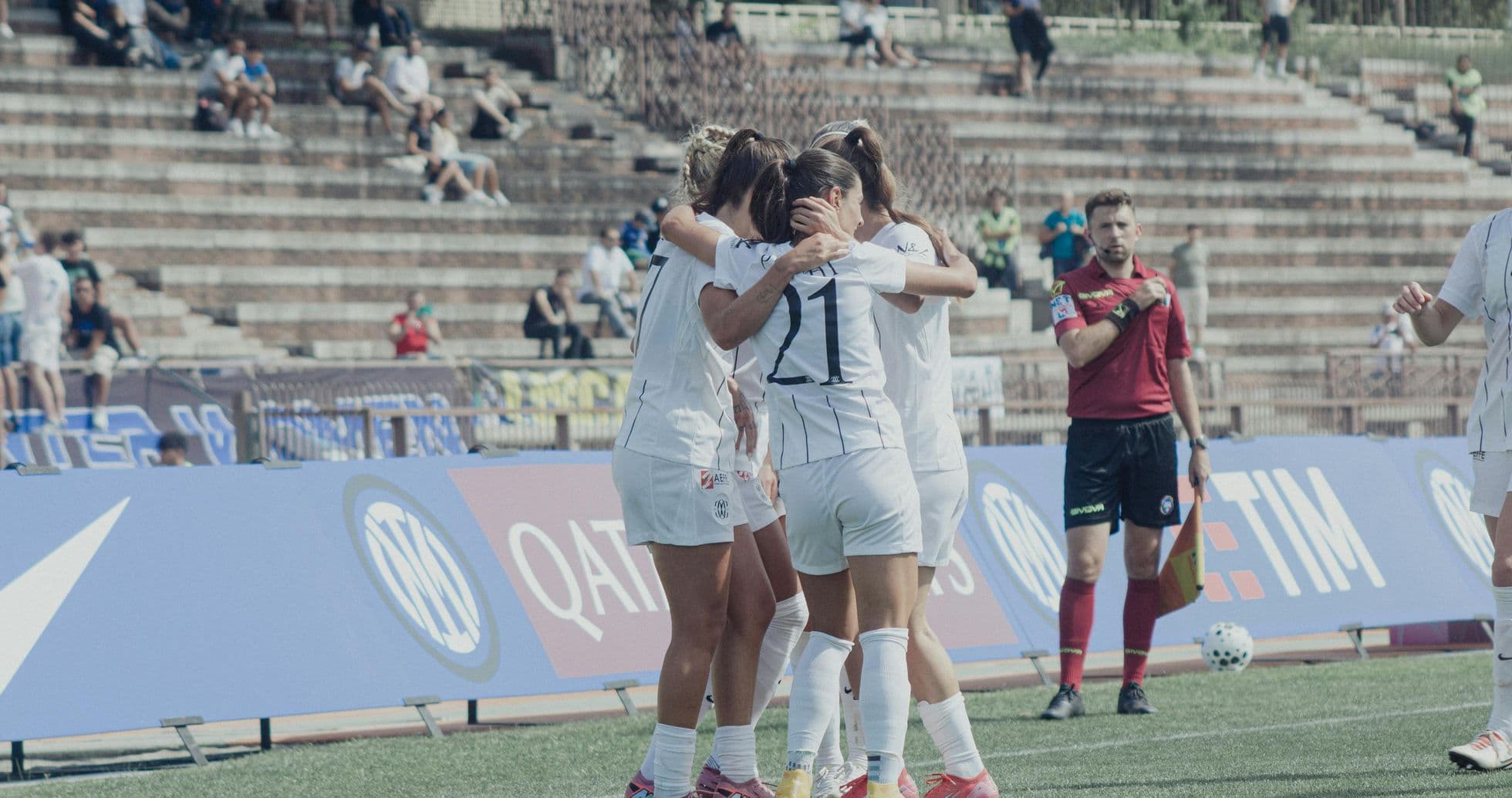
Stadio Enzo Ricci felt like a crossroads for two very different seasons. Following this result, the table tells a blunt story: Sassuolo W sit 9th in Serie A Women with 17 points and a goal difference of -17, while Roma W stride at the summit in 1st place on 52 points with a goal difference of 23. The 3-0 away win in Sassuolo did not just confirm the gap; it illustrated it in tactical detail.
Across 21 league matches, Sassuolo’s seasonal DNA has been one of struggle in both boxes. Overall they have scored 16 goals and conceded 33, averaging 0.8 goals for and 1.6 against. At home the picture is even starker: just 3 goals scored in 11 home games (0.3 on average) against 15 conceded (1.4 on average). Roma, by contrast, arrive as the division’s most balanced machine: overall 42 goals for and 19 against across 21 games, with an attacking average of 2.0 and a defensive concession rate of just 0.9. On their travels they have been ruthless, scoring 21 and conceding 11 in 11 away fixtures, an away attacking average of 1.9.
I. The Big Picture: Structures and Identities
Sassuolo’s season-long formations tell of a side still searching for a stable identity. They have alternated between a back three and a back four, using 3-4-1-2 most often (5 times), but also 4-3-3, 4-1-3-2, 4-1-4-1 and 3-4-3. Against Roma they lined up with N. Benz in goal and a spine built around M. Doms, A. De Rita and H. Fercocq, with K. Skupien and K. Missipo asked to provide energy and protection. Up front, the responsibility fell heavily on L. Clelland and N. Ndjoah Eto, supported by S. Mella from deeper positions.
Roma’s season has been defined by continuity and clarity. Their preferred shape is a 4-3-3, used 8 times, with occasional switches to 4-1-4-1 or 4-4-2. At Enzo Ricci, O. Lukasova anchored a back line featuring F. Thogersen, S. Oladipo, W. Heatley and K. Veje. In midfield, A. Rieke, M. Pandini and G. Greggi formed a hard-working engine, while G. Galli and A. Corelli flanked F. Brennskag-Dorsin in a fluid attacking trio.
The scoreline – Roma leading 1-0 at half-time and stretching it to 3-0 by full-time – mirrored the broader statistical pattern: Roma’s ability to control games over 90 minutes, Sassuolo’s difficulty sustaining resistance.
II. Tactical Voids: Absences, Discipline and Fragility
There is no explicit injury or suspension list in the data, but the absences are structural rather than individual. Sassuolo’s biggest void is a reliable attacking platform at home. They have failed to score in 8 of their 11 home fixtures, and this match slotted seamlessly into that trend. Even with a proven finisher like Clelland – 4 league goals and 1 assist in 14 appearances, with 21 shots and 13 on target – the side struggles to progress the ball into dangerous zones often enough.
Defensively, Sassuolo’s card distribution hints at a team that increasingly defends on the edge as matches wear on. Heading into this game, 26.09% of their yellow cards arrived between 76-90 minutes, with another 21.74% in both the 46-60 and 61-75 windows. That late-game spike speaks of fatigue and chasing games. Roma, meanwhile, spread their bookings more evenly, with 21.05% of yellows in each of the 16-30 and 46-60 ranges and no clear collapse window.
Roma’s disciplinary profile carries a different warning: one red-card incident in the 16-30 minute range across the season. W. Heatley, who started here, features in the red-card statistics with 2 yellows and 1 yellow-red overall. Yet in Sassuolo she marshalled the back line without crossing the disciplinary line, emblematic of a side that can defend aggressively but usually within control.
III. Key Matchups: Hunter vs Shield, Engine Room Battles
The headline duel coming into this fixture was the “Hunter vs Shield” contrast between Sassuolo’s limited home attack and Roma’s elite away defence. On their travels Roma concede just 1.0 goal on average, with 6 away clean sheets in 11 matches. Against that stood a Sassuolo side that had scored only 3 times at home all season. The 3-0 final score and clean sheet for Lukasova’s unit were almost a statistical inevitability: Roma’s compact back four and disciplined midfield screened the few central lanes Sassuolo tried to exploit.
Within Sassuolo’s ranks, Clelland is the clear offensive reference point. Her league numbers – 4 goals, 1 assist, 11 key passes and a rating of 7.19 – show a forward who can both finish and create. But she often found herself isolated, with K. Missipo and M. Brustia pinned back by Roma’s midfield press rather than stepping up to support.
On the Roma side, the true “Hunter” is not a pure striker but Manuela Giugliano. With 8 goals and 2 assists in 19 league appearances, plus 22 key passes and 3 converted penalties from 3 attempts, she is both scorer and conductor. Even starting from the bench here, her presence in the squad changes the geometry: Sassuolo’s midfield must account for her between the lines, which in turn frees space for runners like G. Dragoni and É. Viens when they enter. Dragoni, with 3 assists and 15 key passes, and Viens, with 2 assists and 17 key passes, deepen Roma’s creative options from midfield and wide areas.
In the “Engine Room” battle, Sassuolo’s K. Missipo and H. Fercocq faced a Roma trio of Rieke, Pandini and Greggi. Roma’s overall concession rate of 0.9 goals per match is built on that unit’s capacity to suffocate central spaces. Sassuolo, who average just 0.8 goals overall, were repeatedly forced into hopeful balls toward Clelland and Ndjoah Eto rather than structured entries.
IV. Statistical Prognosis: xG Logic and Defensive Solidity
Even without explicit xG values, the season data allows a clear expected goals narrative. Roma’s attacking average of 2.0 goals per game, combined with Sassuolo’s defensive record of 1.6 conceded overall and 1.4 conceded at home, points to a baseline expectation of Roma creating and converting multiple high-quality chances. Roma’s 11 clean sheets overall, including 6 away, overlay almost perfectly onto Sassuolo’s 10 total matches without scoring, 8 of them at home.
From a probabilistic standpoint, the most likely script was always Roma controlling territory and tempo, pinning Sassuolo back, and gradually turning pressure into goals. The 1-0 half-time score suggested patience and control; the eventual 3-0 simply reflected the weight of the numbers. Sassuolo’s late-game yellow-card surge profile hinted that, as the second half wore on, spaces would open and fouls would increase – precisely the environment in which Roma’s technical midfielders and wide forwards thrive.
Following this result, the trajectories diverge further. Roma consolidate their status as Champions League-bound leaders, their goal difference of 23 underpinned by structural superiority in both boxes. Sassuolo remain locked in a relegation-adjacent battle, their goal difference of -17 a mirror of systemic attacking anemia and defensive strain.
For Sassuolo, the tactical challenge is clear: stabilise a formation – likely one of their back-four systems – that better connects midfield to Clelland and Dhont, whose 3 assists and 16 key passes show she can be a creative outlet. For Roma, the task is more about marginal gains: maintaining defensive concentration away from home while rotating high-impact profiles like Giugliano, Dragoni and Viens without losing fluency.
In Sassuolo, this match unfolded exactly as the season’s numbers predicted. Roma arrived as a finely tuned machine, Sassuolo as a side still assembling the parts. Over 90 minutes, the gap between blueprint and reality became a three-goal margin on the scoreboard.