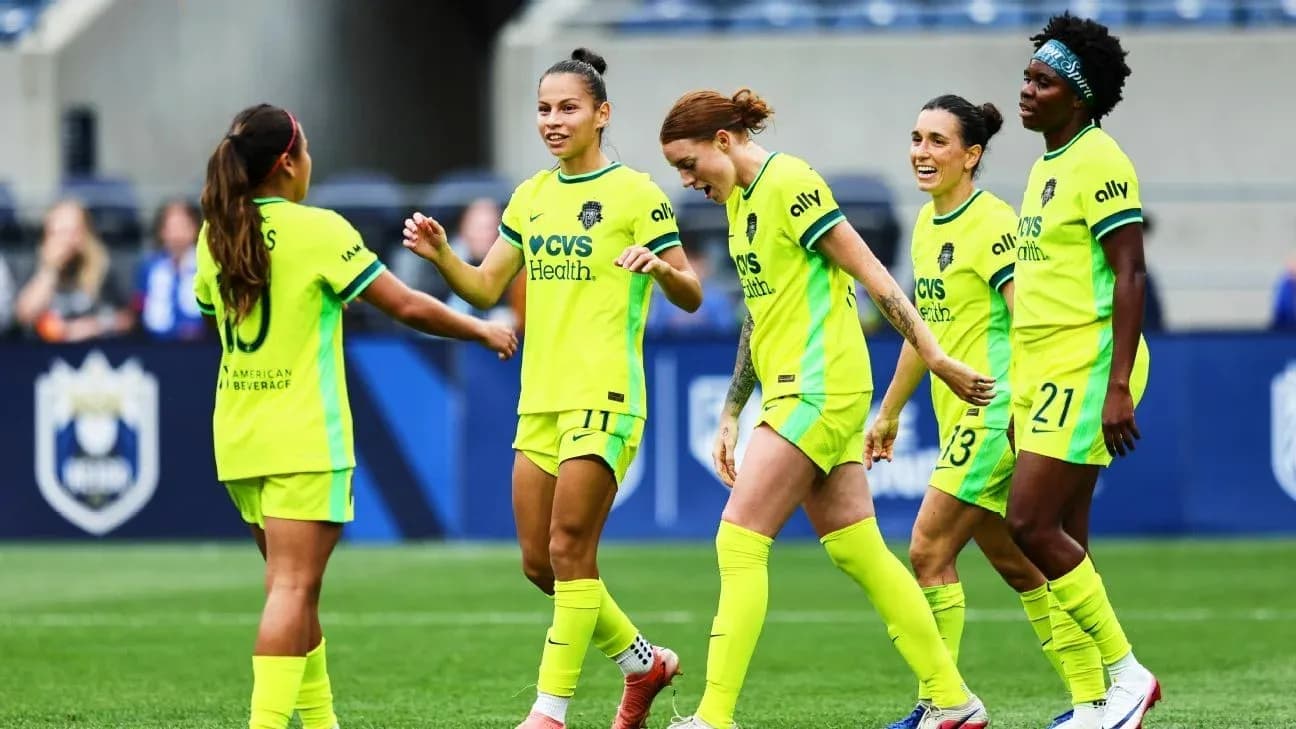
San Diego Wave W vs Washington Spirit W: Tactical Insights from NWSL Clash
Under the San Diego lights at Snapdragon Stadium, this NWSL Women group-stage meeting between San Diego Wave W and Washington Spirit W felt less like a routine league fixture and more like a quiet measuring stick between two early contenders. The scoreboard closes at 2–1 to the Wave, but the deeper story lies in how two carefully constructed 4-2-3-1 systems collided, and what that collision tells us about their evolving identities.
Heading into this game, San Diego sat top of the table on 21 points, with a total goal difference of 5 built on 15 goals for and 10 against across 10 matches. At home they had been efficient rather than explosive: 7 goals scored and 4 conceded in 5 outings, averaging 1.4 goals for and 0.8 against at Snapdragon. Washington arrived as the league’s most balanced side on paper: 18 points, a total goal difference of 8 (16 scored, 8 conceded), and a defensive record that, overall, allowed just 0.8 goals per match, with an especially miserly 0.5 at home and 1.0 on their travels.
Both coaches doubled down on their preferred structures. Jonas Eidevall mirrored Adrian Gonzalez in a 4-2-3-1, but the interpretations were distinct. For San Diego, D. Haracic anchored a back four of A. D. Van Zanten, K. Wesley, K. McNabb and P. Morroni, with K. Ascanio and K. Dali as the double pivot. Ahead of them, a fluid three of Gabi Portilho, G. Corley and Dudinha supported lone forward T. Byars. Washington’s shape had Sandy MacIver behind a back line of L. Di Guglielmo, T. Rudd, E. Morgan and G. Carle, with R. Bernal and H. Hershfelt screening, and a high-talent band of three – T. Rodman, L. Santos and C. Martinez Ovando – supplying S. Cantore.
First Half
The first half, which finished 1–1, showcased the contrasting rhythms. San Diego’s season-long offensive profile – 1.5 goals per game in total, with a slight bump to 1.6 on their travels – has often come from wide overloads and aggressive dribbling. Here, that impulse was personified by Dudinha. Already one of the league’s standout attackers with 3 goals and 4 assists in total, 39 dribble attempts and 23 successes, she repeatedly tested the spaces between Washington’s full-backs and centre-backs, forcing Bernal and Hershfelt to collapse centrally.
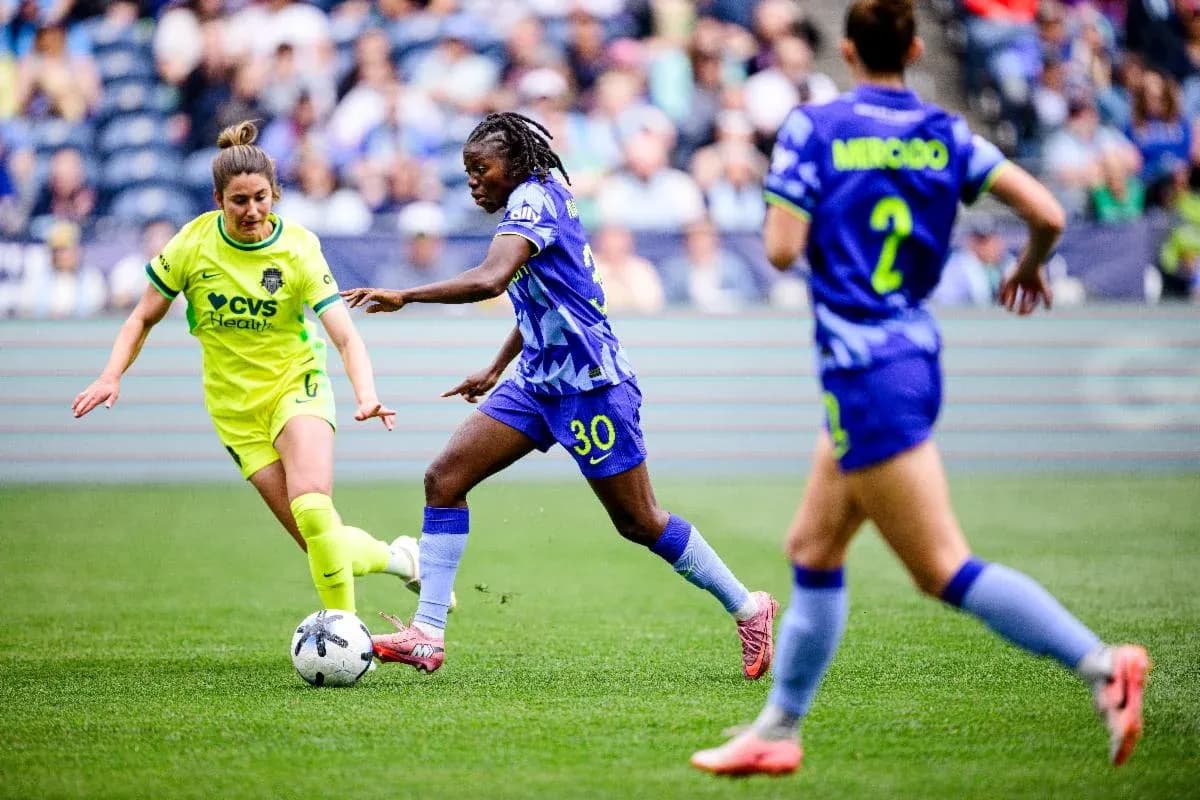
Washington, by contrast, leaned into their structured build. With 16 total goals at an average of 1.6 per match and 403 total passes from L. Santos alone this season, their threat flows through patient circulation before sudden vertical punches. Santos’ 3 goals and 2 assists, combined with 12 key passes, make her the quiet metronome; Rodman, with 3 goals, 3 assists and 25 shots (13 on target), is the chaos agent. In this match, that dynamic was visible every time Santos dropped off the line to receive and Rodman darted into the half-spaces behind Morroni and Van Zanten.
Disciplinary trends added a subtle undercurrent. San Diego’s yellow-card profile is heavily back-loaded: 33.33% of their cautions arrive between 46–60 minutes, another 33.33% from 61–75, and a further 16.67% in each of 76–90 and 91–105. Washington’s distribution is more evenly spread but spikes at 46–60 and 76–90, each with 25.00% of their yellows. In a tight contest like this, those windows matter. They mark the phases when pressing intensity and tactical fouling rise, and when creative players like Dudinha and Rodman are most likely to be clipped.
Key Duels
Within that context, the individual duels were decisive.
The “Hunter vs Shield” battle pitted San Diego’s attacking core against Washington’s vaunted defensive record. On their travels, the Spirit had conceded only 6 goals in 6 matches – exactly 1.0 per game – and recorded 3 away clean sheets. That resilience is not built on last-ditch heroics but on the screening work of Bernal and Hershfelt. Bernal, with 17 tackles, 2 blocked shots and 7 interceptions in total, is a genuine enforcer who steps out to confront the No. 10 zone. Yet against the Wave, the dual threat of Dali between the lines and Dudinha attacking diagonals from the flank stretched her coverage. Every time Bernal moved to shut down Dali’s angles, space opened for Dudinha to receive on the half-turn or slip Byars in behind.
On the other side, the “Engine Room” duel saw Ascanio and Dali wrestling control from Santos and Hershfelt. Ascanio’s season numbers – 292 passes at 86% accuracy, 18 tackles, 2 blocked shots and 7 interceptions – tell the story of a deep midfielder who both builds and breaks. Here, her calm distribution under Washington’s press allowed San Diego to bypass the first wave and find Corley and Portilho earlier, reducing the time Santos had on the ball to dictate. When Santos did escape, her ability to connect with Rodman and Cantore still carved out danger, but the Wave’s compact double pivot ensured those moments were more isolated than Washington would have liked.
Defensively, San Diego’s total record of 10 goals conceded at an average of 1.0 per match – and just 0.8 at home – has been quietly impressive, even if they only boast 2 clean sheets overall. That solidity was underpinned here by McNabb’s positioning and Morroni’s edge. Morroni, one of the league’s most combative full-backs with 29 tackles, 2 blocked shots, 7 interceptions and 3 yellow cards in total, again walked the line between aggression and risk. Her duels with Rodman were a recurring motif: Rodman’s 28 dribble attempts and 87 total duels this season met a defender unafraid to step high and engage. That willingness occasionally left space behind, but it also prevented Washington’s star winger from turning every reception into a direct run at goal.
Conclusion
From a statistical prognosis standpoint, this 2–1 result feels aligned with the underlying profiles rather than an outlier. San Diego, with their 1.5 total goals-for average and a home defensive average of 0.8 conceded, are built for narrow, controlled wins rather than blowouts. Washington’s total attacking output of 16 goals and their away scoring rate of 1.7 per game mean they will almost always generate enough to threaten, but here they ran into a Wave side that managed the key phases better.
The late-game discipline patterns hinted at a possible Spirit surge, especially given their 25.00% share of yellow cards in the 76–90 window – a sign of high pressing and desperation tackles in pursuit of an equaliser. Yet San Diego, whose own cards are spread across the second half and stoppage time, showed they can absorb that storm without losing their structure.
Following this result, the broader arc is clear. The Wave remain a side whose attacking ceiling is defined by Dudinha’s creativity and Byars’ movement, but whose foundation is a disciplined spine in Ascanio, Dali, McNabb and Morroni. Washington leave San Diego with their credentials intact: a coherent 4-2-3-1, a midfield led by Santos and Bernal that can control most matches, and a front line where Rodman and Cantore will continue to produce.
On another night, with slightly different finishing or a marginal swing in Expected Goals, this could have finished level. But the tactical balance of this contest – San Diego’s ability to tilt the central zones in their favour while containing Washington’s wide threats – explains why the Wave edged it, and why both teams still look built for a deep run when the NWSL Women season reaches its decisive stages.