San Diego Wave W's Tactical Victory Over Angel City W
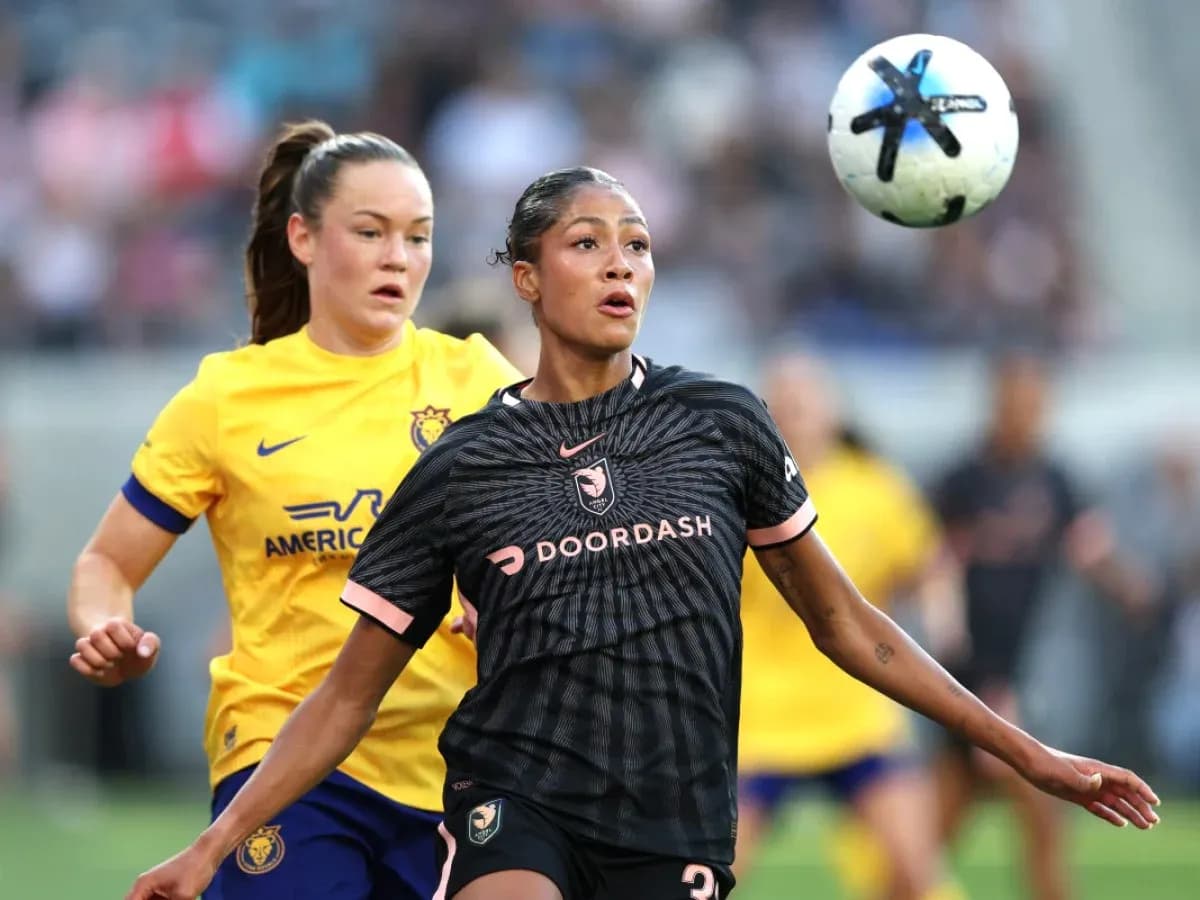
Angel City W’s 2-1 home defeat to San Diego Wave W at BMO Stadium unfolded as a classic contrast of structures: Alexander Straus’ 4-2-3-1 built on vertical surges and wing overloads against Jonas Eidevall’s more controlled 4-3-3, which gradually imposed itself through possession and superior spacing between the lines. After a goalless first half, the match opened tactically with early second‑half substitutions, and San Diego’s better use of the half-spaces and full-back advancement ultimately translated their 55% possession and 11 shots into two decisive goals, while Angel City’s more direct 10-shot approach yielded only one response.
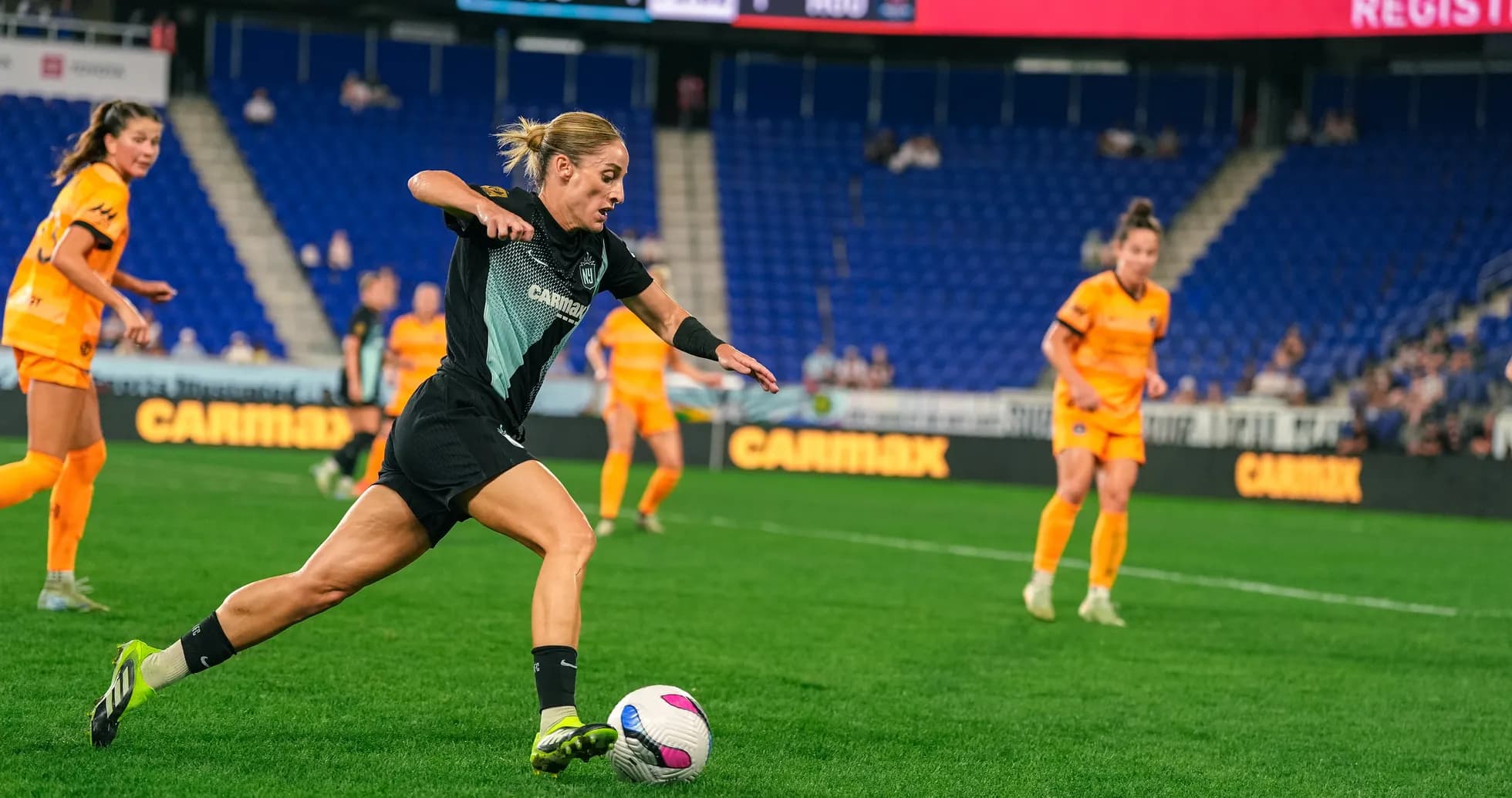
San Diego’s attacking pattern was clear from the outset and crystallized after the break. In the 4-3-3, the midfield trio of Kimmi Ascanio, Kenza Dali and Gia Corley gave Eidevall three distinct lanes of progression: Ascanio often dropped to form a situational double pivot, Dali operated as the primary connector through the right half-space, and Corley supported circulation on the left. This structure allowed the front three of Gabi Portilho, Ludmila and Dudinha to stay high and wide, pinning Angel City’s back four and creating 1v1s, particularly against the full-backs.
Angel City’s 4-2-3-1, by contrast, was more vertical. Ary Borges and Nealy Martin as the double pivot had to cover large horizontal distances to protect the back line of Gisele Thompson, Emily Sams, Sarah Gorden and Evelyn Shores. In possession, the three behind Sveindís Jónsdóttir — Kennedy Fuller, Jun Endo and Taylor Marie Suarez — tried to attack quickly in transition, often looking for early passes into Jónsdóttir’s runs or wide combinations. The fact that 8 of their 10 shots came from inside the box shows that when they did reach the final third, they created proximity to goal, but they struggled to generate sustained pressure: only 3 shots on target and 45% possession reflect a game played more on San Diego’s terms.
Key Tactical Inflection
The key tactical inflection came immediately after halftime. At 46', Straus adjusted first: P. Chilufya (IN) came on for J. Endo (OUT), adding more direct running from the left and an extra vertical threat. Eidevall responded symmetrically but with a clear plan: L. E. Godfrey (IN) replaced G. Corley (OUT) and T. Byars (IN) replaced Ludmila (OUT), both also at 46'. Those two changes sharpened San Diego’s front line; Byars brought more central penetration, while Godfrey offered fresh legs and more aggressive positioning between Angel City’s midfield and defense.
San Diego’s structural superiority materialized at 49', when Dudinha scored the opener, assisted by K. Ascanio. The pattern fits the broader tactical story: Ascanio stepping into an advanced pocket, drawing a line-breaking lane and then releasing Dudinha into space. It was the logical outcome of San Diego’s better control of the central corridor and their willingness to push midfielders beyond the first line of pressure.
Angel City’s response was well-designed and emblematic of Straus’ set-piece and back-line utilization. At 54', E. Sams equalized, assisted by S. Gorden. With the center-backs Sams and Gorden both involved, Angel City leveraged their aerial and physical presence, likely from a restart or second phase in the attacking third. This underlined one of their clearest advantages: when they could commit the central defenders forward, they posed a real threat, compensating for the lack of sustained positional play.
Bench Influence
From there, the benches became central to the tactical narrative. At 63', San Diego replaced Gabi Portilho with M. Barcenas (IN) — a move that freshened the right side and preserved their ability to stretch Angel City horizontally. Straus then tried to tilt the attacking balance: at 68', R. Tiernan (IN) came on for K. Fuller (OUT), adding more direct wide play and perhaps a more classic winger profile. At 76', Casey Phair (IN) replaced T. Suarez (OUT), giving Angel City a different reference in the attacking midfield line — more aggressive in attacking the box and running beyond Jónsdóttir.
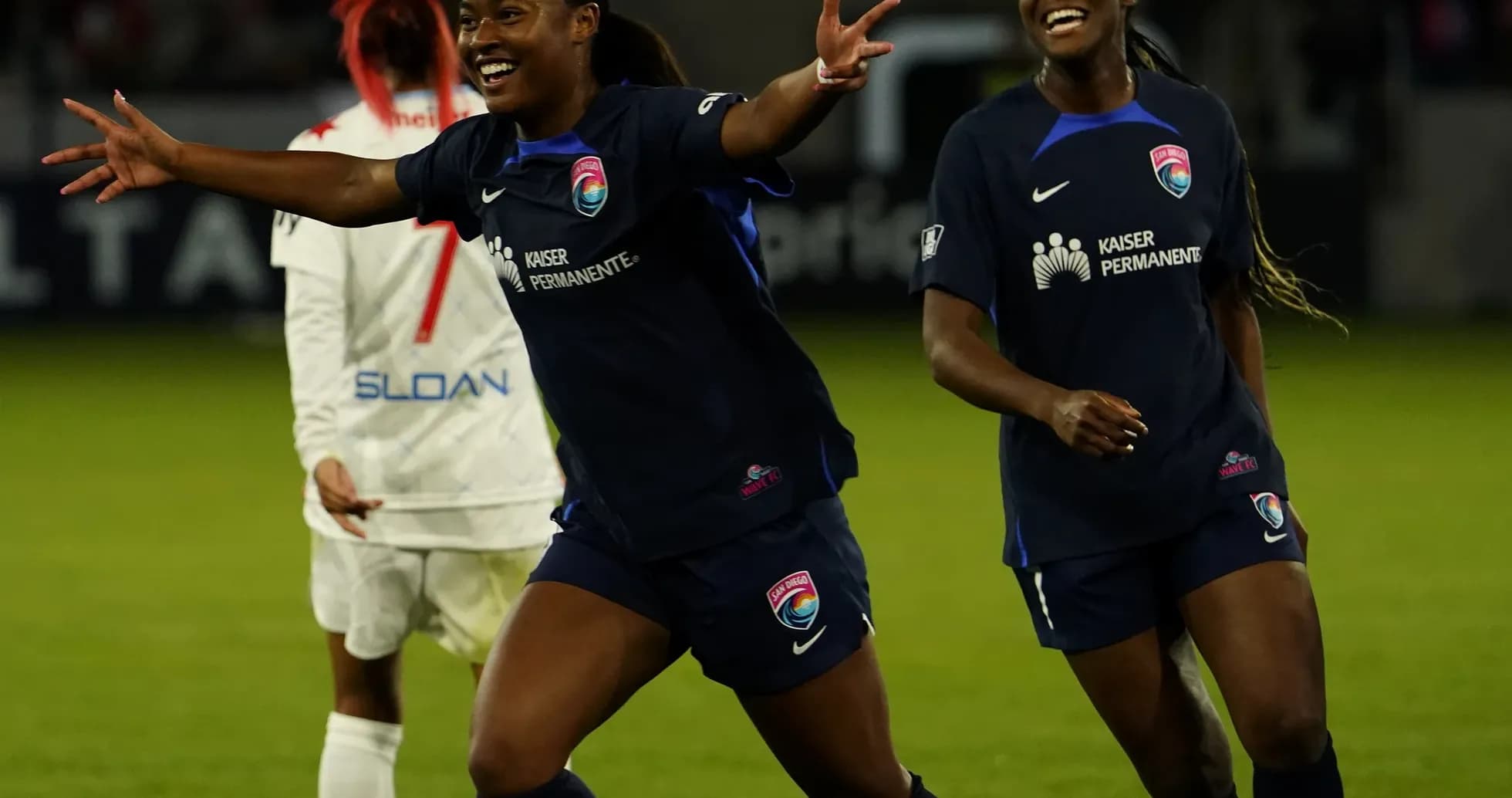
Eidevall’s decisive adjustment came at 79', when L. Fazer (IN) replaced K. Ascanio (OUT). Rather than weakening San Diego’s midfield, this substitution maintained their three-player structure but with fresh pressing energy and new passing angles. Just two minutes later, at 81', San Diego’s territorial control was rewarded: A. D. Van Zanten scored, assisted by Dudinha. The right-back stepping into a scoring position reflected how San Diego’s full-backs, especially Van Zanten, were encouraged to overlap and underlap once Angel City’s wide players were pinned deeper. Dudinha’s second decisive involvement underlined her role as the primary reference point in the final third — not only as a finisher but as a creator.
Straus’s final throw of the dice came at 88', when C. Emslie (IN) replaced N. Martin (OUT). This was an attacking gamble, effectively trading a deeper midfielder for another forward profile to chase the game. Angel City pushed numbers higher, but San Diego’s defensive block, anchored by Kristen McNabb and Kennedy Wesley, managed the late pressure, aided by their superior passing rhythm: 407 total passes, 320 accurate (79%), compared to Angel City’s 320 passes, 231 accurate (72%).
At 90+5', J. Fusco (IN) came on for Dudinha (OUT), a classic game-management substitution to add fresh legs in midfield and help San Diego close out the final moments. By then, the tactical pattern was set: San Diego consolidating in a compact 4-1-4-1/4-5-1 without the ball, Angel City forced into more direct play and early crosses.
Statistical Verdict
The statistical verdict supports the tactical reading. San Diego’s 55% possession, more total passes and higher passing accuracy speak to their control of tempo and territory. Their 11 shots to Angel City’s 10, with 5 on target versus 3, align with the quality of chances created through structured build-up and full-back involvement. Angel City’s 20 fouls against San Diego’s 8 (with no cards recorded for either side) highlight how often the home side had to disrupt transitions and counter San Diego’s positional play. Angelina Anderson’s 3 saves to DiDi Haracic’s 2 suggest that, while both goalkeepers were involved, San Diego’s defensive structure limited Angel City to fewer clear on-target attempts. In the end, Eidevall’s use of his bench and the aggressive positioning of players like Dudinha and Van Zanten turned structural superiority into a deserved 2-1 away win.