Rodri's Bold Move to Barcelona: A New Era Begins
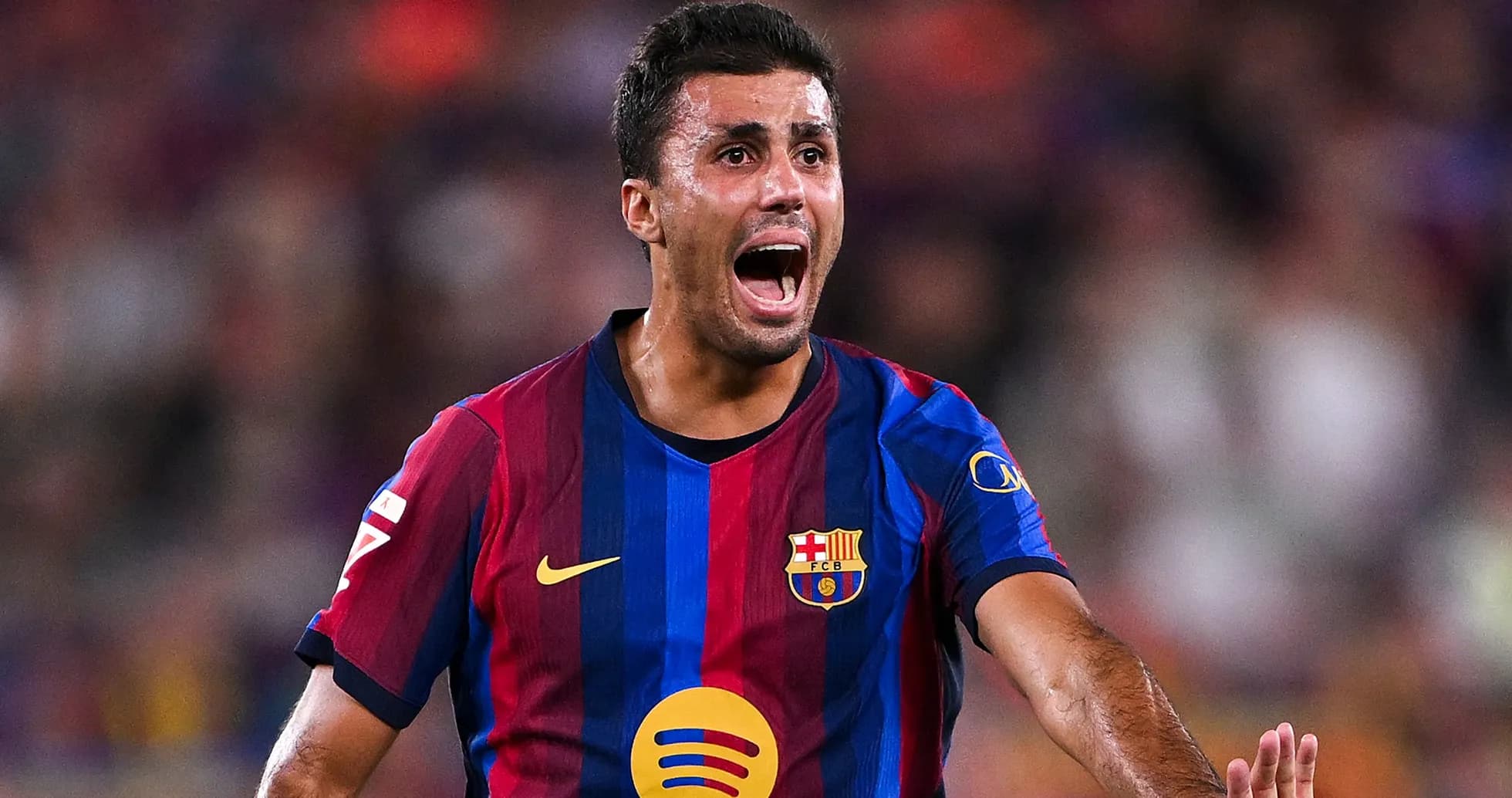
Rodri did not just leave Manchester City this summer. He walked away from the heart of a dynasty and straight into the centre of Spain’s fiercest footballing divide.
The 2024 Ballon d'Or winner, the metronome of Pep Guardiola’s all-conquering side, chose Barcelona. Not Real Madrid. Not the Premier League he says shaped his mentality. La Liga, yes – but in Barça’s colours, at Camp Nou, under Hansi Flick.
And he insists it was all about football.
“A process, not a decision”
Rodri describes his City exit as something that unfolded rather than exploded.
“It’s been a process, rather than a decision,” he told Mundo Deportivo. “First, you have to realise that your time there has come to an end and that you might want a new challenge. From there, the moment the opportunity at Barcelona arose, I realised it was the best thing for me for many reasons.”
No drama, no public stand-off. Just a player who had won everything in England realising he needed something different. Once Barça appeared, the path cleared.
Turning down Madrid
Real Madrid pushed hard. They saw the best midfielder in the world become available and moved accordingly. For them to lose out to Barcelona, and on a Spanish international, cuts deep.
Rodri knows exactly what it means to say no to the Bernabéu.
“I had to weigh up a lot of things and make such an important decision between two of the best clubs in the world,” he said. “In the end, I made my decision based on sporting considerations – on what sparked a bit more enthusiasm in me and on understanding where I could win and develop the most as a player. It wasn’t an easy decision at all; saying no to Madrid wasn’t easy, especially as they treated me exceptionally well.”
That line matters. Madrid did not lose him through neglect or arrogance. They lost him on sporting grounds, by his own measure. He simply believed Barça fit him better.
Flick, Deco and the “generation” that sold Barça
So what tipped it? Not money, Rodri insists. Not noise. The project.
“I’ve always based my decisions on sporting considerations – where I believe I’ll be able to win, be happy and, above all, develop as a player,” he said. “And that’s why I’ve chosen Barca – also because of the generation of players they have and what Hansi is building there. Ultimately, Deco and Hansi, at the top of the organisation, convinced me.”
That “generation” is a key word. Barcelona’s young core, the promise of a team still forming its identity, clearly appealed to a player who has already conquered the established order in England. The idea of being the anchor of a new era, rather than just maintaining an old one, drew him in.
And it was not just tactics on a whiteboard.
A family feel, not a hard sell
Rodri talks about something softer, more human, behind his choice.
He describes Barcelona as “very homely, like a family club” and makes a point of how they handled the pursuit.
“At no point did they put any pressure on me whatsoever; everyone expressed their desire to have me on board, to work together, and to see what I could bring to the team,” he said. “It was more about the football itself – what they understood I could bring both on and off the pitch, and I really liked that.”
No ultimatums. No deadlines. No emotional blackmail. Just a clear message: we want you, we know how you fit, and we trust you to decide.
For a player who has always projected calm and control, that approach hit the right note.
Ballon d'Or storm kept at arm’s length
His move came just after another flashpoint in the rivalry. Real Madrid boycotted the Ballon d'Or ceremony where Rodri beat Vinicius to the prize, a snub that dominated headlines and stirred the usual tribal arguments.
Easy material for a narrative. Too easy, according to Rodri.
“Anyone who knows me knows that I try to distance myself from that sort of thing, like the media hype,” he said. “I focus on football. In that sense, I’m very English, aren’t I? The Premier League is football and little else.”
That last line lands with a certain irony. The player who calls himself “very English” in footballing mindset has left the Premier League at his peak to step into the most politically charged rivalry in the game.
Now he stands in the middle of it, in blaugrana, by choice.
The question is no longer why he left City, or why he turned down Madrid. It’s what he and Flick can build quickly enough at Barcelona to justify a decision that has just raised the stakes in El Clásico all over again.