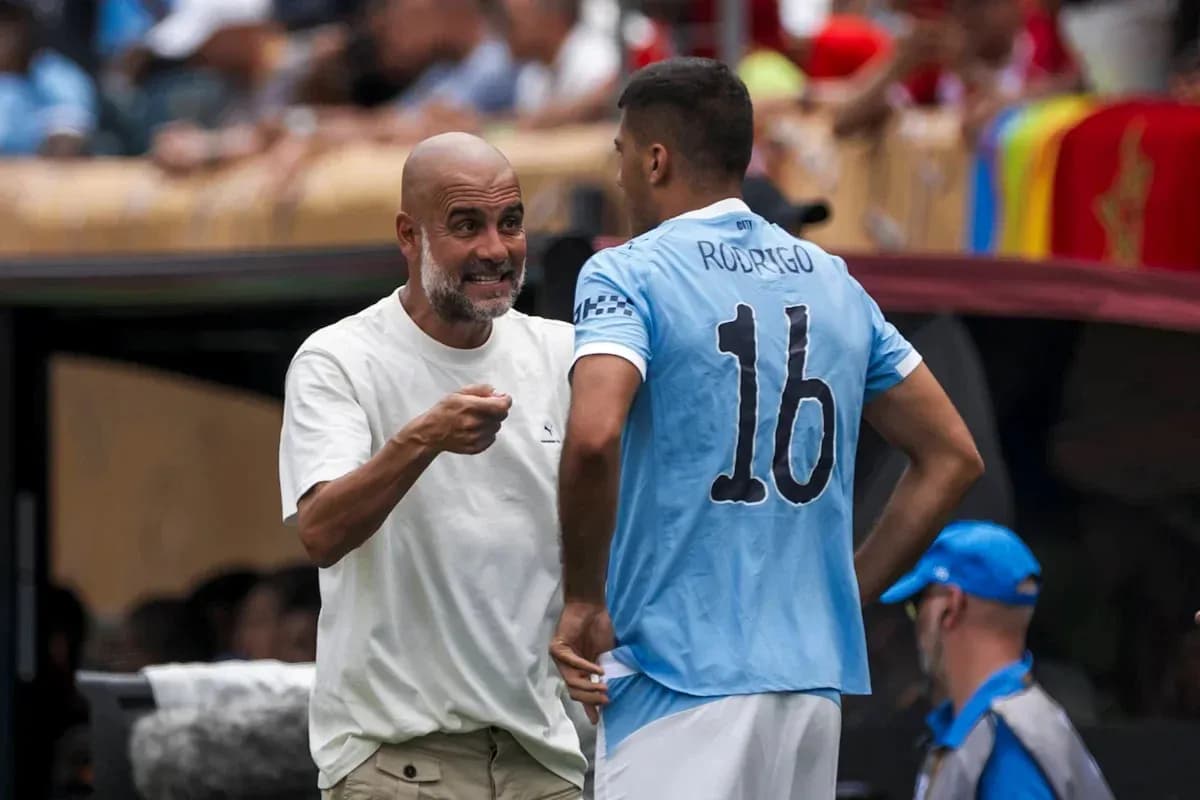
Rodri Chooses Barcelona: A Midfield General's Decision
Rodri’s decision to join Barcelona has the feel of a turning-point transfer. Not just a big name changing shirts, but a move that cuts right to the heart of how modern elite players weigh up their futures. Two giants called. He chose the Camp Nou.
According to Mundo Deportivo, both Barcelona and Real Madrid pushed hard to lure him away from Manchester City. This wasn’t a late whim or a romantic return to Spain. Rodri described a restless summer, a break disturbed by phone calls, meetings and pressure from two clubs who rarely take no for an answer.
In the end, he followed the football. Not the noise.
He spoke about needing to see “the full picture” before deciding. That meant asking who could offer the clearest sporting pathway, where he could grow, where he could win, where the football itself excited him most. Barcelona, he concluded, ticked more of those boxes.
Deco, Flick and the power of a plan
This is where Barcelona won it. Not with slogans, but with structure.
Inside the club, Deco and Hansi Flick became the key figures. They laid out a project, not a pitch. How he would be used. How the team would be built around control and rhythm. How his qualities would sit at the centre of a new era rather than simply decorating an already star-studded squad.
These are the tiny margins that decide the biggest deals. The clarity of a conversation. The conviction of a coach. The sense that you are not just another signing, but the signing.
Rodri’s explanation made that clear. This was not a player drifting towards the easiest option or the loudest offer. Barcelona convinced him they had a plan that made sense for his game and his career. They didn’t just catch a falling opportunity. They won an argument at the highest level.
Saying no to Madrid – and doing it with respect
Turning down Real Madrid still means something. Rodri knew it, and he handled it like a player who understands the weight of that decision.
He made a point of stressing how difficult it was to say no and how well Madrid treated him throughout the process. No cheap shots. No revisionism. Just respect.
His comments about José Mourinho, who personally tried to sway him towards the Bernabéu, underlined that tone.
“Bueno, no creo que sea lo suyo desvelar una conversación privada, pero evidentemente expresó sus ganas de que fuera y de lo que podía aportar al equipo. El trato fue muy bueno. Cuando tomé la decisión también le llamé para agradecer el interés y el trato. Me parece un grandísimo entrenador, ya lo ha demostrado allá donde ha ido en sus grandes etapas y el Real Madrid va a ser un duro rival para esta Liga.”
It was a measured answer. Polite, but not distant. He acknowledged Mourinho’s status, thanked him directly once his mind was made up, and still left no doubt about his final choice.
Top-level football often chews up courtesy and spits it out. Rodri went the other way. He closed the loop properly.
Barça as attraction, not escape
One detail will delight Barcelona supporters more than any other: Rodri did not frame this as a getaway from Manchester City or a rejection of Madrid’s politics. He framed it as a pull towards Barça.
He talked about being drawn to the club, not pushed away from anywhere else. That nuance matters. It gives the transfer a different weight. Barcelona aren’t just the beneficiary of timing or turmoil elsewhere. They presented something compelling enough to outshine both his current situation and Madrid’s offer.
He also refused to wade into the swirl of off-field theories around Madrid’s interest. No feeding the drama. No indulging the theatre. He kept his answers anchored in football, his national team and his own development.
Then came the line that hinted at where his head is. He noted that in England, football largely stays about football. A neat observation, but also a clue: a player forged by the relentless intensity of the Premier League now choosing a different type of scrutiny, a different kind of pressure, a different stage.
A new fault line in La Liga
If Rodri plays in Spain as he has for City, this move shifts the landscape. Barcelona have not just added a midfielder. They have imported control, game intelligence and a hard edge into the heart of their team.
And they have done it by beating Real Madrid to one of the most coveted operators in world football. That stings in Madrid and energises Barcelona. It sends a message about pull, planning and the enduring force of the Barcelona name, even in an era when their finances and structure have been under the microscope.
Madrid, for their part, are left with frustration rather than humiliation. They moved with intent, they argued their case, and they were treated with professionalism. But the player chose elsewhere. That always leaves a mark.
For Barcelona, the satisfaction runs deeper. They have landed a footballer who knew exactly what the alternative looked like – the Bernabéu, Mourinho, a different shade of dominance – and still walked towards the Camp Nou.
The Manchester City void
From a Manchester City perspective, the emotions are tangled.
On one side, there is pride. Rodri is being spoken about as the midfielder both Barcelona and Real Madrid wanted most. That status tells its own story. In Manchester, he became the calm in chaos, the reference point in possession, the man who made complex systems feel simple and balanced.
On the other side lies a familiar irritation. European giants circling a City player as if he naturally belongs in their ecosystem, as if his peak years were merely a prelude to a “proper” stage. The reality is blunt: he became this version of Rodri in Manchester. He sharpened his instincts in the Premier League, shouldered huge responsibility and evolved into one of the game’s most influential midfielders under unforgiving lights.
If his departure is confirmed, City supporters will likely wish him well while staring at the real problem: how do you replace that kind of authority?
Who now slows a frantic game to walking pace when needed? Who dictates tempo when everything around starts to fray? Who offers that sense of certainty when a match turns ragged and emotional?
That is the legacy Rodri leaves behind at City. A vacuum at the very centre of the pitch.
Barcelona have stepped into that space. Madrid tried to. City must now work out how to live without it.