Roberto De Zerbi's Tottenham Hotspur Rebuild Faces Early Setbacks
Roberto De Zerbi will soon be nudging the £400m mark on his Tottenham Hotspur rebuild. On this evidence, he might need a different currency entirely.
Money can buy full-backs, deep-lying playmakers and ball-playing centre-halves. It cannot, as Spurs were brutally reminded in west London, buy a backbone.
A new era, same old Spurs
De Zerbi arrived in March talking as much about minds as tactics. Seven games to keep Spurs in the Premier League, a brief stint as club psychologist, and survival snatched on the final day against Everton. Job done. Barely.
This summer was supposed to end the fire-fighting. Huge backing, a revamped squad, a new direction. No more flirting with 17th. No repeat of the chaos that has scarred the last two seasons.
Then came Brentford away. And the façade fell apart inside 49 minutes.
From the first whistle at The Gtech Community Stadium, Spurs’ “new project” looked alarmingly like the old mess. Brentford smelled frailty and went after it. Hard. Spurs cracked at the first hint of pressure and never really recovered.
By the time Michael Kayode swept in Brentford’s third just after the interval, the away end was emptying. Some Spurs fans had seen enough before the clock had even ticked past 50 minutes of the new season.
Out-fought, out-thought, out-run
De Zerbi didn’t sugar-coat it.
“Bad game. We lost and suffered the difference in the duels. It was the key of this game. We didn't fight in the right way,” he told BBC Sport’s Match of the Day. “Our physical condition was not in the right level for all players… But we have to analyse this game better because we can't play this way in this type of game.”
He pointed to tired legs. Late returns from the World Cup. New signings still short of sharpness. None of that explained the absence of basics: winning second balls, tracking runners, showing any sort of resilience.
Brentford dominated every department. They pressed with conviction, snapped into challenges and played with a clarity Spurs never matched. Mamadou Sangare, the Bees’ record signing, set the tone in midfield and never let up. He was the game’s standout performer by a distance.
Spurs, by contrast, shrank.
Debuts drowned in a mauling
Four of De Zerbi’s headline recruits started. Andrew Robertson, Marcos Senesi, Jan Paul van Hecke and Sandro Tonali all pulled on Spurs shirts in the Premier League for the first time. None will remember it fondly.
They were not alone in their struggles, but there was no hiding place. Spurs were “at rock bottom here” in every sense – structurally, mentally, physically.
Tonali, the £100m arrival from Newcastle United, endured a particularly sobering afternoon. This was supposed to be his stage. Instead, Sangare bullied him, out-ran him and out-played him. Tonali’s most notable contribution was a wild first-half shot that flew high into the sky, quickly met with mocking chants from the home support about Spurs’ spending.
Matheus Fernandes, signed for £85m from West Ham United, came off the bench. Savinho and possibly Omar Marmoush will add further options. Yet it was not a lack of talent that undid Spurs. It was the absence of heart.
Brentford ruthless, Spurs rudderless
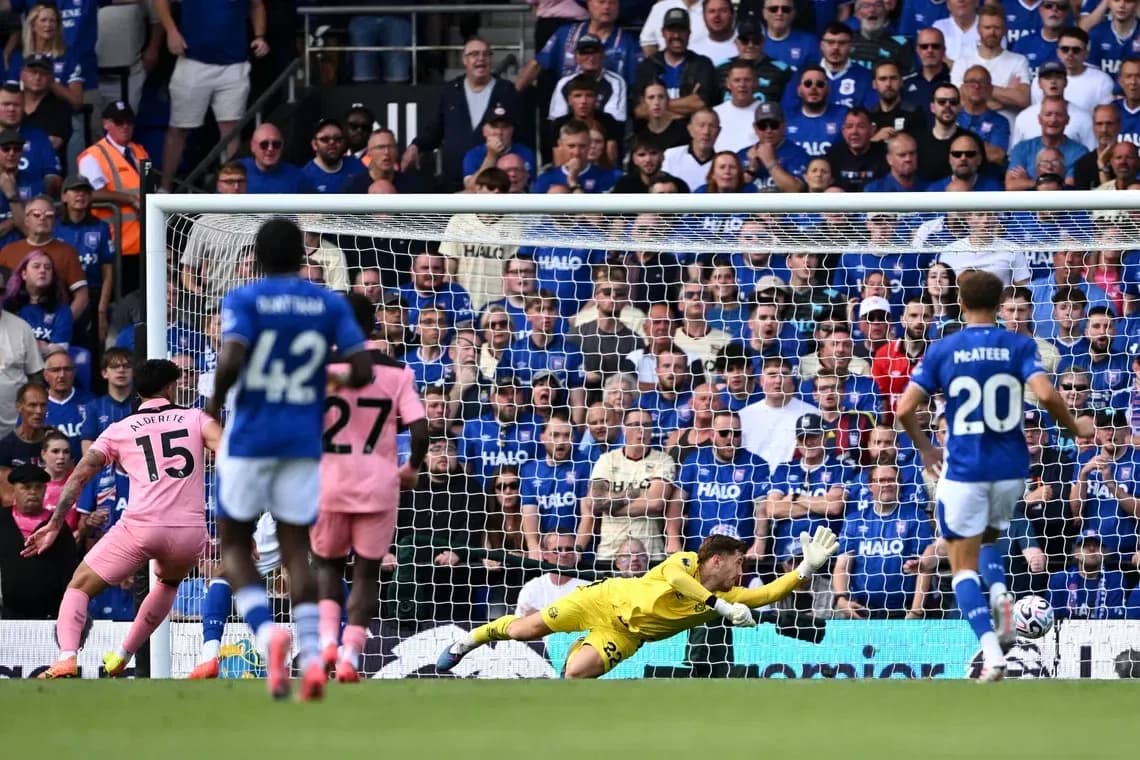
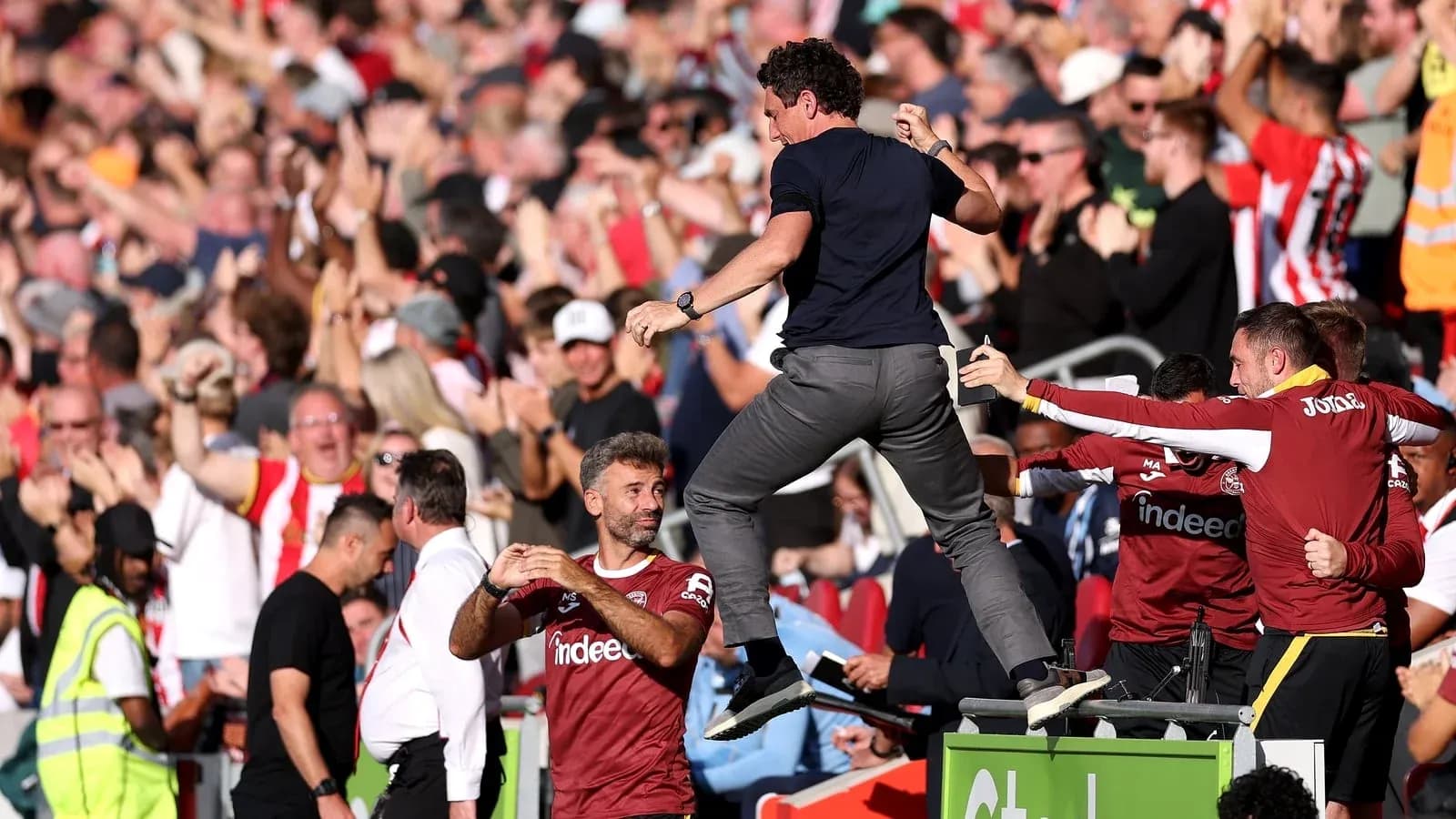
The pattern was set early. Brentford carved out chances before Keane Lewis-Potter finally broke through after 12 minutes. Spurs wobbled, then folded. Vitaly Janelt’s goal before half-time effectively ended the contest.
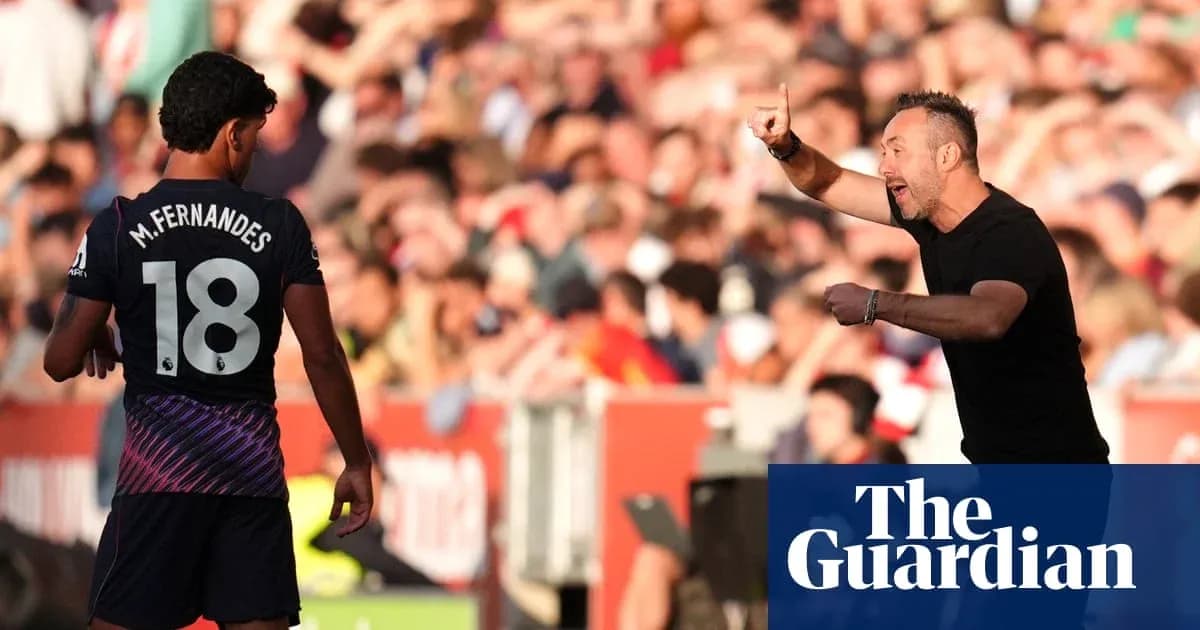
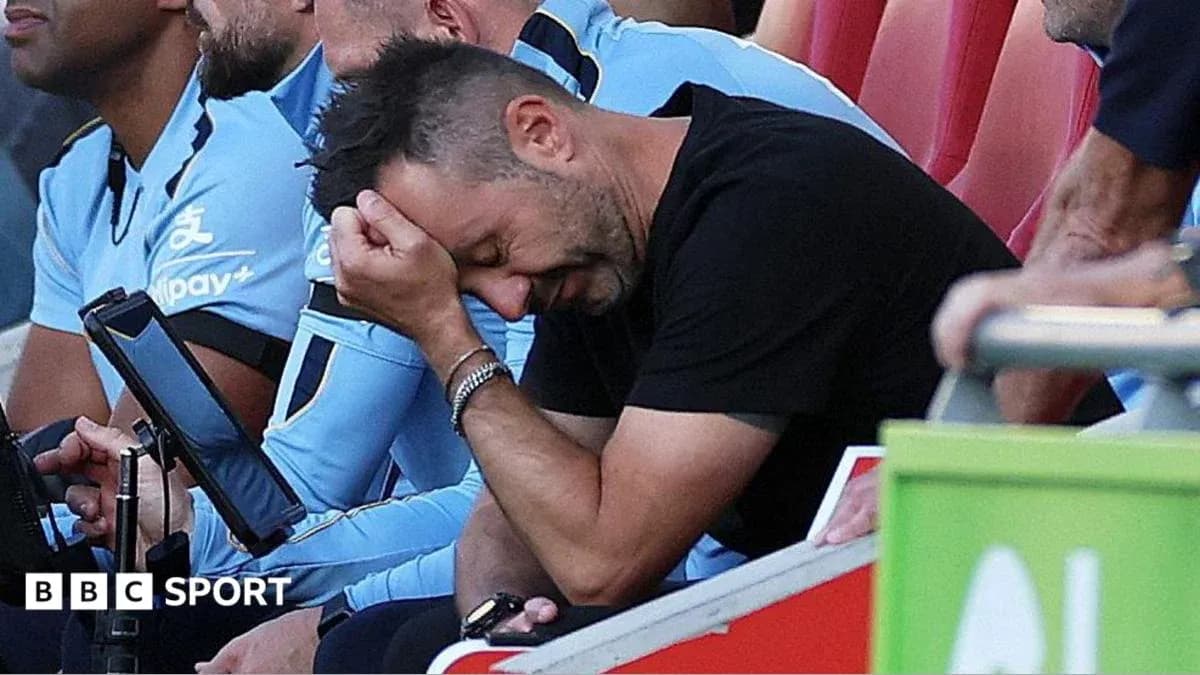
De Zerbi prowled the touchline, agitated and animated, but his players looked beaten long before the scoreboard confirmed it. Heads dropped. Challenges were half-hearted. Panic replaced purpose.
Conor Gallagher and Lucas Bergvall did not reappear after the break, withdrawn at half-time. They could argue several team-mates were fortunate to survive as long as they did.
Kayode’s third soon after the restart turned the away section into a stream of departing figures. It might have been even uglier had Igor Thiago not smacked a penalty against the post. By then, though, the damage to Spurs’ confidence was already done.
Rock legend Jon Bon Jovi watched on from the stands. Spurs handed him enough material for a catalogue of sad ballads: bright hope, slow collapse, lingering despair.
Old scars, new manager
De Zerbi admitted he was “surprised for the result and performance” but refused to hide behind excuses.
“We are starting a new project and we couldn't find the principle,” he said. “Marcos Senesi, Jan Paul van Hecke and Sandro Tonoli are not in the best physical condition. We knew that before the game. We have to improve on that and many other things like organisation and pressing.”
He also batted away the idea that the answer lies solely in more recruitment.
“I don't want the excuse that the first XI was not enough to compete and get a result. Brentford's spirit on the pitch was great, it has to be the right example for us.”
Spurs have been here before. Ange Postecoglou came and at least delivered a Europa League title before the slide resumed. Thomas Frank followed, then Igor Tudor’s blink-and-you-missed-it tenure. The thread running through it all? A culture where defeats like this have become routine rather than shocking.
More than a bad day
Opening weekends can deceive. Ambitious clubs have stumbled out of the blocks before and recovered. One heavy defeat does not define a season.
What makes this one so troubling is how familiar it felt.
Spurs have finished 17th in back-to-back campaigns. This was not a freak result against the run of play. It looked like an extension of a grim pattern: a team that folds when the temperature rises, a squad haunted by recent failures.
De Zerbi was hired to change that psychology as much as the playing style. He has the chequebook, the backing and the time – for now. But this performance screamed that the problem runs deeper than any transfer window.
He can shuffle the names on the teamsheet. He can add more signings before the deadline. Unless he rewires the mentality of this group, Spurs will keep finding ways to lose games like this.
The rebuild is not just about who comes in. It’s about whether anyone inside that dressing room is ready to stop accepting days like Brentford as inevitable.