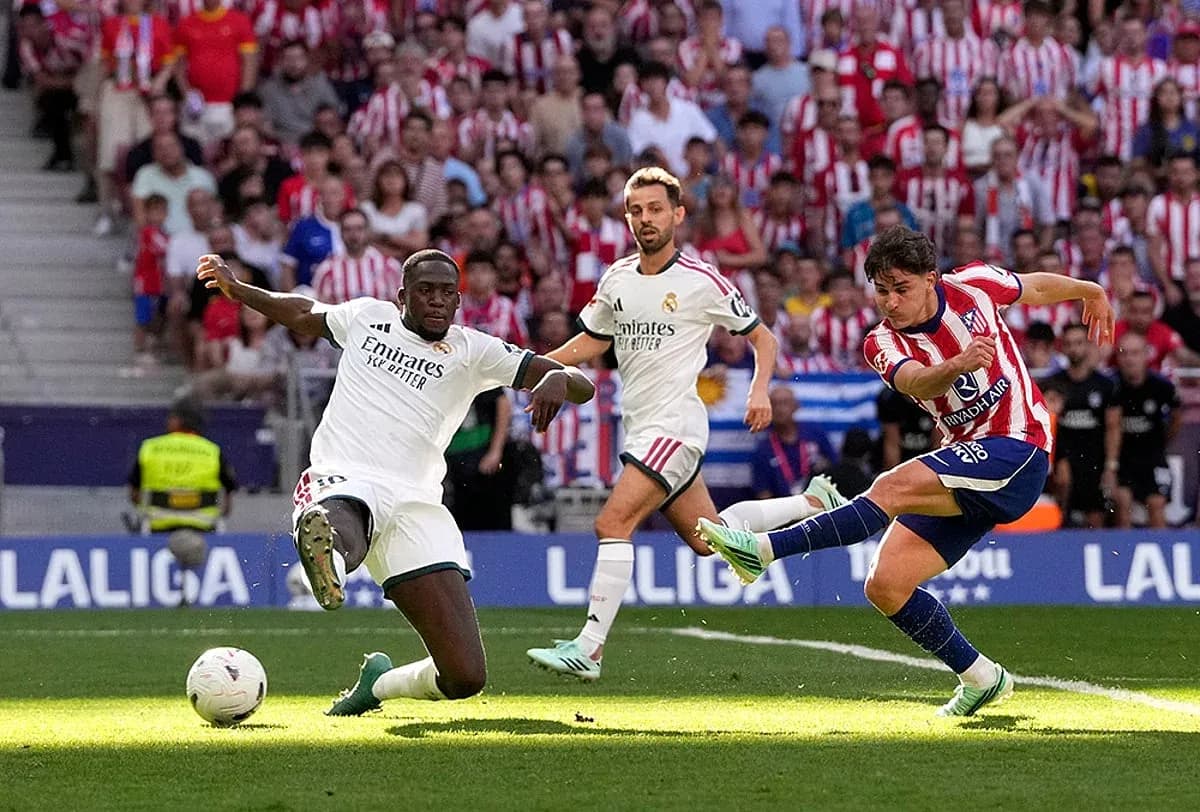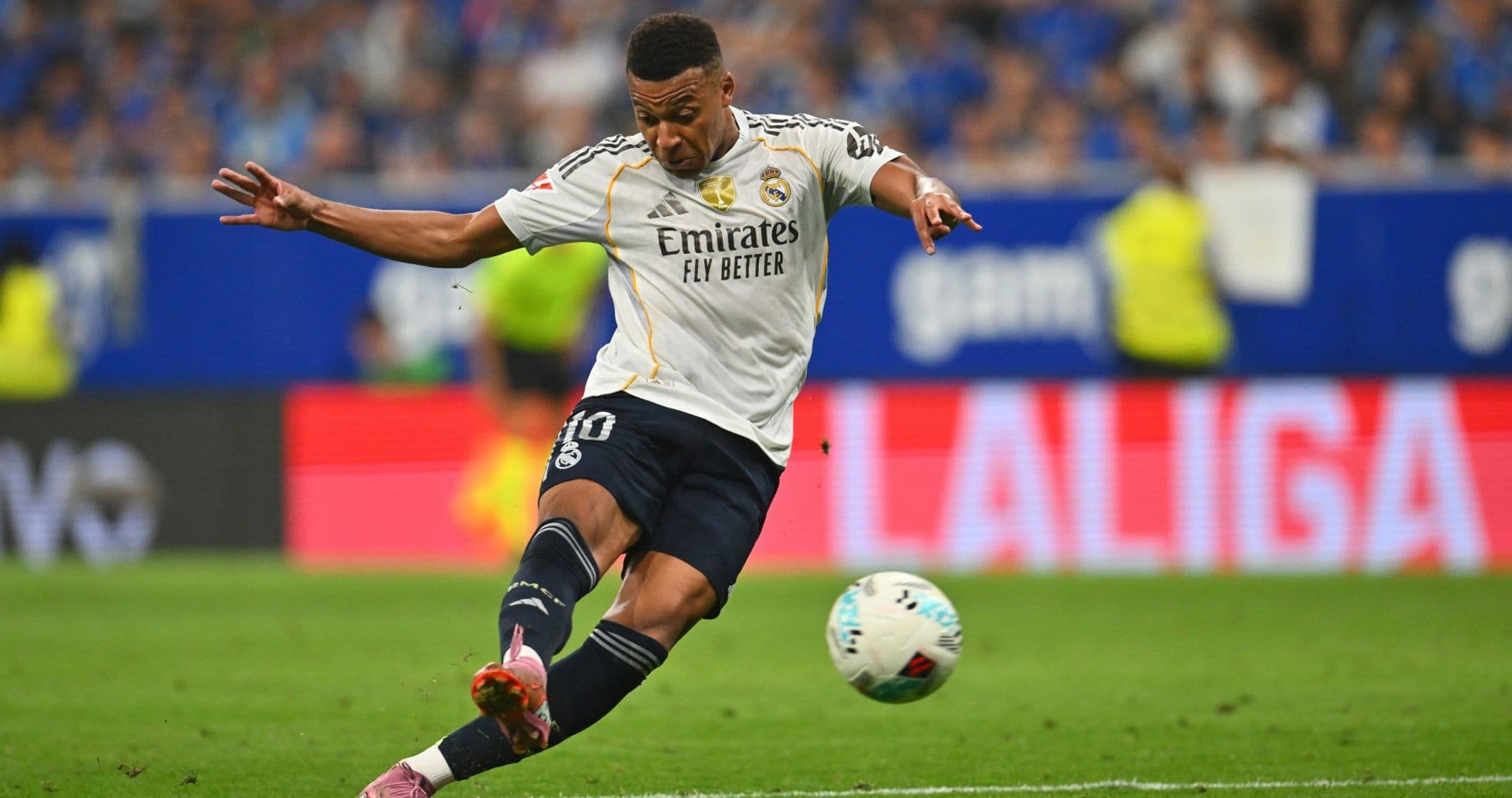
Real Madrid Dominates Oviedo with 2-0 Victory
Real Madrid’s 2-0 win over Oviedo at Estadio Santiago Bernabéu was a controlled, methodical performance built on territorial dominance, secure rest-defense and a clear use of width from a 4-4-2 base. The scoreline matched the pattern of the game: Real Madrid dictated with 65% possession, 616 passes and high passing accuracy, while Oviedo’s 4-3-3 was largely forced into a low block and sporadic counter-attacks.
Executive Summary
In a La Liga Regular Season - 36 fixture, Alvaro Arbeloa’s Real Madrid used a flexible 4-4-2 to suffocate Oviedo’s build-up and gradually turn possession into chances, finishing with 19 total shots to 9. The first breakthrough came just before half-time, easing any tension around breaking down Oviedo’s compact shape. The second goal on 80 minutes, after key attacking substitutions, reflected Arbeloa’s ability to layer additional creativity and penetration without sacrificing defensive stability. Oviedo’s 4-3-3, guided by Guillermo Almada Alves Jorge, produced an xG of 1.03 but managed only one shot on target, highlighting how effectively Real Madrid controlled their own box.
Scoring Sequence & Disciplinary Log
Goal verification (2-0, all for Real Madrid) aligns perfectly with the events list:
- 44' G. Garcia (Real Madrid) — assisted by B. Diaz From the right half-space, Brahim Diaz found G. Garcia with a well-timed pass, exploiting a gap between Oviedo’s right centre-back and full-back. Garcia’s finish delivered the 1-0 lead just before the interval, turning sustained pressure into a deserved advantage.
- 80' J. Bellingham (Real Madrid) — assisted by K. Mbappe With Oviedo stretched in the final phase, K. Mbappe, introduced from the bench, attacked the defensive line and slipped a decisive ball into J. Bellingham’s path. Bellingham’s composed finish doubled the lead, effectively sealing the match at 2-0.
There were no yellow or red cards recorded for either side. The disciplinary count is therefore:
- Real Madrid: 0 cards
- Oviedo: 0 cards
- Total: 0
With no VAR events listed and no cautions, the game flowed with minimal stoppages and without major officiating interventions.
Tactical Breakdown & Personnel
Arbeloa’s Real Madrid lined up in a 4-4-2 that behaved like a 2-4-4 in settled possession. T. Alexander-Arnold at right-back and A. Carreras on the left provided width and early circulation, while centre-backs R. Asencio and D. Alaba held a relatively high line, compressing the field and keeping Oviedo pinned.
The central midfield pairing of E. Camavinga and A. Tchouameni gave Real Madrid complete control of the central corridor. Tchouameni anchored in front of the defence, ensuring rest-defense against counters, while Camavinga shuttled vertically, connecting the first and second lines. Out wide, B. Diaz and F. Mastantuono (before his substitution) operated as hybrid wide midfielders, frequently moving into half-spaces to overload Oviedo’s interior midfielders.
Up front, G. Garcia and Vinicius Junior formed a complementary duo: Garcia more of a reference point attacking the box, Vinicius drifting left to isolate Oviedo’s right-back N. Vidal. The opening goal encapsulated this plan: sustained possession, wide circulation, then an incisive half-space pass from B. Diaz to Garcia.
Without the ball, Real Madrid’s 4-4-2 press sought to steer Oviedo wide. The front two screened passes into S. Colombatto and N. Fonseca, while the wide midfielders jumped to Oviedo’s full-backs. Oviedo were limited to 325 passes at 85% accuracy and only 9 total shots, many from less threatening positions. Real Madrid’s defensive index on the night was underlined by T. Courtois needing to make just 1 save, with 0.16 goals prevented, reflecting good protection of the penalty area and efficient box defending.
Guillermo Almada Alves Jorge’s Oviedo started in a 4-3-3 with A. Escandell in goal and a back four of R. Alhassane, D. Costas, E. Bailly and N. Vidal. The midfield trio of N. Fonseca, S. Colombatto and A. Reina was tasked with screening central zones and springing quick transitions to a front three of I. Chaira, F. Vinas and T. Fernandez. However, with only 35% possession and 5 fouls more than Real Madrid (14 vs 7), Oviedo often defended deep and reacted rather than imposed.
The substitution vector shifted the tactical dynamics in the second half:
- 54' S. Cazorla (IN) came on for I. Chaira (OUT) Oviedo sacrificed a wide runner for an extra technician, looking to improve ball retention and progression through midfield.
- 64' D. Carvajal (IN) came on for T. Alexander-Arnold (OUT) Real Madrid refreshed the right flank defensively while maintaining width and crossing threat.
- 64' J. Bellingham (IN) came on for A. Tchouameni (OUT) Arbeloa moved from a double pivot to a more attacking midfield profile, using Bellingham between the lines to break Oviedo’s block.
- 69' K. Mbappe (IN) came on for G. Garcia (OUT) This added elite depth running and one-versus-one threat, with Mbappe operating off Vinicius and Bellingham, stretching Oviedo vertically.
- 69' H. Hassan (IN) came on for T. Fernandez (OUT) Oviedo sought more direct penetration and pace in transition.
- 77' C. Palacios (IN) came on for B. Diaz (OUT)
- 77' D. Yanez (IN) came on for F. Mastantuono (OUT) These moves preserved Real Madrid’s intensity and pressing structure, keeping fresh legs in wide and advanced midfield zones.
- 79' L. Ahijado (IN) came on for N. Vidal (OUT)
- 79' P. Agudin (IN) came on for N. Fonseca (OUT) Oviedo attempted to energize the right flank and midfield, but by then Real Madrid’s control was entrenched.
The second goal, created by Mbappe and finished by Bellingham, was the direct product of Arbeloa’s substitution strategy: more verticality, more line-breaking runs, and an additional finisher arriving from midfield.
The Statistical Verdict
The statistical profile supports the tactical story of a controlled home win. Real Madrid’s 19 total shots, with 7 on target, compared to Oviedo’s 9 shots and just 1 on target, underline their territorial and chance-quality superiority. The xG figures — 1.46 for Real Madrid against 1.03 for Oviedo — suggest that while the visitors did craft some moments, they were largely kept to lower-quality looks, with Courtois’ 1 save and 0.16 goals prevented reflecting a relatively comfortable night.
In possession, Real Madrid’s 616 passes, 570 accurate (93%), versus Oviedo’s 325 passes, 275 accurate (85%), demonstrate sustained control and structured build-up. The 4-4-2, with its balanced rest-defense and capacity to morph into more attacking shapes via substitutions, allowed Real Madrid to convert statistical dominance into a clean-sheet victory that aligned with both their overall form and their defensive index on the night.