Real Madrid's Late Winner Masks Mourinho's Familiar Flaws
Real Madrid walked out of Catalonia with three points and very few illusions.
Carlos Espí, on debut, buried a 90th-minute winner to seal a 2–1 victory over Espanyol and launch the 2026–27 La Liga season with drama, if not conviction. José Mourinho’s second spell in charge began with a familiar script: moments of brilliance, long stretches of confusion, and a rescue act at the death.
The night had started as if Madrid planned to make a statement.
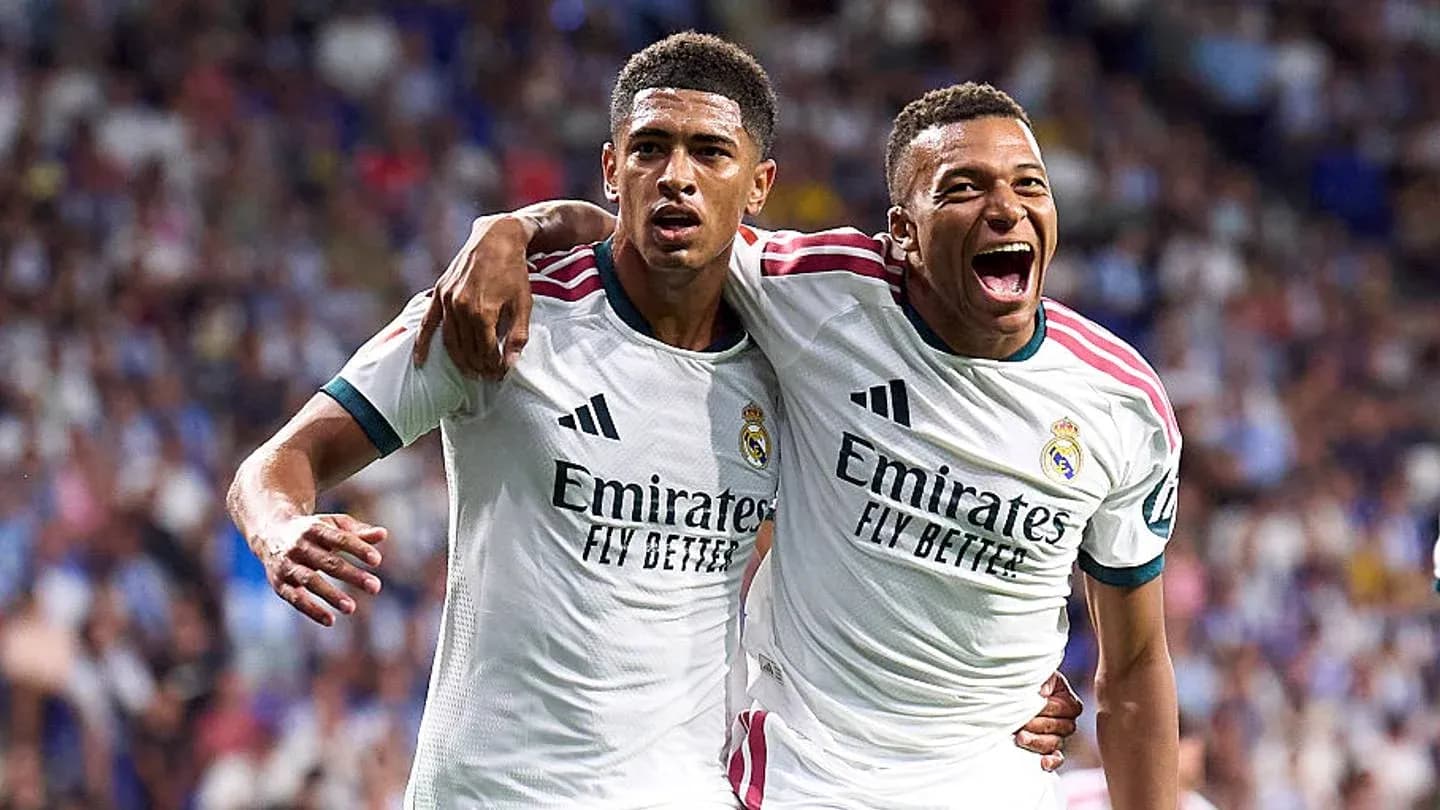
Nine minutes in, Arda Güler stood over a set piece and bent the game to his will. His delivery was wicked, precise, begging to be finished. Jude Bellingham obliged, timing his run and thundering a header past a helpless defense. One ball, one run, 1–0. Mourinho’s new Madrid looked sharp, aggressive, in control.
Then the grip loosened.
Espanyol settled, dropped into their block, and watched Madrid’s ideas dry up. Passes slowed. Movements dulled. The visitors retreated into the bad habits that have stalked them for two seasons.
On 30 minutes, they paid for it. Álex Calatrava ghosted into the box while Federico Valverde stood rooted, shouting rather than tracking. The Espanyol midfielder met the chance and beat Thibaut Courtois, who could do little but glare at the chaos in front of him. 1–1, and deserved.
The equalizer should have jolted Madrid. It didn’t. Mourinho’s men trudged into the break looking like a side still unsure of what they are supposed to be.
Second-Half Stagnation, Late Salvation
After halftime, the pattern hardened. Espanyol sat deep, disciplined and patient. Madrid, supposedly the side stacked with creativity and firepower, looked short of ideas.
Vinícius Júnior ran into the usual cul-de-sacs down the left. He was kicked, clipped, and crowded out, but still went to ground too easily and never found a way to hurt Espanyol. He finished with no chances created and no shots on target, a brutal line for a player of his status.
Kylian Mbappé, increasingly irritated, abandoned the center-forward role and drifted to the right just to feel the ball. He carved out a few half-openings, but the finishing touch deserted him. His worst moment came after the restart, when he somehow headed wide with the goal gaping.
Behind them, the midfield didn’t help. Bernardo Silva kept the ball neatly enough and had short bursts where he dictated tempo, but those spells never lasted. Valverde, aside from seeing one effort clip the outside of the post, struggled to impose himself. Between them, there were too few line-breaking passes, too little invention. Crosses began to rain in without conviction, more hopeful than planned.
The pressure, such as it was, felt disjointed. Madrid looked less like a machine and more like a collection of stars waiting for someone else to solve it.
The breakthrough, when it came, belonged to the new blood.
Mbappé finally found a pocket of space and drove at Espanyol’s back line, carving open just enough room for a decisive move. The ball broke for Carlos Espí, the 80th-minute substitute, who seized his moment and drilled home the winner in the 90th minute. On his debut, he did what the club’s biggest names could not: finish the job.
Not a performance to frame. But three points, all the same, and a lifeline for Mourinho’s opening night.
Same Old Madrid Problem
Strip away the late drama and the story is uncomfortably familiar.
Once again, Real Madrid labored against a compact, “inferior” Spanish side happy to defend deep and wait. Once again, the 15-time European champions ran out of ideas in the final third. Once again, they needed individual heroics to escape.
Vinícius tried the same patterns down the left, and Espanyol read them. Mbappé hunted for magic, but his radar misfired. The connection between the two never really clicked; they looked like stars sharing a pitch, not a partnership sharing a plan.
Valverde and Bernardo Silva, meant to give structure and incision, couldn’t consistently break lines or tilt the game. Too often, Madrid’s attacks ended with a hopeful cross rather than a crafted chance. The sense of inevitability that once surrounded this team in tight games has been replaced by a kind of nervous waiting.
The alarm bells in Catalonia weren’t subtle. Madrid won, but they didn’t convince anyone they are ready to rip the title away from Barcelona.
Player Ratings: Güler and Bellingham Shine Amid the Noise
- GK: Thibaut Courtois — 6.7
Barely tested across the 90 minutes and blameless on the goal. Once more, his defense left him exposed when it mattered. - RB: Denzel Dumfries — 7.2
Mourinho’s choice over Trent Alexander-Arnold for defensive solidity, yet he was beaten in the build-up to Espanyol’s equalizer and often needed Ibrahima Konaté to bail him out after surging forward. Found good positions in attack but lacked the final ball. - CB: Ibrahima Konaté — 7.7
A strong debut. Dominated physically, bullied Espanyol forwards, and used his height to clear danger. Still, there were moments of uncertainty with his positioning inside the box. - CB: Dean Huijsen — 7.1
Showed off his range with five passes into the final third and held firm defensively, even shedding blood for the cause. A gritty, composed display. - LB: Álvaro Carreras — 7.4
After a shaky previous season, a mistake-free outing counts as progress. Linked well with the midfield and kept things simple. - DM: Bernardo Silva — 7.1
Neat on the ball and had spells where he controlled the rhythm, but faded in and out of the game. Won only two of nine duels, which underlined Madrid’s midfield softness. - DM: Federico Valverde — 8.1
The rating flatters the key lapse. Completely switched off for Calatrava’s goal, watching instead of tracking the run. Did threaten with a shot that kissed the outside of the post, but this was another game where he never fully grabbed the midfield. - RW: Arda Güler — 8.5
Madrid’s best playmaker on the night. His set-piece delivery for Bellingham’s opener was sublime, and every time he had space, he looked up and created. Sharp, inventive, and unlucky to be withdrawn just after the hour. - AM: Jude Bellingham — 8.3
Carried his England form straight into club duty. Scored the first goal of the Mourinho era and drove forward relentlessly, mixing power, skill, and timing. A constant threat between the lines. - LW: Vinícius Júnior — 7.2
Kicked repeatedly and targeted by Espanyol, yet still went down too easily at times. Failed to truly influence the game, ending without a shot on target or a chance created. - ST: Kylian Mbappé — 7.4
Restless and frustrated. Drifted wide to find involvement and missed a glaring header after the break. Still, he redeemed himself by carving out the space and sequence that led to Espí’s decisive strike. - SUB: Yan Diomande (64’ for Güler) — 6.4
Delivered some useful balls and initiated the move that ended with Espí’s winner. Overcomplicated things in the box with too many touches. - SUB: Marc Cucurella (64’ for Carreras) — 6.7
Still shaking off World Cup fatigue but slotted in competently. Needs time to build an understanding with Vinícius down the left. - SUB: Trent Alexander-Arnold (80’ for Dumfries) — 6.3
A tidy cameo with little opportunity to change the game late on. - SUB: Eduardo Camavinga (80’ for Silva) — 6.4
Kept possession flawlessly. Safe and secure, if unspectacular. - SUB: Carlos Espí (80’ for Bellingham) — 7.5
The hero. Came on, found his moment, and buried the winner on debut. A night he will not forget.
Subs not used: Andriy Lunin (GK), Sergio Mestre (GK), Antonio Rüdiger, Mario Rivas, Jorge Cestero, Alexis Ciria, Brahim Díaz.
What Mourinho Learned
Mourinho’s first big call of the season was at right-back. He opted for Denzel Dumfries, trusting his defensive reliability over Trent Alexander-Arnold’s attacking flair. The outcome was uncomfortable: Dumfries offered limited threat going forward and still ended up exposed on Espanyol’s goal. Madrid traded creativity for security and got neither.
In midfield, the concerns are not new. Valverde and Bernardo Silva, on paper a blend of dynamism and control, did not consistently dictate the game. Valverde’s lapse on Calatrava’s goal highlighted a broader issue: this Madrid midfield still doesn’t shut down danger or carve open low blocks with enough authority.
Not everyone was part of the problem. Arda Güler and Jude Bellingham were at the heart of everything positive. Their combination of vision, bravery on the ball, and work rate without it offered Mourinho a clear blueprint. They can play together. They should play together. On this evidence, they might be the pair that drags Madrid into a new attacking identity.
For now, though, Madrid remain a team caught between eras. The badge still intimidates. The individuals still decide games. But if Barcelona are to be dethroned, late escapes like this one will not be enough.
Mourinho has his win. The table will show three points. The performance, and the noise around it, tell a different story: the work has only just begun.