Real Madrid vs Girona: Tactical Analysis of 1-1 Draw
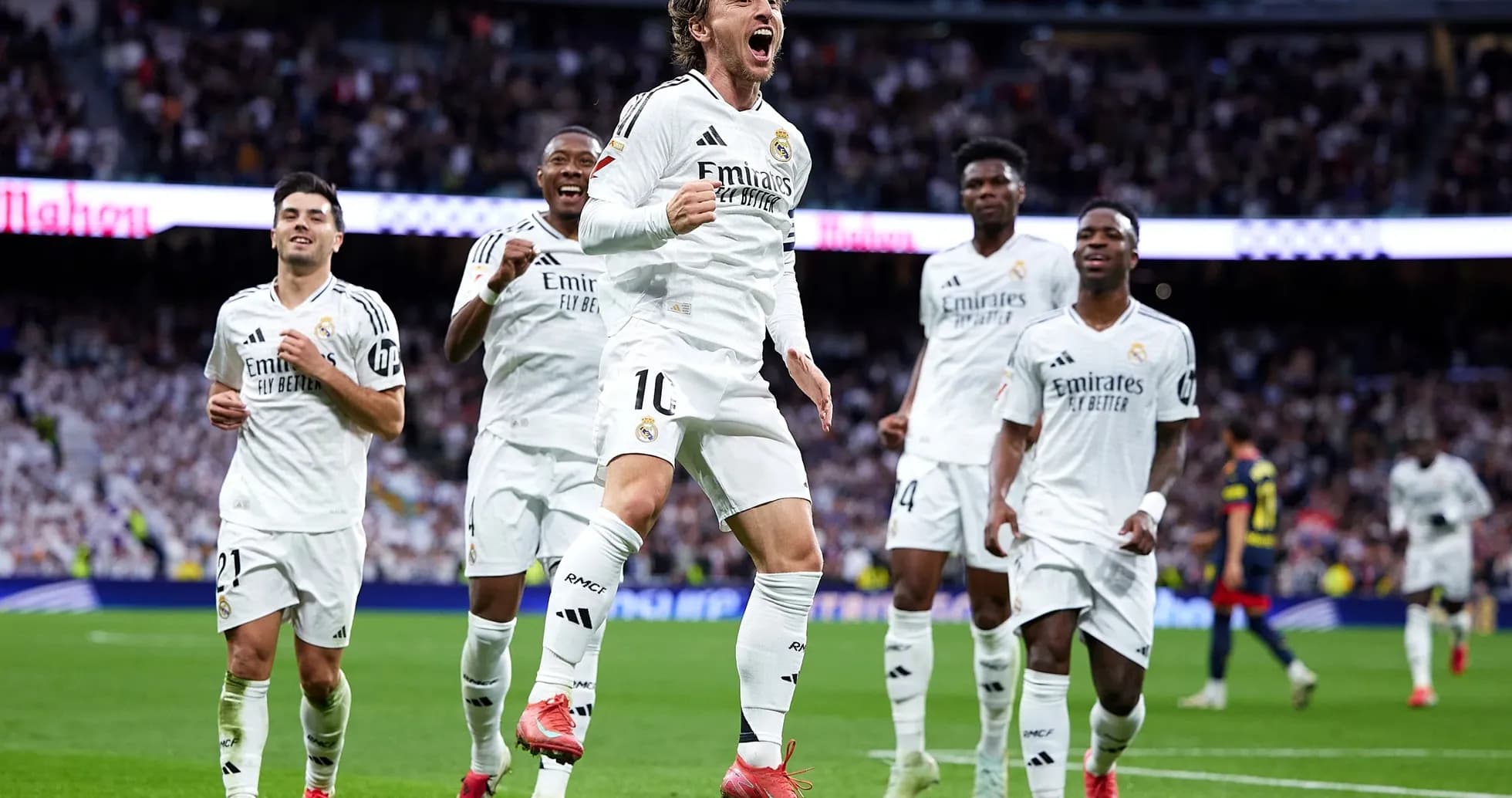
Real Madrid and Girona shared a 1-1 draw at Estadio Santiago Bernabéu in La Liga’s Regular Season - 31, a match where territorial dominance and chance creation from the hosts met a compact, counter-punching structure from the visitors. Real Madrid’s 61% possession, 22 shots and 2.3 xG contrasted sharply with Girona’s 10 shots and 0.52 xG, yet the scoreboard stayed level after Thomas Lemar cancelled out Federico Valverde’s opener. The game evolved from Real Madrid’s controlled 4-4-2 against Girona’s disciplined 4-2-3-1 into a more chaotic final quarter once substitutions reshaped both midfields, but Paulo Gazzaniga’s seven saves and Girona’s late defensive organisation preserved the point.
First Half
The disciplinary tone was set on 35', when Kylian Mbappé received a yellow card for argument, a rare emotional flash in an otherwise controlled first half. The interval arrived at 0-0, with Real Madrid on top territorially but without a breakthrough.
The deadlock was broken on 51'. Federico Valverde arrived from midfield to score a normal goal for Real Madrid, assisted by Brahim Díaz, reflecting the home side’s pattern of using a narrow midfield to generate central overloads and late box entries. Girona responded on 62', also from a structured pattern: Thomas Lemar finished a normal goal after a delivery or action from Arnau Martínez, levelling at 1-1 and punishing Madrid’s brief loss of defensive compactness on the right side.
Substitutions and Tactical Changes
Carlo Ancelotti’s side (coach not listed, but structure clear) reacted with a double substitution on 64'. Eder Militão (OUT) made way for Dean Huijsen (IN), and Jude Bellingham (OUT) was replaced by Arda Güler (IN). Girona mirrored the timing: Claudio Echeverri (OUT) left for Abel Ruiz (IN) on 64', signalling a shift towards a more direct reference up front.
On 70', Girona recalibrated their attacking three: Azzedine Ounahi (OUT) was replaced by Bryan Gil (IN), and goalscorer Thomas Lemar (OUT) came off for Hugo Rincón (IN), refreshing wide creativity and defensive work on the flanks. The next card arrived on 76', when Federico Valverde was booked for a foul, adding a yellow to his earlier goal and underlining his high-intensity role in Madrid’s pressing and transitions.
Real Madrid then made a central-structure adjustment on 79'. Eduardo Camavinga (OUT) was replaced by Aurélien Tchouaméni (IN), and Fran García (OUT) came off for Ferland Mendy (IN), shifting the left side towards more defensive security and deeper build-up stability. On 84', Brahim Díaz (OUT) was substituted by Gonzalo García (IN), adding fresh legs in the attacking line. Simultaneously, Girona replaced Iván Martín (OUT) with Fran Beltrán (IN), reinforcing central control for the closing phase.
On 85', Girona made a late attacking move, with an unnamed player (OUT) replaced by Cristhian Stuani (IN), introducing a pure penalty-box striker. The final card came on 88', when Hugo Rincón received a yellow card for a foul, reflecting Girona’s increased defensive aggression as they protected the draw.
Tactical Analysis
Tactically, Real Madrid’s 4-4-2 was ball-dominant and vertically aggressive. Andriy Lunin, with just 1 save, was largely a distributor rather than a shot-stopper; Girona’s 0.52 xG and only 2 shots on goal show how well the home side controlled the visitors’ access to high-quality chances. The back four of Daniel Carvajal, Éder Militão, Raúl Asencio and Fran García held a high line, compressing space and allowing the midfield to press forward. Girona’s main joy came when they could exploit the gaps behind the full-backs, as seen in the equaliser sequence involving Arnau Martínez and Lemar.
In midfield, Real Madrid’s box of Federico Valverde, Jude Bellingham, Eduardo Camavinga and Brahim Díaz was the game’s tactical centrepiece. Bellingham and Díaz operated between lines, dragging Girona’s double pivot of Iván Martín and Axel Witsel out of shape. Valverde’s goal encapsulated this: his late run from the right half-space, assisted by Díaz, capitalised on Girona’s difficulty in tracking midfield runners once the ball went wide.
Up front, Kylian Mbappé and Vinicius Júnior stretched Girona’s back line. Mbappé’s yellow for argument at 35' hinted at his frustration; despite Real Madrid’s 18 shots inside the box, the visitors’ compactness and Gazzaniga’s positioning limited him to half-chances. Vinicius’ role was to pin Álex Moreno and isolate in 1v1s, contributing to the high corner count (10 for Madrid) as Girona were often forced to defend deep and clear.
Girona’s 4-2-3-1 was pragmatic. Paulo Gazzaniga’s 7 saves were decisive; he outperformed Lunin in pure shot-stopping volume, even if the goals-prevented metric was neutral for both. The central pairing of Alejandro Francés and Vitor Reis, shielded by Witsel and Martín, focused on blocking central lanes and forcing Madrid wide, which is reflected in Real’s 6 blocked shots. Their offensive plan relied on Viktor Tsygankov, Lemar and Azzedine Ounahi linking with Claudio Echeverri between lines, but Real’s defensive line and midfield screening kept Girona to 4 shots inside the box.
The substitutions shifted the tactical tone. Dean Huijsen for Militão maintained the high-line concept but with fresher legs; Arda Güler for Bellingham changed the profile of the central creator to a more final-pass, shot-oriented playmaker. For Girona, Bryan Gil and Hugo Rincón introduced more direct dribbling and defensive work on the flanks, while Fran Beltrán gave extra stability in front of the defence. Stuani’s late arrival turned Girona’s final minutes into a more cross-oriented, second-ball game, but Madrid’s defensive structure held.
Statistical Overview
Statistically, the verdict is clear: Real Madrid were superior in chance volume and quality. They generated 22 total shots to Girona’s 10, with 9 on goal versus 2, and an xG of 2.3 against 0.52. Possession (61% vs 39%) and passing (600 total passes at 92% accuracy versus 390 at 87%) underline their control. Yet the scoreline and the goals-prevented figures (0 for both keepers) indicate that the finishing and goalkeeping performances broadly matched expectation.
Disciplinary balance slightly favoured Madrid in terms of control: 9 fouls and 2 yellow cards (Mbappé for argument, Valverde for a foul) against Girona’s 13 fouls and 1 yellow (Hugo Rincón for a foul). Overall Form-wise, Real Madrid looked like a high-possession, high-chance side whose attacking efficiency did not fully reflect their dominance. Defensively, their Defensive Index on the day was strong: few shots conceded, low xG against, and minimal work for Lunin. Girona’s Defensive Index, however, was the story – under siege for long spells, but structurally resilient and backed by a high-volume, high-focus display from Gazzaniga that turned an expected defeat into a valuable away point.