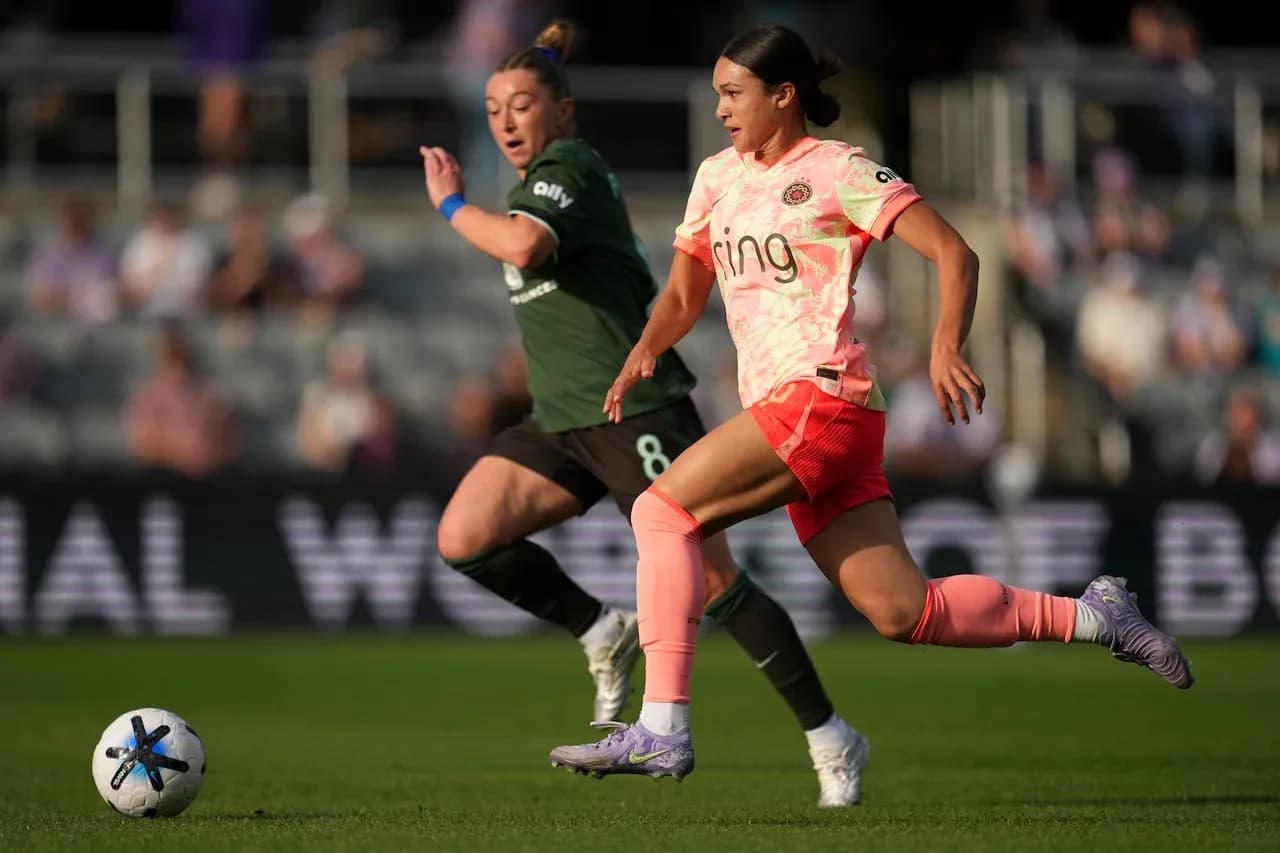
Racing Louisville W Defeats Portland Thorns W 3–1 in NWSL Upset
Lynn Family Stadium had the feel of a group-stage upset in the making, but by full time it was something more: a statement that Racing Louisville W’s home form is no accident, and that even the league leaders can be bent out of shape in Kentucky. Following this result, a 3–1 win over Portland Thorns W in the NWSL Women group stage, the table-topping visitors were forced into an unfamiliar role – chasing shadows and momentum – while the league’s bottom side leaned into a growing identity built on late surges and fearless attacking.
Both sides mirrored each other structurally in a 4-2-3-1, yet the shapes carried very different emotional weights. Racing arrived as the league’s 14th-placed team, with only 7 points and a negative goal difference of -2 overall (13 scored, 15 conceded). But at home they have been a different animal: unbeaten across 3 matches, with 2 wins, 1 draw, and 8 goals scored against 5 conceded. Portland, by contrast, came in as the benchmark: rank 1, 19 points, and a positive goal difference of 6 overall (15 for, 9 against), with 3 home wins from 3 and a strong away record of 3 wins, 1 draw, and 2 defeats.
The opening exchanges reflected the season-long data. Portland’s offensive profile is front-loaded: 26.67% of their goals arrive in the 0–15 minute window, and 26.67% of their concessions also come early. Racing, meanwhile, are slower starters but grow into games, with 30.77% of their goals arriving between 76–90 minutes. The first half at Lynn Family Stadium echoed that tension: Portland’s high, aggressive line and early pressing from Olivia Moultrie and Reilyn Turner tested Racing’s back four, but Beverly Yanez’s side refused to be hurried out of their structure.
The Racing back line – Quincy McMahon, Courtney Petersen, Arin Wright, and Lauren Milliet – set the platform. With Jordyn Bloomer behind them, they compressed the central lane where Portland usually thrive through Jessie Fleming’s distribution and Cassandra Bogere’s ball-winning. Fleming, who has been one of the Thorns’ metronomes this season, found herself funneled into wide areas, her vertical passing lanes into Turner and Sophia Wilson repeatedly blocked by the compact double pivot of Taylor Flint and Katie O’Kane.
Higher up, Yanez’s attacking band of three – Makenna Morris, Kayla Fischer, and Ella Hase – rotated intelligently around Sarah Weber, the league’s 13th-ranked scorer with 3 goals and 1 assist in total this campaign. Weber’s profile is telling: 8 shots, 5 on target, and a willingness to drift, drag centre-backs, and link. Against Portland, that movement was central to pulling Sam Hiatt and Carolyn Calzada into uncomfortable pockets, allowing late-arriving runners like Fischer to attack the second ball.
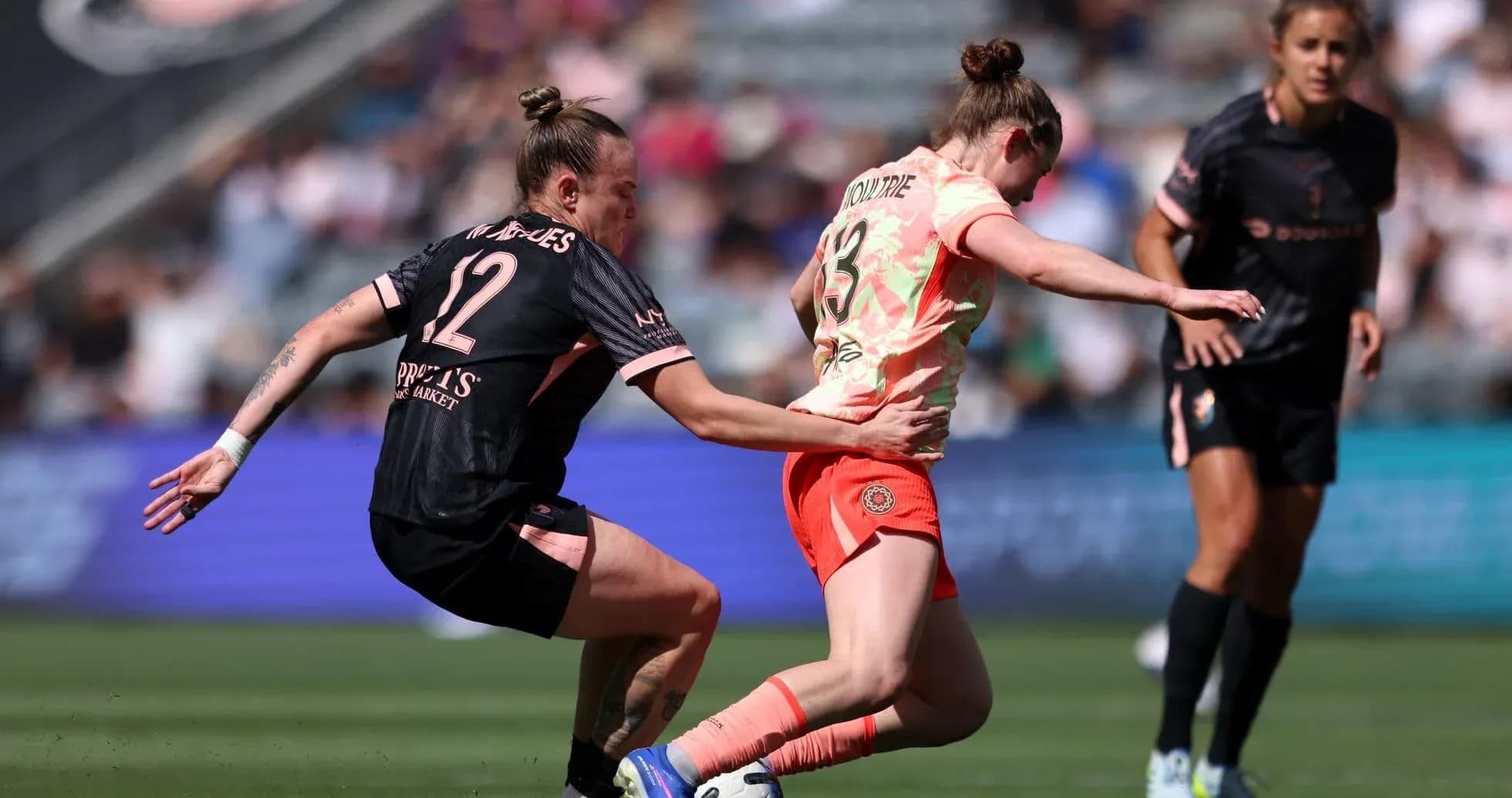
Portland’s own attacking stars still carried threat. Moultrie came into the game as one of the league’s most complete creators: 4 goals and 4 assists overall, 22 key passes, and 13 shots with 9 on target. Her ability to receive between the lines and turn under pressure is usually the Thorns’ cheat code. Turner, with 4 goals from 12 shots and 51 duels won from 80, is the quintessential “Hunter” in the Hunter vs Shield dynamic – relentlessly attacking channels and half-spaces. In the first half, that duo combined to stretch Racing’s shape, and the 1–1 score at the break felt like a fair reflection of Portland’s technical quality against Louisville’s structure and transition threat.
But the second half belonged to Racing’s engine room and their discipline in the dark arts. Statistically, Racing are a side that lives on the edge: they have yet to keep a clean sheet this season, concede 1.9 goals per game overall, and their yellow cards are scattered across the match, with a notable late spike – 27.27% of cautions arriving in the 91–105 minute window. Individually, their midfield spine is combative: O’Kane, Fischer, Macey Hodge, and Flint all feature prominently in the league’s card charts. Hodge, for instance, has 2 yellows and 4 successful blocks, while Fischer has 2 yellows and 10 fouls committed in total. That edge was present here, but crucially, Racing managed it without tipping into chaos.
On the other side, Portland brought their own disciplinary volatility. Reyna Reyes is already on the league’s red-card radar, and Bogere’s record – 1 yellow and 1 yellow-red overall – speaks to an aggressive approach in midfield. In a match where Racing were happy to draw fouls and break rhythm, that became a liability rather than an asset. As the game tilted after the hour mark, Racing’s willingness to absorb contact and slow Portland’s tempo blunted the Thorns’ usual late push.
The decisive tactical intersection came in the final quarter of an hour. Portland’s defensive profile shows a stark weakness late: 44.44% of their goals conceded arrive between 76–90 minutes. Racing’s attacking data, conversely, peaks in that same window, with 30.77% of their goals scored in the final quarter-hour. This fixture played almost exactly to that script. As Portland pushed higher, chasing the game, spaces opened for Fischer and Hase to run into, with Weber continuing to occupy and tire the centre-backs. The home side’s 4-2-3-1 morphed into a ruthless transition machine, punishing a Portland back line that had lost its early-game compactness.
In the “Engine Room” duel, O’Kane and Flint quietly outpointed Fleming and Bogere. O’Kane’s season numbers – 192 passes at 71% accuracy, 15 tackles, 5 successful dribbles – underline a player comfortable both breaking and making play. Flint, with 19 tackles, 10 blocks, and 27 interceptions overall, is one of the league’s most disruptive midfielders. That defensive intelligence showed in how Racing repeatedly shut down Moultrie’s central pockets, forcing Portland wide and into lower-value crossing situations.
From a statistical prognosis perspective, this result feels less like an anomaly and more like the logical collision of two trends. Portland remain an elite side: 6 wins from 9, 1.7 goals scored per game overall, 5 clean sheets, and a perfect penalty record. But their late-game defensive fragility, especially on their travels where they concede 1.5 goals per match, is now a clear target for opponents. Racing, meanwhile, are building a home identity around high-scoring, emotionally charged matches – averaging 2.7 goals for and 1.7 against at Lynn Family Stadium – and a knack for landing the final punch.
Following this result, the tactical story is clear. Racing Louisville W have discovered that their best defence might be a fearless, late-surging attack, anchored by a rugged midfield and a tireless front four. Portland Thorns W, for all their quality, will leave Louisville knowing that in this league, even the top seed cannot afford to switch off when the clock hits 76 minutes.