Premier League Transfer Window: Winners and Losers Revealed
Two days on from the Premier League’s most deranged transfer window yet, the dust hasn’t so much settled as rearranged itself into new, even stranger shapes. Trying to make sense of who “won” or “lost” feels almost quaint. The money moved, the names changed shirts, and half the time it didn’t even seem to matter whether any of it made sense.
This was the summer the Chelseafication of the market felt complete. Fees lost all connection to reality, and the logic became circular: if everyone’s overpaying, then nobody’s really overpaying. Spend £100m on a dud? No problem. Someone will turn up with £80m and a new PowerPoint about “upside”.
How do you apply logic to a world where Chelsea can drop £60m on Mykhailo Mudryk, watch him struggle, watch him get banned, then line up a deal that might somehow turn a profit a year from now?
You don’t. But we’ll have a go anyway.
Before the season kicked off, we picked out 10 glaring problems across the division. The transfer window is shut now. Some clubs actually did something about them. Others just doubled down on the chaos.
Tottenham’s striker problem
This felt like the obvious place to start. Tottenham needed a striker. They kind of signed one. Sort of. Maybe.
Spurs brought in Savio, Omar Marmoush and, yes, Mudryk. They didn’t move on Dominic Solanke or Richarlison, whose relationship with Roberto De Zerbi already looks as spiky as his touchline demeanour.
De Zerbi has publicly set Savio a double-figure goal target, a clear sign that he expects the goals to be shared around rather than supplied by a classic No 9. Marmoush looks a sharp piece of business, a forward who decided early that sitting behind Erling Haaland at Manchester City was a career cul-de-sac and chose to get out.
But he’s not a traditional centre-forward either. The other attacking names that slipped away – Cody Gakpo, Iliman Ndiaye – only reinforce the suspicion that De Zerbi simply doesn’t want a pure penalty-box striker. He asked for plenty this summer. He got plenty.
Two league games in, Spurs have not scored. They haven’t really looked like scoring. The new-look attack needs to reveal what it actually is, and quickly, or this lavish, noisy rebuild is going to start to feel very familiar: another year of angst dressed up as ambition.
Manchester City’s midfield reset
This concern was born out of a post-Community Shield overreaction, which is always dangerous. But watching Elliott Anderson and Mateo Kovacic trying to control a game in Cardiff did raise a fair question: was this really City’s next great midfield?
City answered in the only way they know. They threw another nine-figure fee at the problem and took Enzo Fernandez off Chelsea’s hands.
Fernandez had already painted himself as a Premier League villain-in-waiting after his World Cup antics. Now he’s the face of this summer’s excess, moving from one of the league’s great financial fire-hoses to the other. There will be plenty willing him – and City – to fail, even if it means Anderson’s promising story gets swallowed up along the way.
Manchester United’s defence creaks on
United did the hard, overdue work in midfield. The back line, though, stayed largely untouched and has already started to groan.
Two games, two promoted opponents, four goals conceded. It’s the same defence that was being shredded at Brentford four years ago, only older and more brittle. The warning signs aren’t subtle.
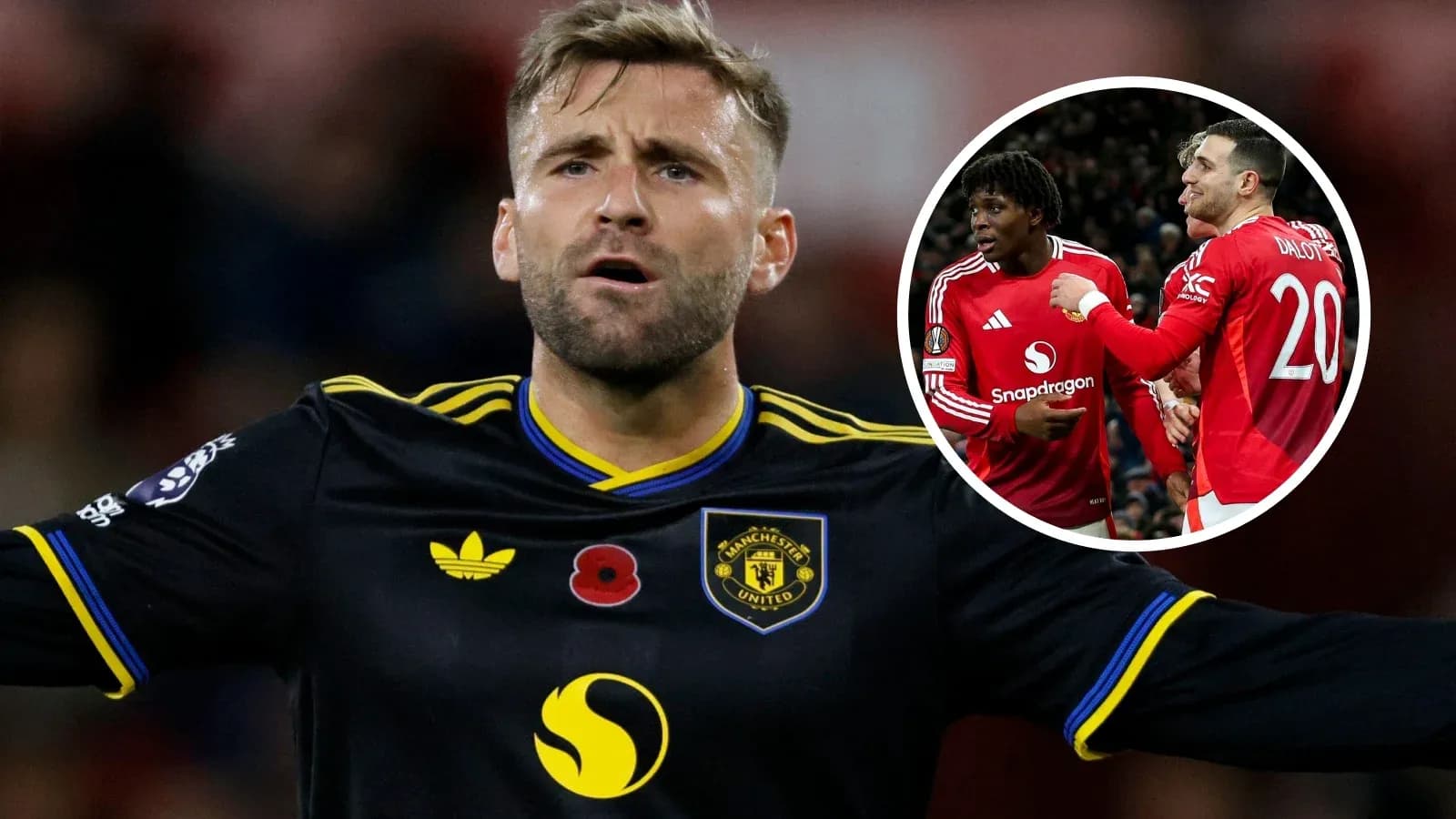
Once the European schedule kicks in, the strain will ramp up. A huge amount rests on Luke Shaw staying fit and reliable from now until the winter. That’s a gamble, not a plan.
Liverpool’s fitness and the strange net spend
While the spotlight flickered between City, Chelsea and Spurs, Liverpool quietly ended up with the biggest net spend of the lot. When the music stopped, they had spent more than anyone – and still don’t look significantly stronger than last season.
Bradley Barcola is the headline act: thrilling, gifted, and extremely expensive. But Liverpool already had a handful of similarly thrilling, similarly expensive forwards from last summer who haven’t truly taken off yet. One or two of them need to ignite or Barcola just becomes another expensive ornament.
As for fitness, the early signs are ambiguous. Two games, two 2-2 draws, two late equalisers. That could be a sign of resilience and legs. Or it could be a rerun of last season’s pattern, when dramatic late winners papered over structural cracks. Maybe it’s coincidence. Maybe it’s noise. Maybe it’s just football happening at random.
Chelsea’s goalkeeper – finally, a clear fix
At last, something simple. Chelsea needed a goalkeeper. Everyone could see it before a ball was kicked. The opening game made it even clearer. Then they acted.
Emi Martinez arrived. Robert Sanchez dropped out. On this, at least, there is broad agreement: Martinez is an upgrade. In a window where nothing made sense, Chelsea handed the rest of us a rare moment of consensus.
Of course, this is Chelsea 2026, so solving one problem simply opened another. Fernandez has gone, nobody came in to replace him, and midfield suddenly looks thin. The lack of European football offers some breathing space. If Moises Caicedo stays fit, a rotating group of Romeo Lavia, Valentin Barco and Reece James might just be enough to limp through to January, when Chelsea can presumably throw another £80m at someone else’s starter.
The wild-card option is the free-agent market. Given Spurs’ fondness for Chelsea cast-offs, there would be a certain grim comedy if Chelsea turned to Yves Bissouma or, for peak chaos, Tanguy Ndombele as a short-term body to plug a gap until the next spending spree.
Aston Villa’s ripped-out spine
Villa’s midfield needed help. They got it, quietly, in the shape of Leon Goretzka on a free after his Bayern Munich exit. It barely registered amid the noise, but it might end up as one of the smartest moves of the window once people notice it actually happened.
Unai Emery’s side have endured another summer of churn. The chips on both shoulders remain firmly in place, but the spine that underpinned their rise – Emiliano Martinez, Ezri Konsa, Youri Tielemans, Morgan Rogers, Ollie Watkins – has been pulled apart and reassembled at speed.
There’s been more change than you’d like for a team trying to stay in the top bracket, yet the recruitment looks coherent across the pitch. The goalless, pointless start feels more like an early-season misfire than a structural collapse. There are other clubs whose blank beginnings look far more ominous.
Newcastle’s Newcastle problem
This one can be parked for now. Matthias Jaissle looks like he knows exactly what he’s doing and Newcastle look, well, fine. Better than fine, actually.
The only nagging doubt is what their results really tell us. Four points from games against Liverpool and Tottenham is impressive on paper. It might also be a clearer reflection of where Liverpool and Spurs are than where Newcastle are.
We’ll learn more when they face a less chaotic opponent. Bournemouth this weekend should offer a cleaner read.
Fulham’s manager gamble
Alvaro Arbeloa, the Temu version of Xabi Alonso, has already been installed as favourite in the Sack Race. That’s despite Tottenham’s issues and the fact Evangelos Marinakis hasn’t dismissed anyone for weeks and must be getting twitchy.
The logic behind Fulham and Marco Silva parting ways is understandable. Still, it felt like one of those rare Premier League marriages where club, coach and timing all lined up.
That’s part of why Arbeloa always looked the flimsiest of this season’s managerial newcomers. The fit isn’t obvious. The risk is.
Coventry’s Sky Bet aura
Coventry still absolutely reek of Sky Bet. The loss to Hull only deepened the concern and their upcoming schedule looks brutal: Manchester City, Brighton, Nottingham Forest and Newcastle in the next month or so.
By the time a kinder-looking trip to Dr Tottenham rolls around in late October, they could already be staring up at the rest.
While the billion-pound sagas grabbed the headlines, Coventry’s summer tells its own story. They’ve spent £150m just to assemble something that, at best, resembles a Championship side with upgrades. De-Championshiping a promoted team has never been harder, or more expensive.
Crystal Palace’s patched-up defence
The alarm bells were already ringing. Two defeats later, including a mauling by a Manchester City side still clearly working things out, and they’re deafening.
Palace have tried to plug the gaps with a familiar face: Axel Disasi, on loan from Chelsea, because it now appears mandatory for every Premier League club to take a turn with him. Somewhere there’s probably a rota.
They’ve also added Honest Ahanor on loan from Atalanta, though he’s already agreed to join Chelsea next summer. It’s a move that dances gleefully through a loophole, and the fact the player is literally called “Honest” only sharpens the irony.
To complete the Chelsea flavour, Ben Chilwell returns to Selhurst Park after a previous loan spell, this time via Strasbourg and with injury baggage in tow.
You can shrug at all of it as just another messy window. But experience tells you something specific: clubs only sign an injured Ben Chilwell on deadline day when they are very, very worried.