Premier League Insights: Hull, Chelsea, and Early Trends
The Premier League is already sorting itself out. Two weeks in, the table still lies, but the patterns don’t. Hull are organised, Chelsea are chaotic fun, James McAtee looks like the smartest kind of internal promotion – and Spurs and Liverpool are discovering that no single signing fixes a cracked foundation.
This is what the early wheat looks like. And the chaff.
Hull: Structure over stardust
Hull were meant to be the next punchline. Another promoted side held up against Derby 2007/08 until they scrambled past that infamous points tally and went down anyway.
Instead, they’ve walked into the Premier League and quietly joined a very small club. Only the fourth promoted team ever to win their first two games. Two of the previous three stayed up. The other was Hull in 2016/17, which ruins the omen but not the point.
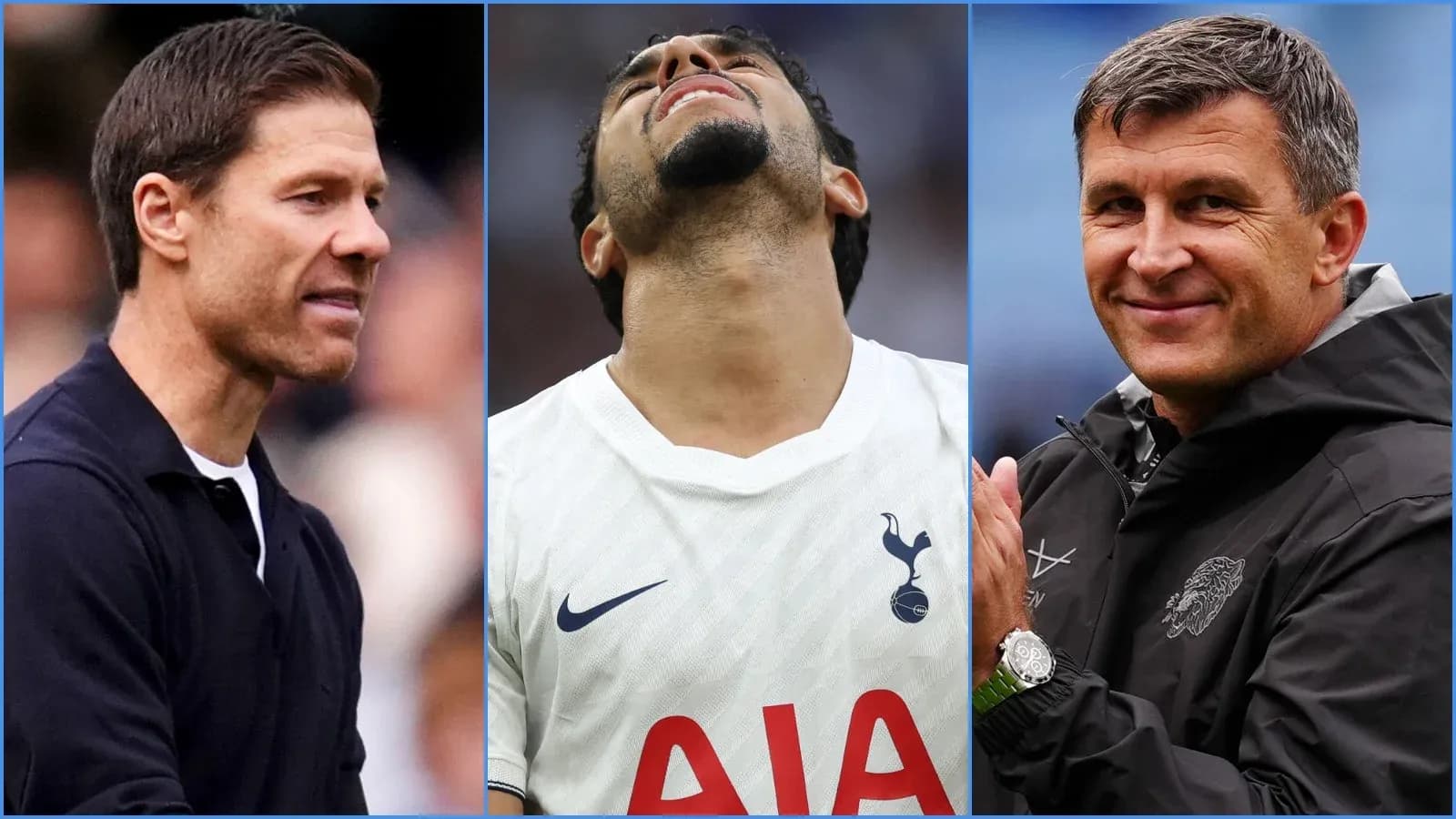
This start is no fluke. Sergej Jakirovic has gone back to basics and doubled down.
A solid keeper. Three big, uncompromising centre-halves in a back five. A disciplined midfield. Width. Repetition. Organisation. Teamwork. It’s simple, and it’s working.
They’re already more than halfway to that dreaded Derby comparison being irrelevant, with 36 games to spare. And with more attacking additions still to come before the deadline, Hull look like a side who will stay in games, lean on counters and set pieces, and let the chaos belong to everyone else.
Chelsea: Glorious chaos, fragile edge
Xabi Alonso has brought something to Chelsea that he certainly didn’t pick up from Rafael Benitez or Jose Mourinho. This is closer to Kevin Keegan’s “we’ll score one more than you” than anything from the old Liverpool or Chelsea schools of control.
Last season, Chelsea won just one Premier League match in which they conceded at least twice. This season, they’ve already done it twice – 3-2 and 4-3 – and flirted with spectacular collapse both times before remembering how to manage a game.
The attack is dazzling: fluid, varied, constantly interchanging. It looks like a unit that will score in almost any scenario. The concern sits behind it.
Emi Martinez still needs time to settle with new teammates. Romeo Lavia is learning how to function without being the senior man in a midfield pivot. These aren’t unsolvable problems, but they are the difference between a thrill ride and a title tilt.
Right now, Chelsea feel like mid-process Arsenal from four years ago: raw, exhilarating, flawed. The trip to the Emirates next week will tell us more than any scoreline against Fulham or Brighton. And there’s a lingering question we haven’t seen answered yet: what happens when they actually go behind?
Malick Yalcouye: Brighton’s latest warning shot
At this point, clubs know the script. Brighton find an obscure midfielder, polish him, and sell him for a fortune a couple of years later.
So when they move for someone like Malick Yalcouye and the rest of the league doesn’t at least try to hijack it, that’s not caution. That’s negligence.
Marcus Rashford: Another turn of the redemption wheel
Harry Maguire knows the drill at Manchester United better than most.
“Marcus has been part of a rough ride for Manchester United, and when that happens and the team doesn’t deliver, players get dug out and he was one of them at that stage,” he said. “I’ve been through it. Everyone’s been through it at this club.”
He’s right. Luke Shaw, Kobbie Mainoo, even Bruno Fernandes have all been written off at various points, only to climb back through a storm whipped up by managers, pundits and fans.
Rashford’s disconnect from his boyhood club under Ruben Amorim felt different. Deeper. Almost beyond repair.
But this is Old Trafford. Sometimes all it takes is a hard recovery run, a big tackle, a moment that screams effort, not entitlement. One action to start stitching the bond back together.
The cycle turns again.
Rayan Cherki: City’s necessary chaos
Look at this list: Savio, Yoane Wissa, Jamie Gittens, Anthony Elanga, Brennan Johnson, Kevin, Emile Smith Rowe, Dan Ndoye, Dilane Bakwa.
They share two things. Each joined a Premier League club in the past year, and each cost more than Manchester City paid for Rayan Cherki.
Cherki already has more combined goals and assists in 109 minutes this season than any of them managed across the entirety of 2025/26.
He’s been called “chaotic”, and he doesn’t always respect Enzo Maresca’s safe zones. That’s exactly the point. City have more than enough structure. A bit of sanctioned anarchy might be what keeps them unpredictable.
James McAtee: The £116m solution from within
James McAtee arrived at Nottingham Forest as part of the answer to losing Anthony Elanga and, before that golden handshake, Morgan Gibbs-White. Twelve months on, he looks like something else entirely: a succession plan for a £116m midfielder.
Oliver Glasner decided to zag where others would have thrown money.
He “decided it’s not target No. 1 to replace Elliot because maybe we can do it from our own squad and spend the money on other positions”. McAtee was the in-house bet.
Signed from Manchester City in 2025, his path only truly cleared when Anderson went the other way in 2026. Now, two games into his second season at the City Ground, Glasner has already given him 164 Premier League minutes – more than any of his previous four Forest managers combined, and almost as many as under Nuno Espirito Santo (50), Ange Postecoglou (77) and Sean Dyche (43) put together.
The tweak is simple but sharp: play the Etihad academy graduate deeper, give him more of the ball, let him dictate rather than just decorate. At Anfield, if you squinted and let your imagination stretch to an unlikely backflip, he looked a lot like an Adam Wharton type.
Sometimes the smartest signing is the one you’ve already made.
Everton: Back to civil war, back to being Everton
For a brief, unsettling moment, Everton looked vaguely aligned. Stakeholders pulled in something resembling the same direction.
That’s over.
The £40m move for Harrison Armstrong has dragged them straight back into their natural state: suspicion, friction, internal loathing. In a perverse way, it feels more familiar. More Everton.
They could be the most fascinating club to watch as the window closes. An attack that could have been Dewsbury Hall, Ndiaye, Barry and George might, in a couple of weeks, be Richarlison and Balogun with Jack Grealish floating in the gaps. The swing is wild. The stakes are higher.
Yet even as everything threatens to collapse inward, David Moyes still grinds out results. Everton sitting in the European places early in a season is one of the Premier League’s oldest traditions. There’s a reason it keeps happening.
Brentford and Leeds: Different paths, same competence
Some clubs don’t need paragraphs of analysis.
Brentford are just a bloody good team under a bloody good manager. The system works, the recruitment works, the football works.
Leeds? One defeat in 11, and that came on the final day away at already-relegated West Ham in a game that barely counted. When you can’t win, don’t lose. They’ve taken that to heart.
Regis Le Bris: Impact from the bench
Regis Le Bris is the first manager this season to send on substitutes who combined for a goal – one assist, one finish.
It’s a small detail. But it speaks to something every coach chases: influence from the touchline. You’ll never sing about it, but it matters.
The Losers
Spurs: Money can’t buy a mentality
Roberto De Zerbi didn’t bother dressing it up.
“You can’t find the right mentality in the transfer market,” he said. For a club on course to push the record for most money spent in a single window, that’s a brutal truth.
“It’s the biggest problem, it’s the biggest challenge and the biggest target is to find the right mentality,” he went on. “After the goal we conceded, I think we lost the confidence. The reaction was not good enough, not the reaction I want to see on the pitch, and I said immediately after the end of the game, the players, because when you are building something new, it’s tough, there are problems, the difference is how you want to find the solution of these problems, and the solution is not to put down the head, but to react, because we had 20 minutes again to score one, two or maybe three goals.”
Harsh? Maybe. He’s only been in the job four months. But Spurs have spent enormous sums and started against Newcastle with five new signings, including two Premier League champions and a Serie A winner.
They should not look like the least prepared side in the division. Not at home. Not against a club they stripped of a £92.5m midfielder, whose new manager arrived less than a month ago.
New Spurs, same old problem. And this time the bill is bigger.
Crystal Palace: Out of breath before full-time
Pierre Sage cut a frustrated figure.
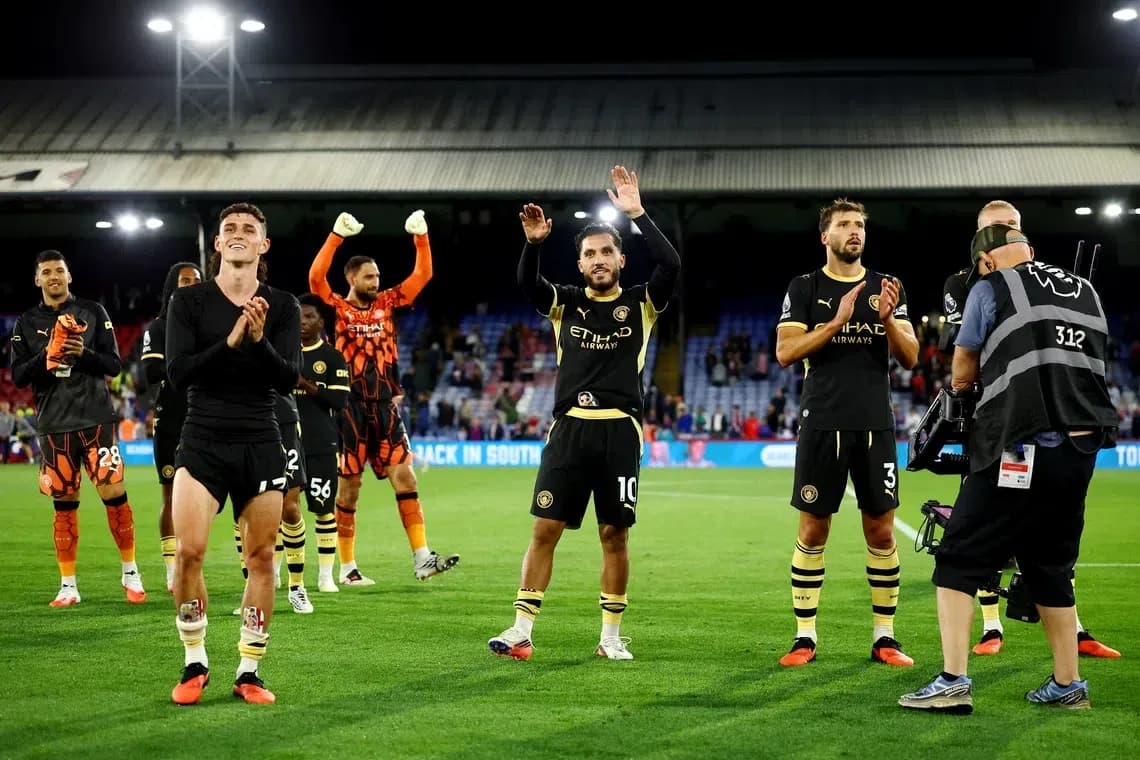
He felt his players “gave up a little” and couldn’t “do it for the duration of the game” against Everton. In his first match, he watched Crystal Palace play well for a half before drifting badly in the second. Against Manchester City, they lasted about an hour before effectively clocking off.
Fulham, then, are in for a 75-minute examination next week. After that, who knows.
This has been a brutal summer for preparation. Palace were heavily represented at the World Cup, victims of their own success in UEFA SCR, and are now at the end of a cycle that has already cost them key players and their manager. They might be the club most visibly warped by the calendar.
Oliver Glasner has already joked he’ll “have a pint of beer and celebrate the transfer window being closed”. His successor probably feels the same. So does half the league.
Liverpool: Barcola can’t fix this on his own
Liverpool have been here before.
Back in January 2016, they won a wild 5-4 at Norwich. The attack looked thrilling, the defence looked flimsy, and the question was thrown out: how do you solve those problems with Teixeira?
They didn’t. They skipped the mid-season fix, coached their way through the issues, and used the summer to build something sturdier and more sustainable.
This isn’t a perfect comparison. Bradley Barcola is a far better player and a far more enticing market opportunity, especially if Cody Gakpo departs. But the principle holds.
Watching Liverpool concede from a goalkeeper’s long punt and then give away a penalty from a quick throw-in, only to respond both times with slick, well-taken equalisers, told its own story. The need for about £123m of new arrivals before the deadline felt obvious – just not all in attack, and not all on one player.
Andoni Iraola needs more. More control, more balance, more help in every line of the team. Barcola would be a statement, not a solution.
Bournemouth: Hit by both clichés at once
Some teams draw one unfortunate narrative card. Bournemouth have picked up two.
They’ve taken the lead in the 83rd and 90th minutes of their first two games and have a single point to show for it. All three goals they’ve conceded have been scored by defenders. Both equalisers came from corners.
“Struggle to defend set pieces” and “lose points from winning positions” is a brutal double act to carry this early in a season. The margins are tiny. The damage isn’t.
Gary O’Neil: The Lampard statistic that won’t die
Ipswich’s defeat at Old Trafford will sting. The more painful number sits beside Gary O’Neil’s name.
He remains the only manager to lose a Premier League game to Frank Lampard since October 2022. Nineteen matches and counting. That’s a club no one wants to belong to.
Coventry: The step up, brutally exposed
Coventry have waited a long time to come back to the top flight. Off the pitch, they look under-equipped. On it, they don’t look ready either.
The schedule has been unforgiving. First, the champions away – the hardest fixture of the season. Then, the theoretical soft landing: a home game against the Championship play-off winners. No other side has had to pivot their game plan so drastically in the opening fortnight.
Now they go to Manchester City.
It may get uglier before it improves. Frank Lampard has moved from talking about “The Basics” to “the details”. The problem is that his team still don’t seem to grasp either at Premier League level.
The season is already drawing its battle lines. Hull, Chelsea, McAtee and a handful of sharp operators look like they’ve cracked something. Spurs and Liverpool? They’re learning, again, that you can’t buy your way out of a mentality gap.