Plazma Youth Sport Games: A Social Project on the Dalmatian Coast
On a raised platform above the Adriatic, 20 children sit in a wide circle, locked in concentration. They’re not facing each other. They’re facing Nigel Short. The grandmaster shuffles around the ring of boards, making a single move at each stop, trying not to trip over chairs or small feet.
These are not casual holiday players. They are some of the best young talents from across the Balkans. Yet even that doesn’t quite explain the scene. Because when a child gets stuck, they can turn to a “celebrity coach” standing at their shoulder. One board has Ana Ivanovic leaning in, offering quiet advice. Another has Sean Dyche, the former Burnley manager, peering over the pieces. And on another, in the most surreal pairing of all, rightwing tech billionaire Peter Thiel is helping plot the next move.
This is the Plazma Youth Sport Games, or YSG, in Split. Thirty years old this summer and still growing.
The “Davos of sport” on the Dalmatian coast
Each year, the Games turn Croatia’s second city into a meeting point for power and promise. Senior figures from sport and politics descend on the Dalmatian coast, drawn by an event that some of its grander guests have happily dubbed “the Davos of sport”.
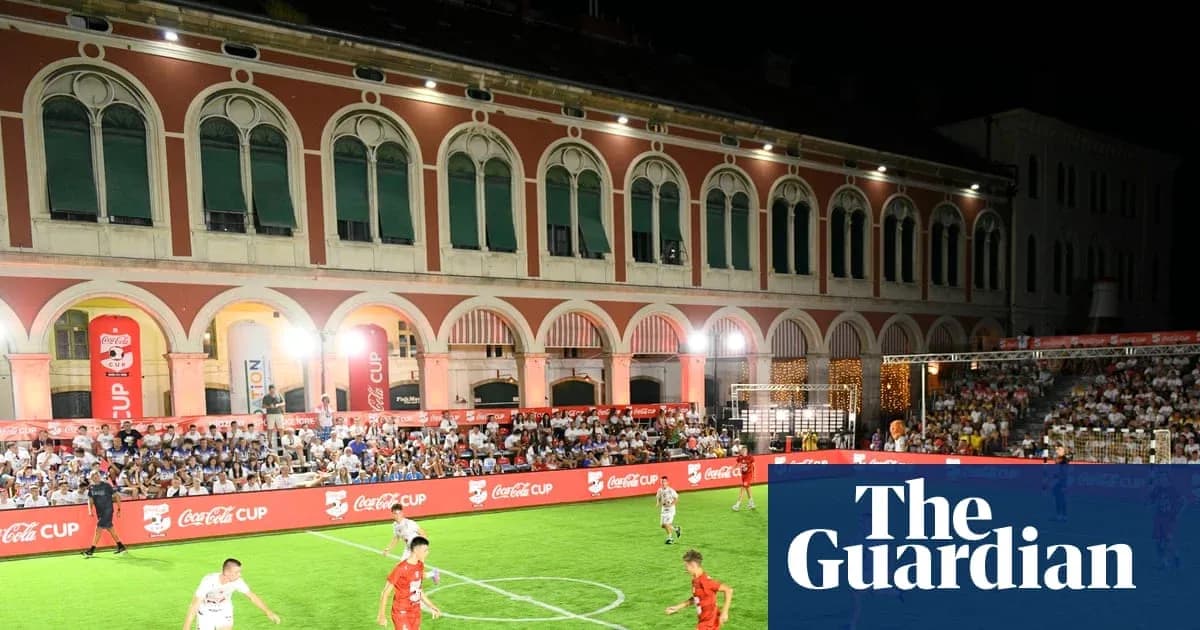
Strip away the big names, though, and the scale on the ground is what really hits you. The YSG is the largest amateur sports event for children in Europe. Close to half a million young people from Croatia, Bosnia and Herzegovina, Serbia, Slovenia and North Macedonia took part in qualifying this year. The best of them have earned the right to be in Split, where finals in 10 sports – from chess and athletics to 3v3 basketball – are squeezed into a single week.
Competition is only part of the pitch. Children are urged to work in teams, to collaborate, to look each other in the eye rather than at a screen. The organisers insist the Plazma Games are as much a “social project” as a sporting one.
The message travels well. Zlatan Ibrahimovic has thrown his weight behind the project as an ambassador. So has Alastair Campbell. Visitors tend to leave converted.
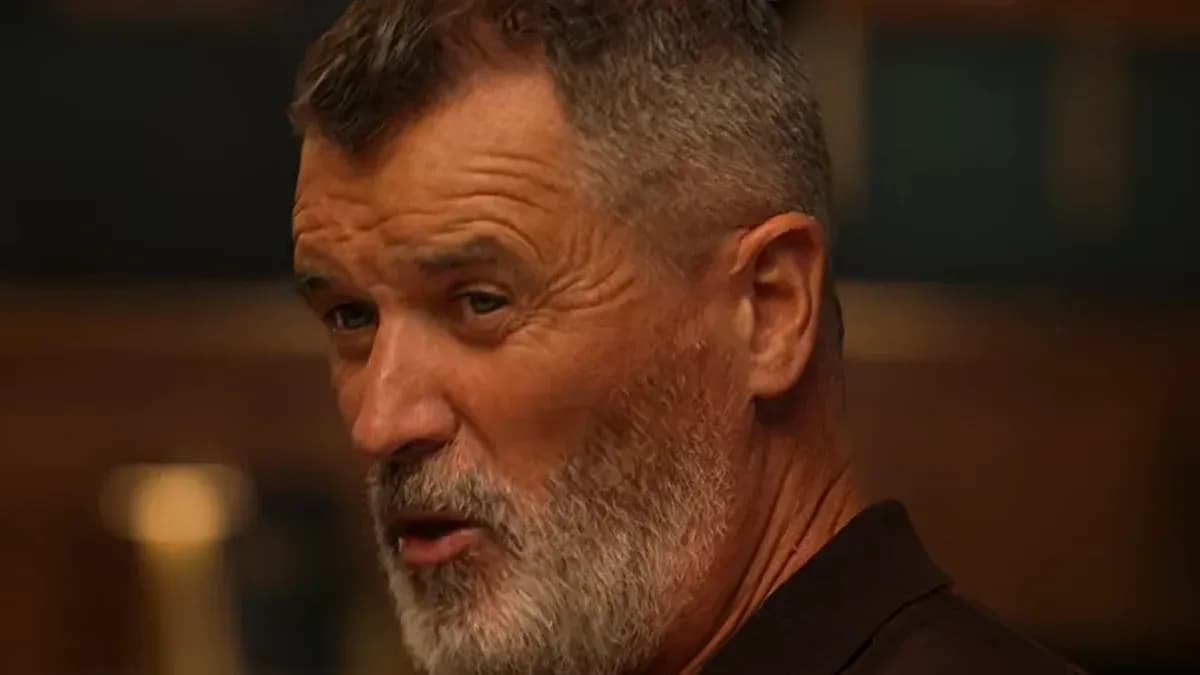
Dyche is one of them. He calls the Games “a brilliant, brilliant initiative” and lights up when he recalls the girls’ mini-football final. “It was terrific, they were playing good football; getting properly stuck into each other, properly playing,” he said. “You could feel that they felt free and were being supported in that environment.”
He doubts the same thing could have been built in his own country. “It seems to me that every time you try and get an initiative off in England, there’s a million rules and regulations that make it difficult,” he said. “I know how hard it can be to get funding too and times are tough for people.”
Born out of crisis, built for connection
The Games themselves emerged from a much darker backdrop. Founder Zdravko Maric launched them in the wake of the breakup of Yugoslavia and the Bosnian war. His aim was not lofty notions of peace-building or reconciliation. It was something more immediate: to tackle the drug problems gripping Croatian youth at the time.
“It’s a lifetime project and we live with it every day,” says his brother, Slaven Maric, who has worked on the Games since day one. “But when Zladko started it we didn’t have an idea that it would develop into this. It’s not about sport or the results, it’s about social life, it’s about being together. There were many issues with drug abuse [then], now it’s about bringing the kids to spend sometime together in real life.”
That last phrase has become a rallying cry. The organisers are already sharpening a key message for 2026: get off your phone. Esports brands have tried to muscle into the programme. Maric says those approaches have been turned away.
Split, a small city with a giant sporting shadow
Bringing the Games to Split added another layer to a city that already punches absurdly above its weight in sport. With a modern population of around 160,000, Split has produced a conveyor belt of champions.
- Goran Ivanisevic, Wimbledon winner.
- Bernard Vukas, the pre-Modric standard-bearer for Croatian football greatness.
- Branko Cikatic, a kickboxing icon.
- Toni Kukoc, a three-peat NBA champion.
- Stipe Bozic, one of the world’s most celebrated mountaineers.
Walk along the seafront and the city’s Olympic “walk of fame” spells it out in stone: 73 medal winners, honoured Hollywood-style. Split even has its own game, picigin, played waist-deep in the Adriatic, a kind of hand-based hackysack where the point is to keep the ball airborne and the style points matter as much as the score.
Little wonder, then, that the bond between city and Games feels so natural. Pride in the event is everywhere. Slaven Bilic, another famous son of Split and now a YSG ambassador, sees it as a rare bright spot.
“I’m not objective because I’ve known Zdravko for more than 30 years but it’s great that at a time when there’s a lot of negativity in the world that this can exist,” Bilic said. “Especially in this part of the world that is supposed to be unstable.”
Billionaires, brands and a widening map
Three decades on, the obvious question hangs in the air: what next?
One answer lies in expansion. North Macedonia sent teams for the first time this year. Ukrainian sides arrived as invited guests. Talks have already taken place with six other countries about joining in future editions.
The commercial side is swelling too. Coca-Cola is on board as a partner, along with Topps and Croatian telecom giant Telemach. Behind the scenes, the money is getting heavier. There are now 11 billionaires associated with the Games, several of whom have put in their own capital.
One of them is understood to be Thiel, the PayPal and Palantir founder and mentor to US vice-president JD Vance. Asked in Split why he had chosen to invest in the Games, Thiel offered no explanation. He simply moved along the riviera, flanked by his security team, leaving the question hanging.
For Aleksander Ceferin, the Uefa president whose organisation also funds the YSG, the answer is obvious enough. He sees the Games as a rare example of elite sport’s riches being channelled in the right direction.
“I think that top sport, and the money that you get with top competition, should be used for the development of sport and this is the development of sport,” he said. The remark inevitably invited comparison with Gianni Infantino’s efforts to sell a slice of the World Cup to private investors – a debate Ceferin was reluctant to revisit directly while in Split, but one that lurked in the background all the same.
A final whistle with star power
By Friday night, the medals had been handed out and the long week of finals was almost done. There was one last showpiece. The Games signed off with their own take on Soccer Aid: a YSG select side against an all-star XI.
On paper, it looked lopsided. The all-stars lined up with Claude Makélélé, Pavel Nedved and Ibrahimovic. The local team had Dyche in the dugout, barking and cajoling.
The imbalance hardly mattered. The point was the spectacle, the selfies, the shared pitch. A bridge between kids from countries once at war, now swapping shirts and stories under the floodlights.
For the organisers, it was another night of memories banked. For the children, it was a week where phones stayed in pockets and legends wandered past the chessboards.
For a 30th birthday, it felt like an announcement: the Plazma Youth Sport Games are no longer just a Balkan curiosity. The question now is how far – and how fast – this “social project” built on sport can run.