
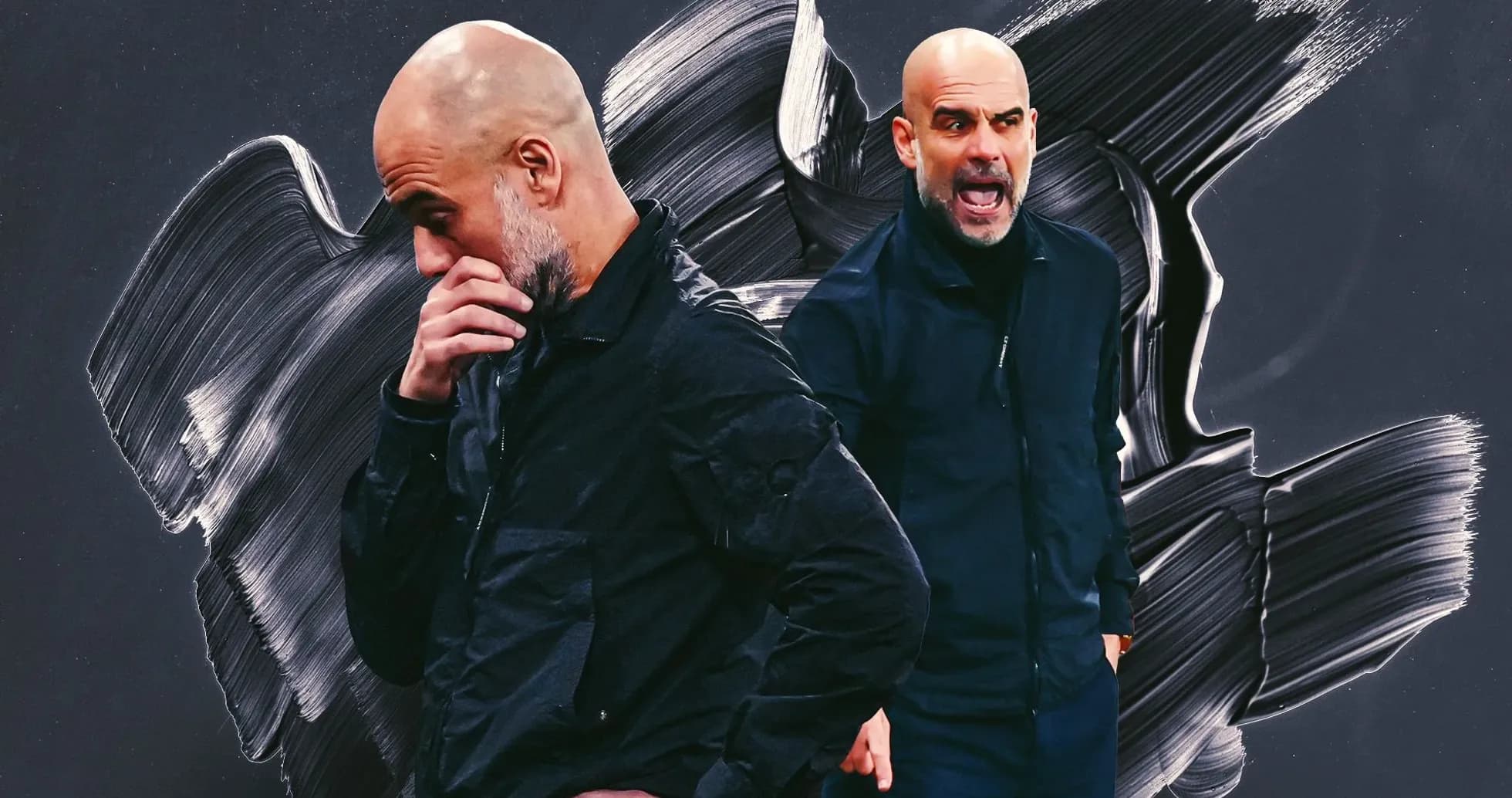
Pep Guardiola's Tactical Gambles: Legacy on the Line
For more than a decade, Pep Guardiola has lived with a paradox. The most decorated coach of his generation, a serial winner in Spain, Germany and England, yet dogged by the accusation that, when the stakes rise in Europe, he cannot resist outsmarting himself.
He hates that reputation. Only last week he talked about being “massacred” for his decisions. But then came Madrid. And West Ham. And suddenly the old doubts roared back to life.
The Return of “Pep Overthinking”
The charge sheet is long and familiar. A front four for Bayern Munich against Real Madrid in 2014. Eric Garcia in a back three against Lyon in 2020. Ilkay Gundogan as the holding midfielder in the 2021 Champions League final against Chelsea.
For a while, it looked as if that version of Guardiola had gone. City’s 2023 Champions League win felt like a cleansing. The line-ups were largely predictable, the structure stable. They dismantled Bayern, outplayed Madrid, then ground their way past Inter in the final. No wild experiments, no self-inflicted chaos. Just a ruthlessly coherent side finally conquering Europe.
Even their exit to Madrid in the 2024 quarter-finals, on penalties, could be framed as misfortune. Last season’s heavy defeat to Los Merengues had its own context too: a wretched run of form and the brilliance of Kylian Mbappe. You could argue those campaigns away without touching Guardiola’s tactical instincts.
Last week, that luxury disappeared.
Bernabeu Boldness or Bernabeu Hubris?
Real Madrid manager Alvaro Arbeloa, who spent much of his playing career suffering on the wrong end of Guardiola masterclasses, offered a warning before the first leg in the Spanish capital. “He always has a surprise planned,” he said.
He was right.
At the Bernabeu, Guardiola ripped up the template that had underpinned City’s recent resurgence. Out went the settled back four of Rayan Ait-Nouri, Marc Guehi, Ruben Dias and Matheus Nunes, who had started the previous four league games together. The midfield trio of Nico O’Reilly, Bernardo Silva and Rodri, the heartbeat of a six-game winning run in February, was broken apart.
O’Reilly, restored to left-back for the first time in two months, struggled badly. Federico Valverde exposed him for Madrid’s opener, and every time the hosts scored they sliced through a midfield that looked alarmingly open.
Guardiola refused to concede he had misjudged it. He pointed to City’s dominance in the first 20 minutes and insisted Madrid had scored with their only shots on target. The numbers did not back him up. Madrid managed seven attempts to City’s four, and Vinicius Jr even squandered a penalty that could have all but killed the tie.
His explanation was revealing. He wanted to “make the Bernabeu feel that we are there.” It sounded less like a game plan and more like a statement. And it echoed that Bayern night in 2014, the one he has called “the biggest f*ck up of my career”.
As the dust settled, an old critique resurfaced, this time in the form of quotes from Fabio Capello, given to El Mundo almost a year earlier.
“You know what I don’t like about Guardiola? His arrogance,” the former England manager said. “The Champions League he won with City is the only one where he didn’t try anything funny in the decisive matches. But all the other years, in Manchester and Munich, on key days, he always wanted to be the protagonist. He would change things and invent them so he could say: ‘It’s not the players who win, it’s me’. And that arrogance cost him several Champions Leagues. I respect him, but for me, it’s clear.”
If City fail to overturn a deficit of three or more goals – something achieved only four times in the competition’s modern history – those words will hang heavily over this campaign. And yet, astonishingly, the Bernabeu was not the end of the week’s surprises.
From Gung-Ho in Madrid to Cautious in London
Three days after going all-in at the home of European football’s most decorated club, Guardiola took his team to the London Stadium and did the opposite.
Against relegation-threatened West Ham, managed by the notoriously conservative Nuno Espirito Santo, he chose control over incision. Antoine Semenyo started again, while Rayan Cherki – a player built for tight spaces, for receiving under pressure and keeping the ball alive in crowded areas – watched on from the bench.
On paper, it made little sense. If any game cried out for Cherki’s ability to unpick a low block, it was this one. Instead, Guardiola turned to him with half an hour remaining, then threw on three more attackers as City chased the game. The late flurry came too late. City dropped points to a side fighting for survival for the second match in a row and slipped nine points behind Arsenal, albeit with a game in hand.
This time, Guardiola did not hide behind statistics or narratives.
“Bad selection, now you can criticise me incredibly for the selection, now I deserve it,” he said, the sarcasm barely masking the admission.
A Season on the Brink – and a Legacy in the Balance
The calendar offers Guardiola no breathing space. Over the next month, City face Madrid again, Arsenal in the Carabao Cup final, Liverpool in the FA Cup quarter-finals, then a trip to Chelsea before what already looks like a title decider against the Gunners on April 18.
Two weeks ago, this season promised a shot at something close to perfection. Multiple trophies in play, a team purring into form, a manager who seemed to have found the balance between invention and stability.
Now, everything feels precarious. In four weeks, City’s campaign could disintegrate into irrelevance.
There is another layer to all this. Expectation grows that Guardiola could walk away in June, drawing a line under an extraordinary decade in Manchester. If he does, the manner of this final act will colour how his City era is remembered.
The trophies are not in doubt. Nor is his influence on the club, the league, or the sport. But so much of Guardiola’s aura rests on the idea of him as the game’s great tactician, the coach who sees things others cannot. When that gift tips into compulsion – when the need to surprise overrides the need to win – it feeds the one criticism he has never quite shaken.
He deserves to leave City on a high, with the noise about “overthinking” finally silenced. Over the next month, he will either prove that he has learned to resist his most dangerous impulses, or he will hand his critics fresh evidence that, on the biggest nights, Pep Guardiola still cannot stop trying to be the protagonist.



