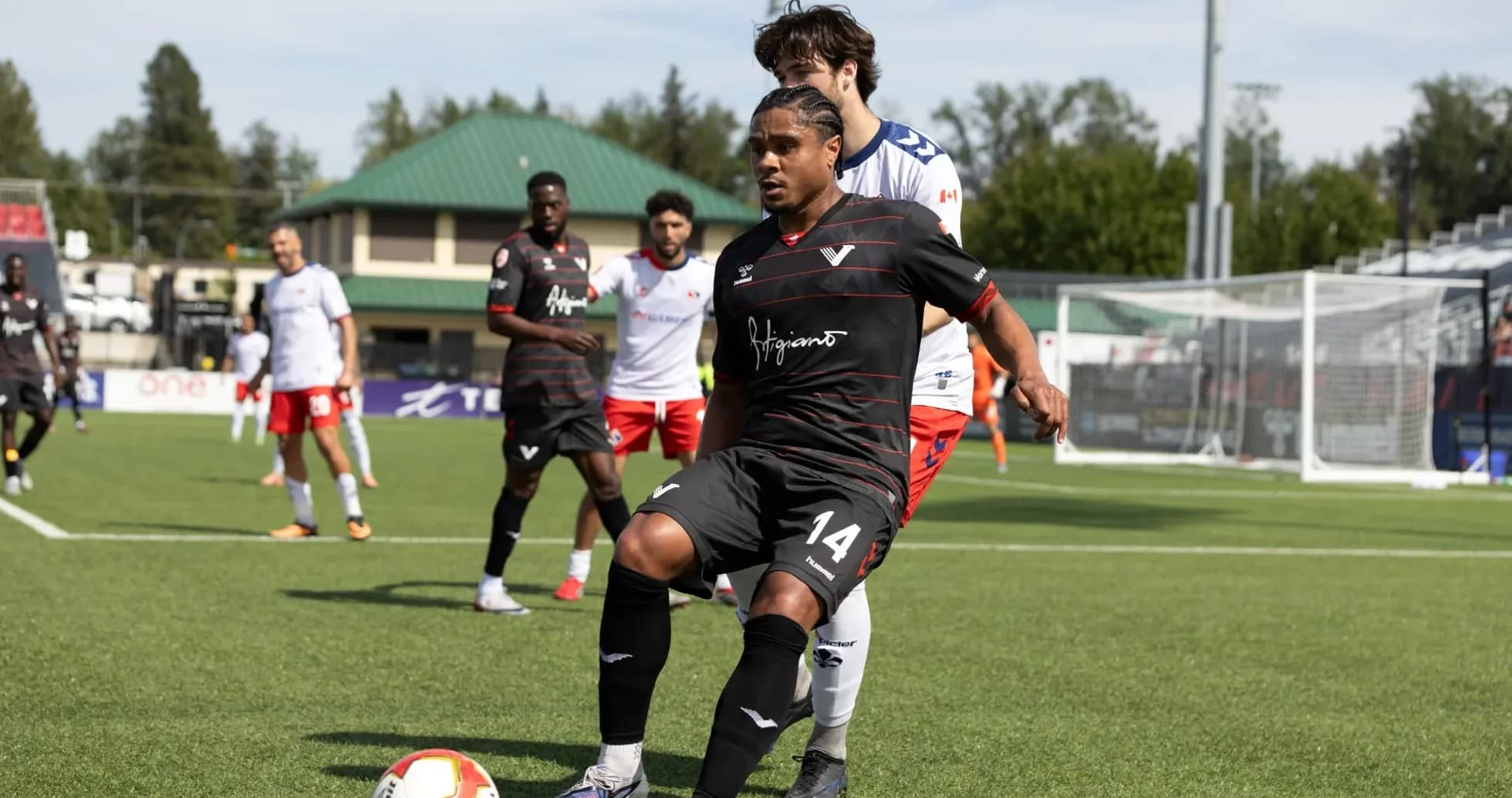
Pacific FC vs Forge: A Crucial Clash in Canadian Premier League
Starlight Stadium hosts an early litmus test in the Canadian Premier League on 26 April 2026 as Pacific FC welcome Forge. The table already underlines the contrasting trajectories: Pacific sit 7th with just 1 point from three matches, while Forge arrive in Victoria in 2nd place on 7 points and yet to concede a goal across all phases. For the hosts, this is about kick-starting their season; for the visitors, it is about reinforcing title credentials and tightening their grip near the summit.
Stakes and context
In the league, Pacific’s start has been stuttering. They are winless after three games (DLL in their last three across all phases), with two home defeats from two and a negative goal difference of -2 (5 scored, 7 conceded). Starlight Stadium, traditionally a difficult trip for opponents, has not yet provided any comfort in 2026.
Forge, by contrast, have been almost flawless. They are unbeaten (W2 D1 L0), with a +3 goal difference and, crucially, no goals conceded in 270 minutes of league action. Their form line of DWW hints at a side that has grown into the campaign quickly, tightening up defensively while finding just enough cutting edge at the other end.
This is still early in the group stage, but the psychological stakes are clear. A home defeat would leave Pacific marooned near the bottom, already chasing the pack. A Forge win would consolidate their position as the early pace-setters and send a familiar message to a rival they have dominated of late.
Tactical narrative: Pacific’s search for balance
Pacific’s numbers tell the story of a side that can create and score but cannot yet control games. Across all phases, they have found the net five times in three outings and, importantly, have not failed to score in any match. Their goals-for average of 1.7 per game is respectable, with a spread that suggests they can threaten throughout the 90 minutes: 20% of their goals between minutes 16–30, another 20% from 46–60, a significant 40% between 61–75, and a final 20% in the closing 15 minutes.
However, the defensive side is unravelling that attacking work. Pacific are conceding 2.3 goals per game, with some worrying clustering: 42.86% of goals against arrive between 46–60 minutes, and a further 28.57% from 31–45 and 76–90 respectively. In other words, they are vulnerable around half-time and again in the final stretch, precisely when game management and concentration should be at their peak.
At home, the issues are magnified. Two defeats from two, with 3 goals scored but 5 conceded, point to a team that opens up in front of their own fans and gets punished. They have yet to keep a clean sheet this season, and their biggest home loss (2-3) underlines that even when they score twice, defensive lapses can undo them.
The use of a 4-2-3-1 in at least one match suggests Pacific want structure in midfield and width in attack. Key figures are emerging from deeper positions. Defender Diego Konincks, their top-rated player so far (average rating 7.3), has already contributed a goal from the back, with 72 passes at 87% accuracy, 1 block and 2 interceptions. His dual role as a ball-playing defender and set-piece threat could be crucial against a Forge side that rarely gives up open-play chances.
In midfield, Taras Gomulka has been tidy and efficient, with 90% pass accuracy and a willingness to engage defensively (2 tackles, 1 interception) despite limited minutes. Aidan Daniels adds dribbling and ball-carrying (3 dribbles attempted, 2 successful, 10 duels with 5 won), hinting at a player who can help Pacific break lines and transition quickly.
The tactical dilemma for Pacific is clear: do they double down on their attacking instincts at home and risk exposing a shaky back line, or do they temper their aggression to avoid being picked off by a ruthless, structured Forge outfit?
Forge’s defensive platform and attacking edges
Forge arrive with the most striking statistic in the fixture: zero goals conceded in 2026 across all phases. Three clean sheets from three, with opponents yet to find a way through either at Tim Hortons Field or on the road, is the foundation of their early surge to 2nd place. Their away record is pristine: one match, one win, 1-0, and another clean sheet.
They are not free-scoring yet (three goals in three games, 1.0 per match), but they do not need to be when the defensive block is this secure. Their biggest wins – 2-0 at home and 0-1 away – reinforce the image of a side that plays within itself, takes its chances, and then shuts the door.
Structurally, a 4-3-3 has been deployed at least once, and the personnel data backs up the picture of a hard-edged, organised team. Defender Benjamin Alan Paton has been outstanding: three appearances, a rating of 8.2, 1 goal, 2 shots on target from 2 attempts, 27 passes at 81% accuracy, 3 tackles and 1 interception. He epitomises Forge’s blend of solidity and set-piece or second-phase threat.
Up front, Brian Wright has been a central attacking reference point. In just 81 minutes (two starts, one appearance from the bench), he has 1 goal, 3 shots, 2 key passes and has won 5 of 10 duels. Importantly, he has already converted a penalty (1 scored, 0 missed), underlining his composure from the spot and giving Forge an extra edge in tight games where marginal decisions can decide the outcome.
The discipline and aggression levels are notable too. Forge have seen yellow cards spread across the match (with clusters between 46–75 minutes) and one red card in the 46–60 range, suggesting a side that presses and tackles with intensity, occasionally overstepping the line. Yet even with that red card incident, they have not conceded, which speaks to the resilience and depth of their defensive structure.
Head-to-head: Forge’s recent dominance
The recent competitive history between these sides is heavily tilted in Forge’s favour. Looking at the last five league meetings (all in the Canadian Premier League, excluding friendlies):
- Forge have 4 wins.
- Pacific have 1 win.
- There have been 0 draws.
In 2025, Forge beat Pacific 4-0 and 2-0 at Tim Hortons Field, and 1-0 and 2-0 at Starlight Stadium. That sequence of four straight victories, with an aggregate score of 9-0, is a brutal illustration of the gap that opened up between the teams last year.
Pacific’s lone bright spot in this run came in October 2024, when they edged a 1-0 home win at Starlight Stadium. That result will be the reference point for any belief in the home dressing room, but the more recent pattern is clear: Forge have repeatedly shut Pacific out and found ways to score, home and away.
Key battles and game script
The match is likely to hinge on whether Pacific can disrupt Forge’s defensive rhythm and avoid the costly lapses that have marked their season so far.
- Pacific attack vs Forge defence: With Pacific yet to fail to score in 2026 and Forge yet to concede, something may have to give. Konincks’ set-piece presence, Daniels’ dribbling and any pace in the wide areas will be tested against a back line marshalled by Paton and protected by a compact midfield three.
- Transitions and mid-game phases: Pacific’s tendency to concede heavily between 46–60 minutes is particularly dangerous against a Forge side that often raises intensity after the break. If Pacific are not sharper in those periods, Forge’s structured 4-3-3 and physical forwards could tilt the match decisively.
- Discipline and control: Pacific have already seen red cards in the 76–90 and 91–105 ranges this season, and Forge have one red between 46–60. With both sides prone to late or high-intensity challenges, game management and composure could be crucial, especially if the scoreline is tight and a single penalty – with Wright’s proven reliability – could decide things.
The verdict
On form, structure and recent head-to-head history, Forge travel to Vancouver Island as clear favourites. They are unbeaten, have yet to concede, and have dominated this fixture in 2025 with four straight wins and a 9-0 aggregate. Their defensive platform, anchored by Paton, and the presence of a confident penalty-taker in Wright give them multiple ways to control and edge the game.
Pacific’s hope lies in the attacking sparks they have shown and the knowledge that Starlight Stadium has, in the past, been a venue where they can frustrate Forge, as in the 1-0 win in October 2024. Their scoring spread across different phases suggests they can threaten throughout the match, and players like Konincks, Gomulka and Daniels provide technical quality.
However, unless Pacific can significantly tighten up defensively and manage those vulnerable windows around half-time and late on, the balance of probabilities leans towards Forge extending their unbeaten start. A narrow away win or a low-scoring draw appears the most logical outcome, with Forge’s organisation and clean-sheet record giving them the edge in a fixture that has recently been theirs to dictate.