Osasuna vs Girona: A Tactical Showdown in La Liga
On a raw Pamplona evening at Estadio El Sadar, Osasuna leaned into their identity and the table told the story. Tenth against 13th in La Liga, separated by three points at kick-off, ended 1–0 to the hosts and crystallised two seasons heading in subtly different directions.
This was Round 29, and with both sides having now played 29 league matches, the numbers are definitive rather than provisional. Osasuna sit on 37 points with a goal difference of -1 (34 scored, 35 conceded), Girona on 34 with a far more fragile -13 (31 for, 44 against). The game itself – goalless at half-time, decided after the interval – slotted neatly into those trends: Osasuna’s home strength and functional attacking edge against a Girona side that can create but rarely control their own box.
Osasuna's Strategy
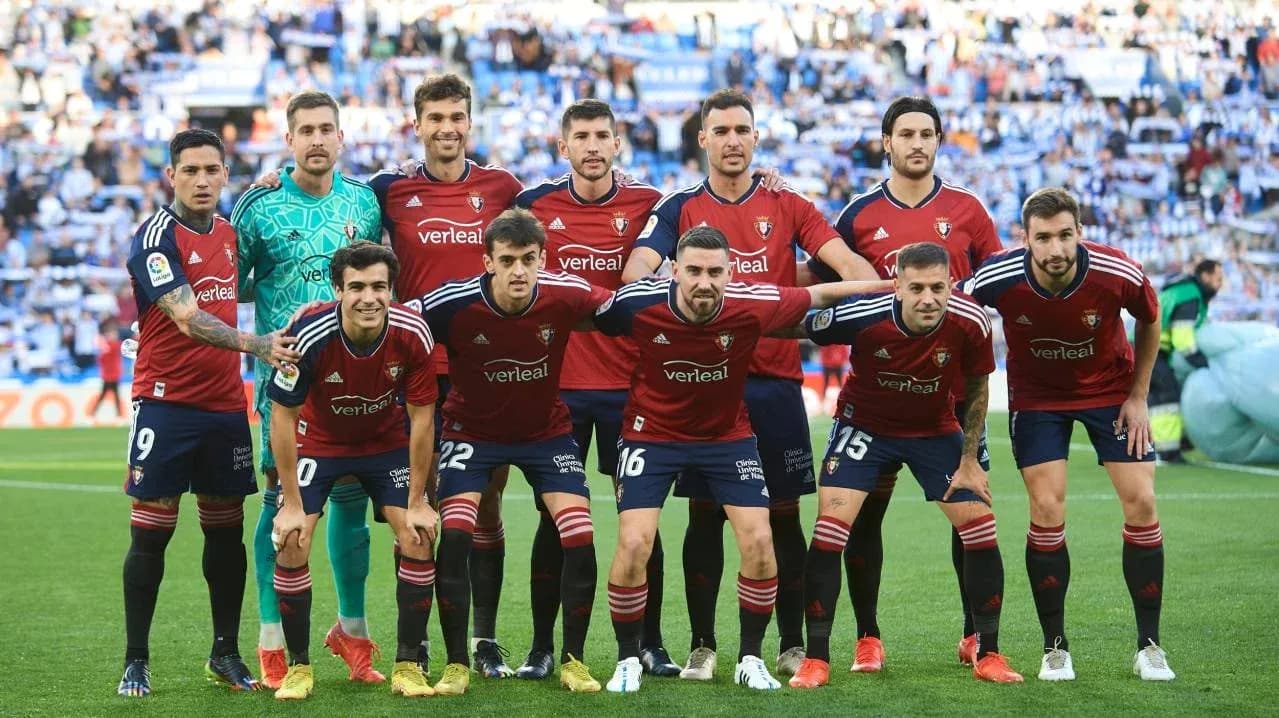
Alessio Lisci doubled down on what has worked all year in Pamplona: a 4-2-3-1 that has now underpinned 14 home league outings, yielding eight wins and only two defeats. The spine is recognisable. Sergio Herrera behind a back four of V. Rosier, Alejandro Catena, F. Boyomo and J. Galán; J. Moncayola and I. Muñoz as the double pivot; a line of three technicians – Rubén García (#14), Aimar Oroz and V. Muñoz – feeding Ante Budimir.
At home, Osasuna average 1.8 goals for and 1.1 against, with five clean sheets in 14. They had already failed to score in zero home league matches this campaign; that streak continued, and so did the sense that El Sadar amplifies their strengths. The 1–0 scoreline nudged nothing statistically, but it reinforced the pattern: narrow margins, but margins they tend to dictate in Pamplona.
Girona's Challenges
Michel’s Girona mirrored the shape on paper – also a 4-2-3-1 – but not the stability. Behind the symmetry of formations lies a different statistical DNA. Girona concede 1.5 goals per game both home and away, with only one away clean sheet in 15 and 23 goals shipped on their travels. Their -13 goal difference is the product of fragility at both ends: 31 scored in 29 is modest; 44 conceded is alarming for a mid-table side.
The absences only deepened that imbalance. Osasuna were without I. Benito (knee injury), a loss more felt in terms of rotation than structure. Lisci could still roll out his first-choice defensive axis and his main creative and scoring threats.
Girona, by contrast, were stripped of layers. R. Artero, B. Gil, Juan Carlos, Portu, C. Stuani, M. ter Stegen and D. van de Beek were all listed as missing. The headline is the forward line: no Stuani, no Portu, no Artero. It left V. Vanat as the lone senior No. 9, supported by V. Tsygankov, A. Ounahi and J. Roca. On the bench, A. Ruiz was the only recognised striker. For a team that already averages just 1.0 goals per away game, that is a tactical void rather than a mere inconvenience.
Discipline and Match Dynamics
Discipline was always likely to shape the contest, and the season-long data framed the tightrope. Osasuna’s yellow-card distribution spikes late: 20.59% of their cautions between 61–75 minutes and 22.06% between 76–90, with another 13.24% in the 91–105 band. Their reds cluster between 31–45 (20.00%), 76–90 and 91–105 (both 40.00%). This is a side that walks the line as games stretch and legs tire. Catena embodies that edge: eight yellows and one red so far, ranking him among La Liga’s most card-prone defenders.
Girona are even more volatile in the closing stages. A huge 41.27% of their yellow cards arrive between 76–90 minutes, with a further 14.29% between 91–105. Red cards are spread across 16–30, 31–45, 46–60, 76–90 and 91–105, plus one unassigned, underlining a group that can lose control at almost any phase. For Michel, the risk is systemic rather than individual.
Within that framework, the individual matchups defined the night.
The Key Matchup: Budimir vs. Girona’s Defense
“The Hunter vs. The Shield” was always going to be Ante Budimir against Girona’s defence. Budimir came into the game with 14 league goals from 28 appearances, ranked fourth in La Liga by rating among scorers. He is not just volume; he is workload – 66 shots, 28 on target, 304 duels with 148 won. He has also been decisive from the spot, converting four penalties but missing one, a reminder that his threat is persistent rather than flawless.
Across from him, Girona offered a back line anchored by Vitor Reis (#12) and Daley Blind, with A. Martínez and H. Rincón as full-backs. Reis’s season has been impressive on the ball – 1,407 passes at 90% accuracy – and combative without it, with 31 tackles, 32 blocks and 20 interceptions. Yet the context matters: he is part of a unit conceding 1.5 goals per match and suffering heavy away defeats (5–0 being the worst). Budimir’s aerial and physical presence was always likely to exploit that structural weakness rather than dismantle Reis one-on-one.
Behind Budimir, Rubén García (#14) orchestrated. With five assists, 31 key passes and 624 total passes at 79% accuracy, he ranks among the more productive creators in the league. His role between the lines is to dictate tempo and drag markers into uncomfortable zones, especially in that 4-2-3-1 band with Oroz and V. Muñoz.
Midfield Dynamics
Girona’s answer in the engine room was twofold. On the ball, F. Beltrán and A. Witsel offered circulation and control. Off it, the enforcer brief fell partly to Vitor Reis, whose blend of interceptions and fouls (23 committed) makes him a natural candidate to step out and engage Rubén García between the lines. The duel was less about crunching tackles and more about who could impose their rhythm: Osasuna’s vertical surges or Girona’s desire to slow and pass.
From the bench, Lisci had genuine game-changers. R. García (#9), clearly distinguished from Rubén García by his shirt number and role, offers penalty-box instincts; Abel Bretones brings progressive running from deep; Kike Barja and R. Moro can stretch tired full-backs. In a team that has used 4-2-3-1 in 14 league matches but is comfortable morphing into back threes and 4-4-2 variants, those options allow Osasuna to either lock a lead or chase a goal without losing structure.
Michel’s bench was thinner in forward threat. A. Ruiz was the only orthodox striker, with T. Lemar and C. Echeverri the primary creative alternatives. With so many senior attackers injured, Girona’s capacity to change the game late was heavily skewed towards adding another passer rather than another finisher.
Conclusion
The statistical prognosis before a ball was kicked would have leaned Osasuna, and the 1–0 result validated that reading. Osasuna’s home metrics – 8 wins in 14, 25 scored and 16 conceded, seven clean sheets overall this season – pointed to a side that can neutralize and then exploit. Girona’s away profile – just three wins in 15, 15 scored and 23 conceded, only one clean sheet – suggested they would need efficiency in both boxes they have rarely shown.
The decisive factor, beyond Budimir’s constant menace, lay in the time windows and discipline. With both teams prone to late bookings, the side better able to stay on the pitch and manage the final quarter of an hour was always likely to dictate the closing narrative. Osasuna did exactly that: they kept their structure intact, trusted their 4-2-3-1 to compress space, and used El Sadar’s energy to push Girona into those familiar late-game mistakes.
In a season where both clubs hover around mid-table, this felt like more than just three points. It was a clash of identities resolved by the side whose numbers at home already hinted at a quietly efficient machine – one that does not blow opponents away, but knows how to exploit weaknesses and neutralize threats when the margins are thin.