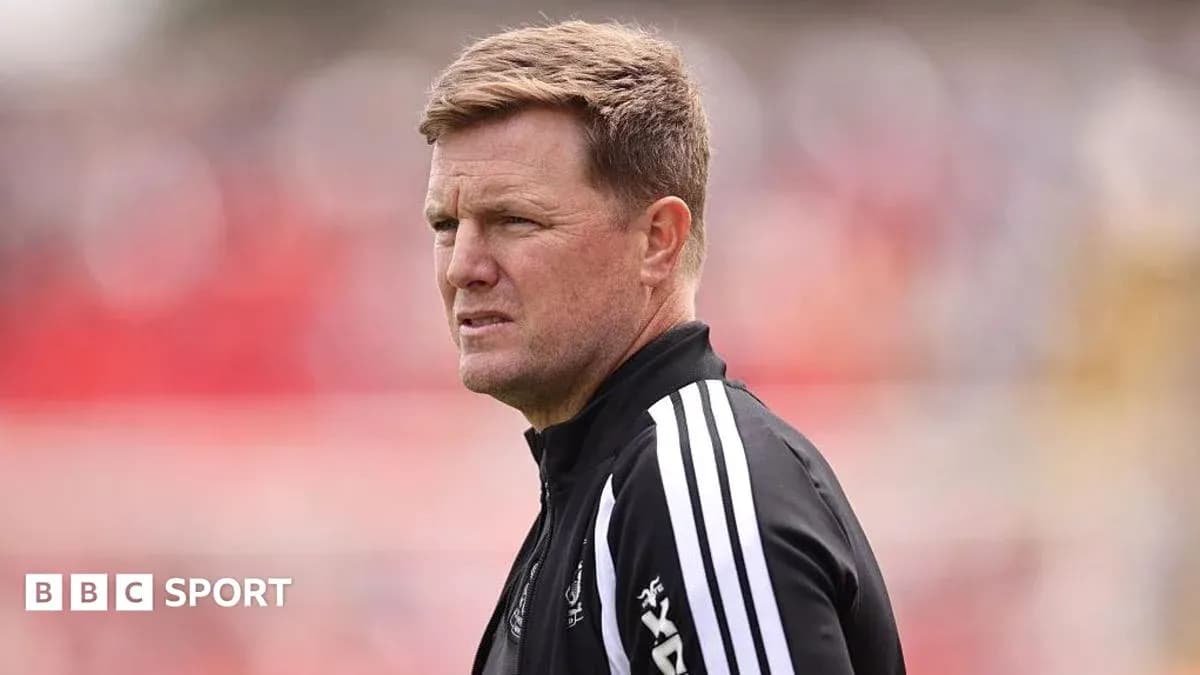
Newcastle United's Transition: Planning for Life After Eddie Howe
Newcastle United had been quietly planning for Eddie Howe’s exit for the best part of nine months. When the moment finally came in July, after a draining five-year spell, the club insist it was anything but a scramble.
Howe had originally intended to lead Newcastle into this season. The idea was continuity, evolution, not rupture. But the manager, worn down and convinced a break would serve everyone best, chose to walk away in the summer – just as a squad already stripped of several key players tried to absorb major change.
It looked sudden from the outside. Inside the building, Ross Wilson says it was anything but.
Behind the scenes, a long goodbye
“We always knew where we were going to go,” said the sporting director, who arrived at St James’ Park in October. He described Howe as “an exceptionally talented coach” – and that, in Newcastle’s eyes, was exactly why they had to plan for life without him.
If a coach is that good, the logic ran, eventually he will move on or need a reset. Newcastle could not afford to be caught cold.
So, for eight or nine months, Wilson worked in the background on a managerial succession plan. Not a hunt for a specific name at first, but a clear profile: aggressive, high-pressing football, a coach comfortable developing younger players, someone who could build on Howe’s foundations rather than rip them up.
As the months ticked by, one name kept staying in the frame.
Matthias Jaissle.
Jaissle steps into a legend’s shadow
Newcastle spoke to several candidates once Howe’s departure crystallised. According to Wilson, Jaissle – fresh from Al-Ahli and with a reputation forged at Red Bull Salzburg – emerged as the leading choice to replace what he called a “legend of the club”.
Jaissle’s track record with young talent at Salzburg dovetailed neatly with Newcastle’s recruitment policy of targeting players aged 24 and under. His intensity on the touchline and commitment to front-foot football echoed what supporters had grown used to under Howe.
After Wilson’s first meeting with the German, Newcastle chief executive David Hopkinson sensed the shift.
He told Wilson he sounded “really excited about this one”. Wilson didn’t deny it. “I remember saying ‘you’re probably right. I think this is it’,” he recalled.
Jaissle arrived, the handover completed, the plan executed. Four games into his reign, across all competitions, he remains unbeaten.
A new era, but not yet a new team
Unbeaten, yes. Fully formed, not yet.
Only three of the club’s eight summer signings – Lukas Hornicek, Amar Dedic and Nico Gonzalez – started the 2-2 draw with Bournemouth. On the pitch, it felt like a snapshot of where Newcastle are: caught between eras, with the new faces still learning the rhythms of the Premier League and of Jaissle’s demands.
The head coach has repeatedly called it a “transition phase”. The team sheet backed him up.
Newcastle’s hierarchy know this season could bend in several directions. The club have forecast a range of financial scenarios depending on where they finish, but Wilson is clear: Jaissle has not been handed a hardline league-position target.
Hopkinson framed it differently. The long-term ambition, he said, is for Newcastle to “consistently and credibly compete” for top honours. That means Champions League nights, trophies, and a place at the game’s top table – not just once, but regularly.
To get there, they first have to stay on the right side of the rules.
Walking the financial tightrope
Newcastle entered into a Uefa settlement after breaching European financial regulations. Hopkinson made it plain: if the club want to live among the elite, they have to live within the game’s financial framework.
The response has been strategic. The Magpies have set a target to increase revenues by 50% between now and 2030, with sponsorship deals expected to carry much of that load. At the same time, player trading will remain central to how Newcastle operate, a recurring source of funds to reinvest in the squad.
“We want to have players here who are on a journey with us,” Wilson said. The flip side is baked into that sentence. If those journeys accelerate, some players will move on. That, he stressed, is normal. It is how modern football works.
This summer underlined the point.
Losing stars, sticking to the script
Newcastle had prepared themselves for the exits of Anthony Gordon to Barcelona and Sandro Tonali to Tottenham Hotspur. Those moves hurt, but they were in the planning.
Bruno Guimaraes was different.
The Brazilian, the heartbeat of Howe’s side and the symbol of Newcastle’s resurgence, was not supposed to be part of the churn. His move to Arsenal forced a recalibration that went beyond tactics. It meant ripping out the central pillar of the project and trying to keep the structure standing.
On top of that, top targets Victor Munoz and Johan Manzambi slipped away to Liverpool and Aston Villa respectively, nudging Newcastle further down their shortlist.
Even so, Wilson insists the window remained largely under control. “Aside from Guimaraes going to Arsenal, everything else that happened during the window was part of the plan,” he said.
That did not mean every arrival was the first name on the list. It never is.
“Clearly we were disappointed a couple of times but, again, that’s normal,” Wilson admitted. “No club goes into the window and reaches the end getting every target they set out to get. If they say they did, it is a lie.”
So Newcastle move forward with a new head coach, a reshaped squad, and a strategy that leans heavily on planning and flexibility. The succession from Howe to Jaissle did not come out of nowhere; it was months in the making.
Now comes the only test that really matters: can that careful planning survive the chaos of a Premier League season?